
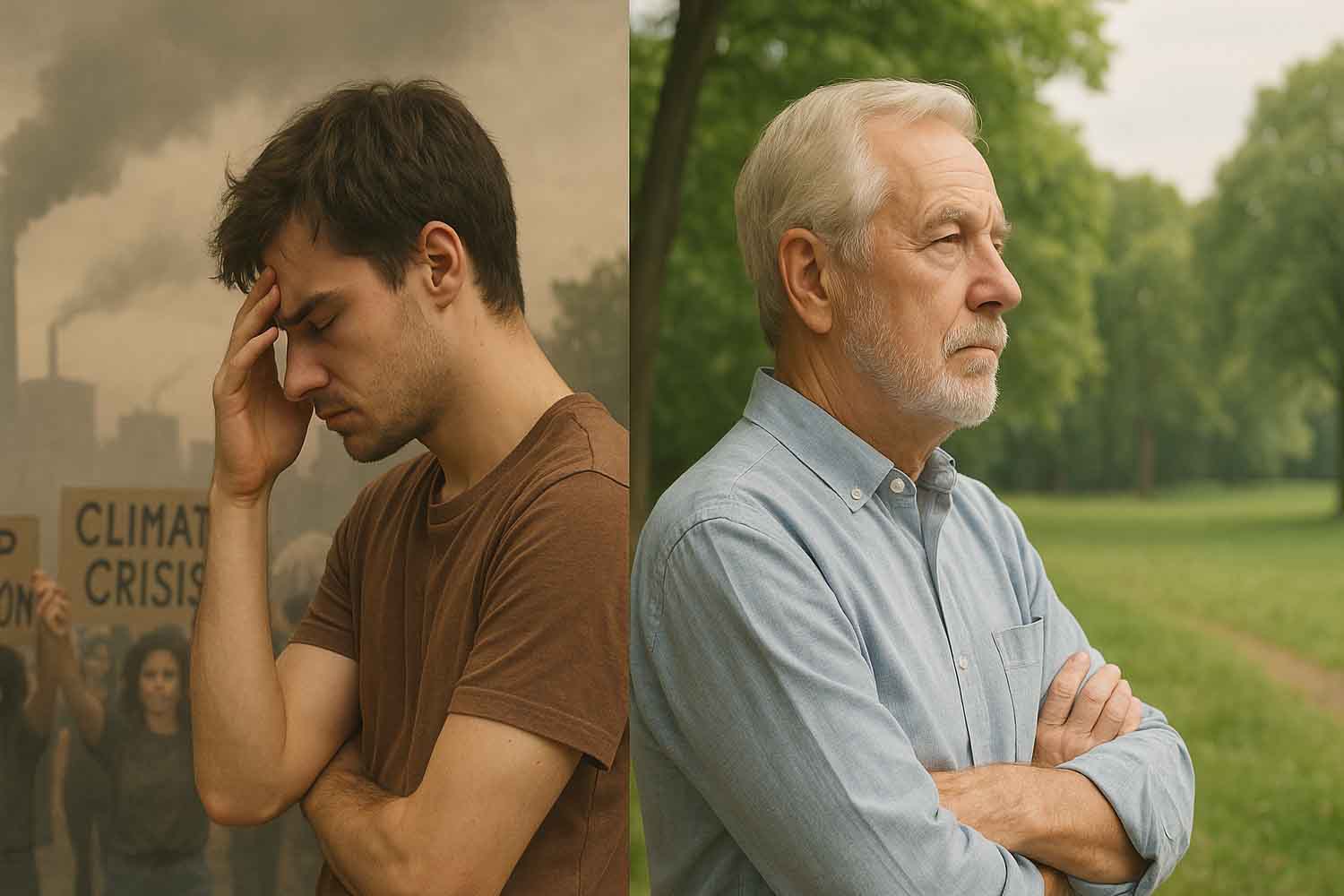
More and more often, in therapy, the same story is heard: that of boys and girls who say they are disappointed, angry, betrayed. Not from a single parent, but from an entire generation, the generation of the baby boomers, the one grown with the promise of well -being, of the permanent place, of the house purchased with the savings.
Today, that promise no longer applies. And so the phenomenon of Boomer Blaming was born: an expression that summarizes the feeling of frustration, anger and helplessness that many young people feel towards those who preceded them.
It just looks like an accusation, but in reality it is much more. It is the symptom of a deep malaise.
It’s not just fault: it’s pain
It is not just anger. What many young people are experiencing is a real mourning. A strange mourning, difficult to recognize, because a person is not crying, but a future that will never arrive.
It is called anticipatory mourning, or unrecognized mourning. And it happens when you realize that your dreams, your expectations will never be realized.
Buy a house? Maybe not.
Get to the world of children with economic serenity? Difficult.
Have certainties at work, on health, on tomorrow? A utopia.
So what remains?
The pain we are talking about is not only individual. It is collective. And we say it is not only us, but also science.
An important research published on The Lancet Planetary Health He involved 10,000 young people between 16 and 25 years old, in ten different countries. The results make you think:
Not only that: many participants speak of sadness, anger, sense of helplessness, fault. But above all of treason. By governments. By adults. On the part of those who should have dealt with the future, and instead he turned his gaze.
What if we let go of anger to give space to something new?
In therapy, after listening to anger, there is always a question that comes, inevitable:
“And now?”
What is done with all this pain?
You can get stuck. Anger can be used to close, to accuse, to depress. Or, you can try to transform it.
Because yes, it’s true: something has been taken away from us. But this does not mean that there is nothing else to build.
Maybe we will not have the house owned, but we can create anything else
Maybe we will not be able to replicate the life model of our parents. But who said we have to?
Perhaps we can free ourselves from the idea that we only evaluate if we own something, if we reach goals that today are no longer accessible. Perhaps we can invent new desires, new roads, new ways of living in the world.
Psychotherapy does not give easy answers. But it helps to make room. To understand that accepting pain does not mean surrendering, but stopping fighting against something that we cannot change. And finally start taking care of what we can still build.
Be careful not to idealize the past: each era has had its shadows
One of the risks of Boomer Blaming is also this: to think that “before everything was better”.
But was it really?
The 80s were not a perfect era. There were inequalities, violence, disinformation, discrimination, silences. Today we have something that then did not exist: greater awareness, a richer emotional language, a culture of care that grows.
This also matters.
The Boomer Blaming is not just a fashion. It is the signal of a collective malaise, of an entire generation that feels that she does not have a safe future in front of her. And that, for this, accuses. Reacts. Gets angry.
But anger alone is not enough.
It is also necessary to recognize the pain hidden underneath. It is necessary to process it. And then, you need to imagine a different future. Maybe more uncertain. Certainly more fragile. But still possible. And above all, ours.
Don’t you want to lose our news?
You may also be interested in:
