
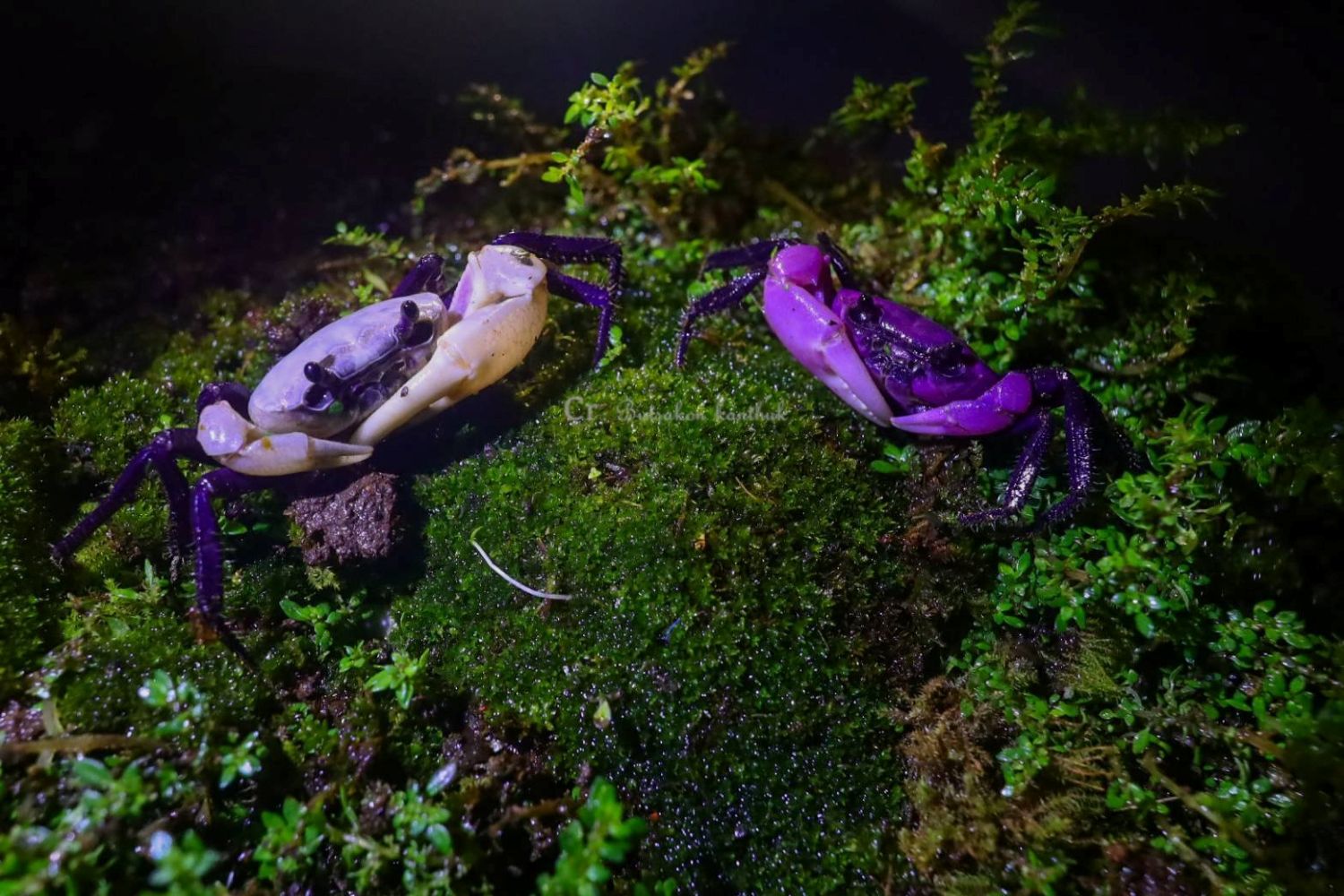
In the dense tropical forests of Thailand, the recent discovery of rare panda purple crabs captured the attention of biologists and enthusiasts of nature. Photographed by the Rangers of the Kaeng Krachan National Park just before closing the tourist season, these small crustaceans were defined in the post published on social networks have been defined as “precious gifts of nature”. Their square and slightly bombed carapace measures just over 2.50 cm and is distinguished by the intense purple color, a rare exception compared to the most common white and black livery.
A symbol of hidden biodiversity
The panda crab belongs to the Lepidothelphusa genre and was renamed “Princess” or “Sirindhorn” in honor of Princess Maha Chakri Sirindhorn. The species was described for the first time in 1903, but for decades there were no observations. It reappeared in the 80s in some protected areas, including the NGAO National Park of the Cascata. It is a semi-terrestrial animal, which spends part of the life out of the water, hidden in the wet cracks of the rocks.
A health indicator of the ecosystem
Since 2019, the Panda crab is a protected species in Thailand, not only for its rarity, but because its presence is considered an indicator of healthy forest environments. He lives in fresh and humid microhabitats, often at low altitude, where the waterways flow all year round. These conditions make it particularly vulnerable to climate change and mass tourism pressures.
The value of the Kaeng Krachan park
Kaeng Krachan’s National Park is UNESCO World Heritage Site and hosts an extraordinary variety of fauna. The discovery of a panda purple crab confirms the ecological wealth of this area and the importance of protecting it from deforestation and pollution.
A biodiversity still to be discovered
Recent studies conducted between Malaysia and Singapore have identified at least six distinct species of the Lepidothelphusa genre, some confined in areas of a few square kilometers. The observation of these crustaceans requires patience and attention, since their mimetic aspect makes them difficult to identify.
The photographic reports of hikers have shown the value of the collaboration between citizens and scientists in monitoring the fauna. The panda crab, with its unusual appearance and the link with ancient forests, is today a symbol of the need to preserve tropical ecosystems, true caskets of life still largely unexplored.
ปรากฏการณ์หายาก! พบปูเจ้าฟ้าสีขาว-ม่วง อวดโฉมบนพะเนินทุ่ง …
Posted by กรมอุทยานแห่งชาติ สัตว์ป่า และพันธุ์พืช และพันธุ์พืช และพันธุ์พืช และพันธุ์พืช และพันธุ์พืช และพันธุ์พืช และพันธุ์พืช และพันธุ์พืช และพันธุ์พืช และพันธุ์พืช และพันธุ์พืช และพันธุ์พืช และพันธุ์พืช และพันธุ์พืช และพันธุ์พืช และพันธุ์พืช และพันธุ์พืช และพันธุ์พืช และพันธุ์พืช และพันธุ์พืช และพันธุ์พืช
Don’t you want to lose our news?
You may also be interested in:
