
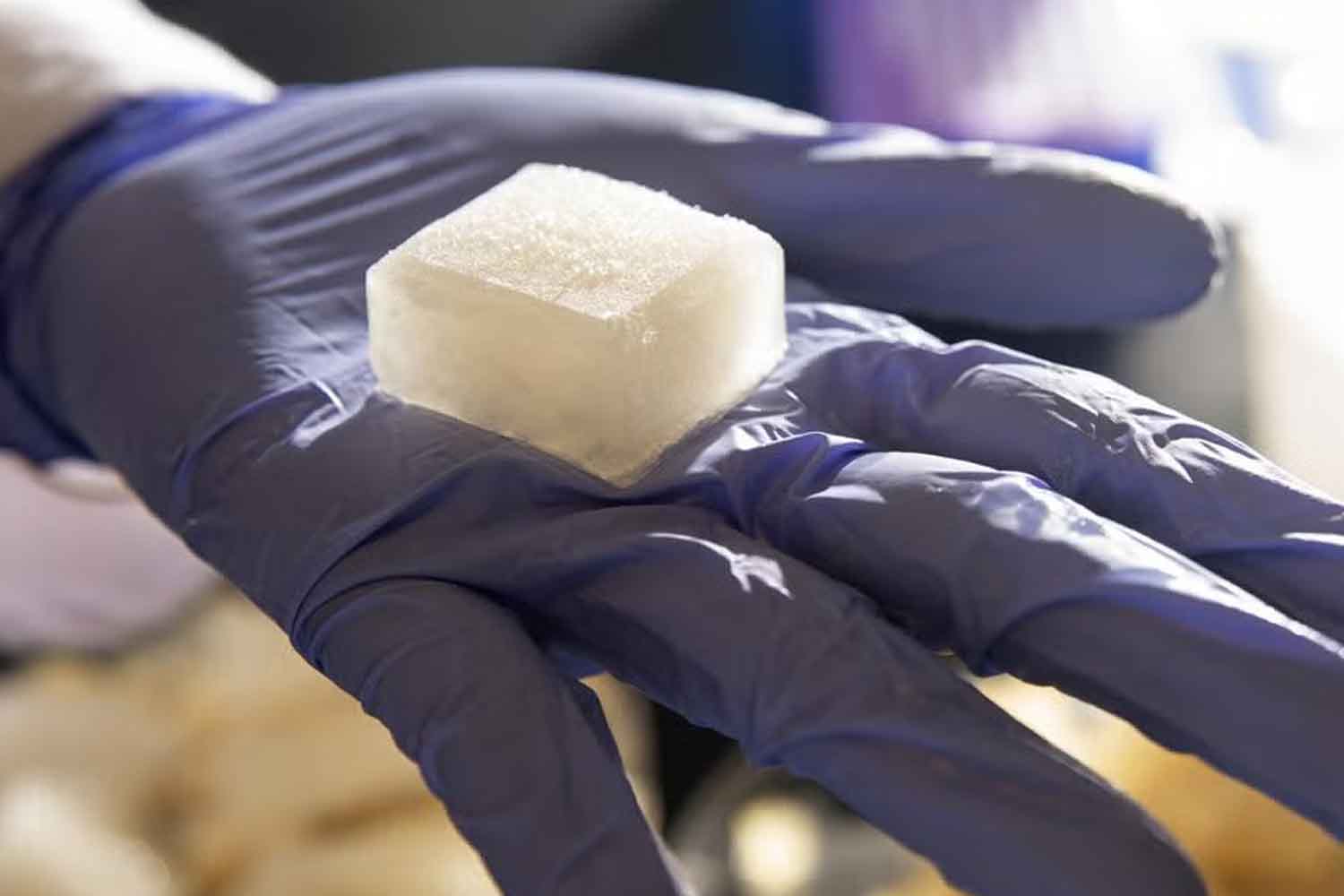
It might seem like a laboratory gimmick, one of those inventions that go around the web for a few days and then disappear. But Jelly IceThe gelatinous ice which, has little spectacular and very concrete. The idea was born from a daily situation: the fish counter of a supermarket.
A food scientist, observing the ice melting between seafood and crustaceans, asked a simple question to the colleagues of theUniversity of California Davis: Can we invent an ice that cools, but does not become water?
The answer was Yes. And now there is a new ice, composed for 90% of waterbut without melting waterwhich and can be reused several timessimply washing it.
How gelatinous ice works
Jelly Ice’s secret is in the jellya well -known material in the kitchen, but used here differently. Within its structure, the proteins form a network capable of retain water moleculespreventing that they come out even when the ice “thaws”.
The result is a soft materialcold to the touch, which behaves like icebut. It can be put in the freezer, used for Keep fresh foodcool a drink, transport medicines and then put back in the freezer for the next use.
Not only that: it is compostablenor microplastics, e it can be washed and disinfected without losing its shape.
What is Jelly Ice really for?
Currently researchers manage to produce 450 grams blocksbut the structure is customizable. They can make it different formsadapting it to containers, cassettes or packaging.
According to what reported by Professor ZouThe cooling which offers Jelly Ice is equal to approximately 80% of that of traditional ice: enough to maintain the cold chain in the sectors where you need, from food transport to pharmaceutical transport, to domestic use.
The technology is in the approval phasetherefore it is not yet available for the purchase. But the goal is clear: to create an alternative without melting water, more hygienic, more sustainableand that like the classic cubes.
This innovation could reduce waste and health risksstarting from a very concrete need. And if it works well on fish, who knows how many other uses we could find them.
