
On August 7 Felipe Bressanim Pereira, Brazilian YouTuber known as Felca, published “Adultização”, a video of almost fifty minutes that in a few days exceeded 48 million views. The content is truly disturbing, in fact we speak of a phenomenon of our times still too underestimated, that of children transformed into small adults for social media. A real content factory made of sensual choreography, winking and direct moves and behaviors in which minors are exposed to the public mercy without any protection.
The saddest thing is that behind all this there are not only influencers to hunt for visibility and easy money but also families and mothers who (perhaps) do not realize that they feed a dangerous spiral that puts minors at a real risk of exploitation and sexual abuse.
Despite the burning theme of international interest, in Italy there was very little about it, the only one to deepen the story was Serena Mazzini, an expert in criticism of the new media and social phenomena, while Ansa published a short article in which he mentions the viral video of Felca and the death threats received by the YouTuber after having denounced the exploitation of minors on social networks.
In our opinion, it is a fundamental investigation, which deserves to be known, because the theme – unfortunately – concerns us all closely in an era in which social networks are part of daily life, with all the risks that this involves in particular for children and adolescents.
The investigation that shocked Brazil
Felca shows how some families and creators build viral content based on performance which, behind innocent appearance, in fact adult children. The video has all the characteristics of a real investigation that systematically documents the phenomenon, revealing deeply upset and criminal aspects, not only by collecting concrete examples but also by analyzing the functioning of the algorithms and including interviews with experts.
In particular, Hytalo Santos is targeted, Brazilian influencer who had transformed his home into a sort of content factory with children and adolescents as protagonists, pushed to create choreography, ballets and directed by decidedly inappropriate tones for age. Felca highlights how social algorithms rewarded this exhibition, creating a spiral of views, comments and shares.
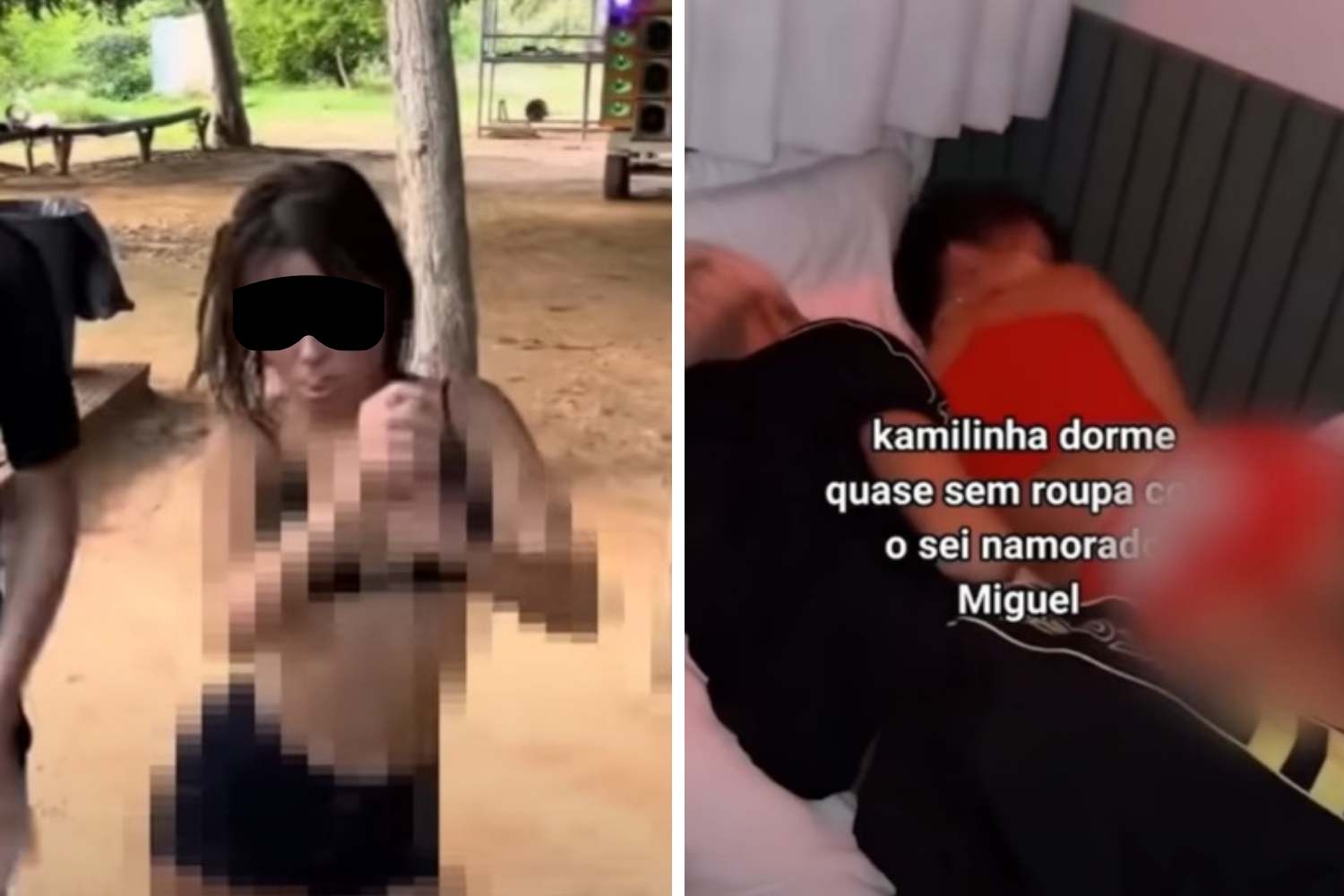
One of the most striking cases told in the video is that of Kamilinha, who entered the “circle” of Hytalo Santos at the age of 12, developing all his pre-adolescence and adolescence in an environment described as a “reality show” made of “disorder and promiscuity”. Gradually, Camilinha has become “more a product than a human being”, with Hytalo that thanks to her he obtained his best in terms of numbers and views.
At 17, this girl was even exposed to breast silicone system surgery and the post-operative was filmed while she was still under the effect of drugs. A real spectacularization of an extremely private fact that involved thousands of users.
The cases of girls encouraged by families such as that of Caroline Cha has started at 11 years of age with innocent “Dancinhas”, but the mother, instead of protecting her from the explicit comments of adult men, also supported these requests, pushing her to produce more and more pushed content that fueled a “pedophile community” generating more and more money. Not happy, the mother went even further creating a VIP channel on Telegram (the contents we let you imagine).
It is increasingly clear that adultification and sexualization of online minors are a serious reality, to be eradicated as soon as possible, and what really upsets is that sometimes this is even orchestrated by the parents themselves for economic reasons, with devastating consequences for the development and mental health of the victims.
A very important theme that is certainly not limited to Brazil but which at least in this case, fortunately, has had immediate legal consequences. A few days after the publication of the video, on Friday 15 August, the San Paolo police arrested Hytalo Santos and her husband, Israel Vicente, on charges of exploitation of minors aimed at the production of online content.
The investigation had already been started in 2024 by the Paraíba Public Ministry, but probably the felca investigation, with videos and documents in hand, provided the missing tests and, together with the clamor aroused, contributed to rekindling the attention on the topic, pushing authority and public opinion to react.
The media and social pressure also produced another effect: the Brazilian parliament has put 32 bills on the agenda to regulate the exposure of minors on social media and limit the risk of exploitation.
In the meantime, Felca is receiving death threats for his important reporting work.
The node of algorithms and platforms
Felca’s video brought attention to the role of algorithms, which are not in itself the absolute evil but which, without adequate “ethical filters”, end up monetizing and amplifying at risk content. Specifically, Felca speaks of a “algorithm P” – where P is for “pedophile” – to explain how the interaction with few ambiguous content can trigger a mechanism that automatically multiplies videos in which children are exposed in a sexualized way.
In this circuit, minors become viral, fueling a chain that directly connects those who produce to those who consume. In comments, adults often exchange links to private channels on Telegram, where even more explicit materials circulate.
The arrest of Hytalo Santos, the complaint of Felca and the wave of reports have made evident the urgency of a regulatory response to stem a phenomenon which, thanks to the algorithms of social media, can quickly escape from hand.
Increasing complaints
According to data from the Ministry of Human Rights and Citizenship in Brazil, 261 complaints of physical and psychological sexual violence against minors in the virtual environment were recorded only in the first days of August 2025. An impressive fact: 243 of these reports came after the publication of Felca’s video, a sign of a disruptive effect of the investigation in raising public awareness.
From 2020 to 2025 the complaints of sexual violence against minors range from a minimum of 1,178 cases (2020) and a peak of 2,169 (2022), with 1,057 reports already recorded in the first eight months of 2025.
The psychological effects of adultization
For his investigation, Felca asked a psychologist specialized in childhood, called in the video “Doutora”, to analyze the impact of online exposure and adultification on minors. The professional explained how early exposure to inappropriate content can compromise the development of children’s identity, which is formed “from the outside to the inside” rather than of course. This phenomenon can lead to emotional fragility, psychiatric disorders and an excessive association between identity and sexuality.
The expert also highlights the risk of abuses by family members or trusted people, who generates confusion and loss of trust, transforming himself into insecurity and fragility in adulthood. In this context, the role of the parents is crucial: supervising and monitoring the use of media is not an invasion of privacy, but a preventive protection measure.
Those who have been exposed by a child to harmful content can become an adult with a fragile “self”, which seeks connection through sexuality and materiality, with relationship difficulties. The psychologist recalls that therapy is always useful, even after years, and invites the victims to become aware that the fault is not theirs, underlining the importance of speaking, appointing and understanding the incident with adequate support.
The psychologist also indicates clear limits for the use of digital devices: none up to 2 years, maximum one hour a day between 2 and 5 years old, and no more than two hours from 5 years upwards, always under adult supervision. Ignoring these recommendations can lead to a hyperconnection, up to 10-13 hours a day in teenagers.
In an interview with CNN Brasil, the psychiatrist Maurício Okamura also explained the damage related to the early exposure of children to sexualized and performative content. According to the expert, this phenomenon can cause:
Okamura invites parents to maintain an open dialogue with children, establish rules on the use of the Internet and encourage offline activities, without forgetting the use of filters and privacy tools on social media.
A question also Italian
The phenomenon unfortunately not only concerns Brazil. Also in Italy there are several minors profiles, sometimes managed by parents, others by agencies or managers, who offer content built on adultization: ballets and sensual poses, sponsorship of products, fake relationships between teenagers and young adults and much more.
The search for popularity, hype, virality and economic profit seems to prevail, a bit all over the world, on the protection of minors, in the absence of a clear regulation.
In Italy there is actually a bill that aims to regulate the exposure of children online, and to prevent their digital adult, but is stopped since March 2024. It is therefore urgent to accelerate their approval, to protect children and adolescents from an exposure that can compromise their development and safety.
Don’t you want to lose our news?
You may also be interested in:
