
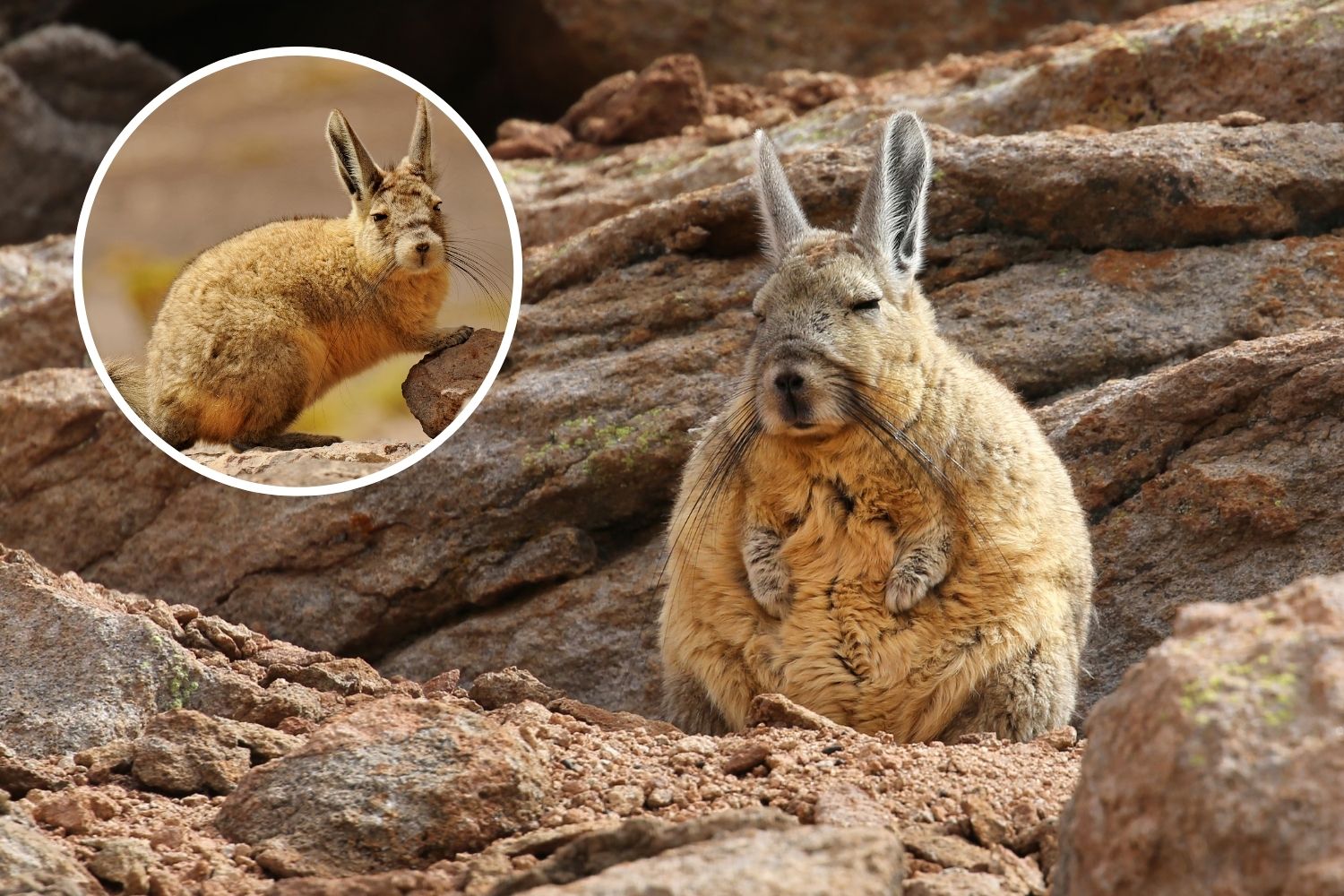
Among the breathtaking and impervious landscapes of the Andes, a small rodent gained the attention of the web for an expression that seems to have come out of a melancholy cartoon. The southern Viscaccia (Lagidium Viscacia), endemic of the high altitudes of Argentina, Bolivia, Chile and Peru, has become famous for her perpetually “disappointed” face: calendar eyelids, mouth of plot and a sad air that make her an icon of involuntary sympathy. But behind this discouraged aspect there is a story of extreme and surprising resistance adaptation.
Despite their “gray” appearance, the Viscacies are highly social animals. They are rarely found alone: they form numerous colonies that inhabit the rocky cliffs and cold and dry plateaus. Here, group life is essential for survival. They are recognized, the links are strengthened and they protect themselves through a combination of vocal calls and mutual cleaning rituals. This collective behavior is an integral part of their evolutionary success in environments where resources are limited and the climate is extreme.
The hidden superpowers of the Viscaccia
Viskacs are not only adorable: they are perfect models of biological adaptation.
The resilience of the Viscaccia
Although at the moment the population of southern Viscacce is stable, the future could reserve important challenges. Climate change, with the alteration of temperatures and water availability, and the loss of habitat could compromise the delicate balance on which their existence is based.
The vecaccia of the Andes is much more than an animal with a sad muzzle: it is a symbol of intelligent adaptation and resistance to the most extreme conditions. Observing it reminds us that even behind the most discharged aspect one of the most fascinating stories of wild nature can hide.
Don’t you want to lose our news?
You may also be interested in:
