
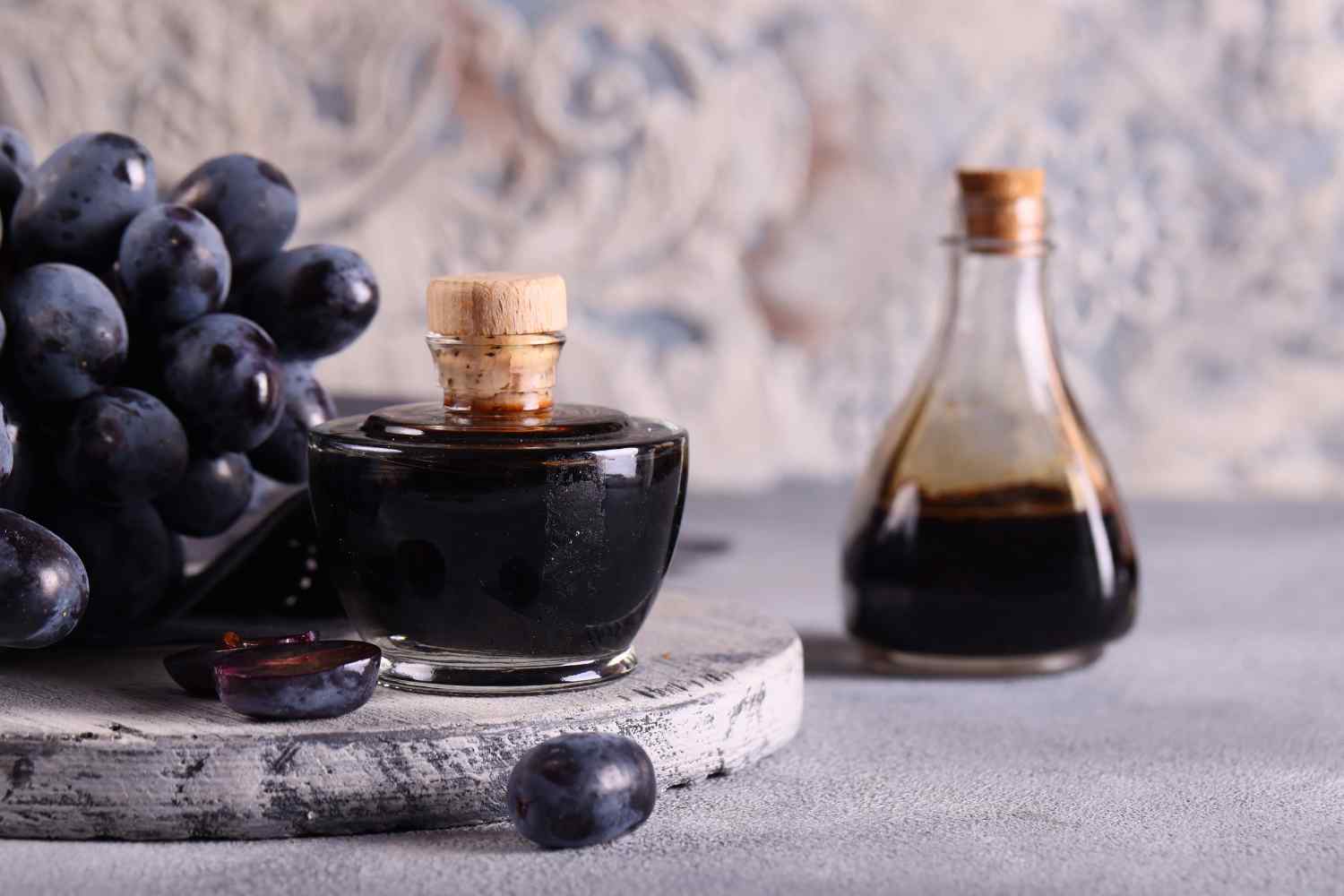
From the myth to the supermarket
When we think of balsamic vinegar, the imagination immediately runs to Modena, wooden barrels, long seasoning and that “black gold” that slips slowly on a piece of Parmesan or a strawberry. But on the shelves of supermarkets the story changes radically: the best -selling product is not the vinegar, but the icing. A dark, shiny, dense cream. Councilor, of course, but with very little to do with the authentic Emilian tradition.
What really is inside the icing
The industrial glaze has not been born for years of aging, but from a quick reduction of balsamic vinegar (often IGP, when it is good) to which sugars, syrups, modified starches, xanthno rubber, caramel and other thickeners are added. It is a product built to be sweet, stable and scenic. The brands acetaia confirms this:
Balsamic glazes are often acent -based condiments, thickened with sugars and starches, designed more to decorate than to flavor
The comparison with the true balsamic vinegar
Traditional Balsamic Vinegar DOP is a whole other story. Produced exclusively with cooked grape must, fermented and aged in batteries of wooden barrels for at least twelve years, it reaches very high prices precisely because it is the result of a patience that touches devotion. The result is a dense but fluid liquid, capable of combining sweetness, acidity and aromatic complexity.
The more different is the balsamic vinegar of Modena PGI, a more accessible version, obtained from the mix of must and wine vinegar, aged for a minimum of sixty days. It is the daily option, honest and versatile. And then there is the glaze: sugary, syrupy, immediate.
Artisan against industrialist
A traditional artisan vinegar is the result of a rigorous supply chain and a know -how that has been handed down for centuries. No additives, no shortcuts: only time and wood. On the contrary, the supermarket glaze is designed for the great consumption, produced everywhere, standardized, with the sole purpose of conquering the eye and the palate with an explosion of sweetness.
Wikipedia is clear:
“The traditional balsamic does not admit additions of caramel or additives, unlike commercial versions and glazes”
Question of substance
The difference, after all, is this: traditional balsamic is a product of depth, the glaze an aesthetic artifice. The first is enjoyed in a few drops, the second is poured at will. One was born from years of silent care, the other from an assembly line. It is the triumph of “everything and immediately” against the value of the time.
Nutritional values and risks of consumption
The balsamic vinegar glaze that we find at the supermarket has very little light. Behind the creamy consistency and the inviting appearance, in fact, a concentrate of sugars is hidden. According to the official nutritional data of brands such as Ponti and Monari Federzoni, 100 grams of product can contain between 200 and 270 calories, with over 40 grams of simple sugars. In practice, a couple of tablespoons of icing are equivalent to a small dessert in terms of calorie intake, even if many consumers do not realize it because they use it only as a garnish.
True balsamic vinegar: another story
If we compare these numbers with those of authentic balsamic vinegar, both IGP and traditional DOP, the picture changes completely. A spoonful of vinegar contains just 10–15 calories and very few sugars, without added additives or sweeteners. 100 ml of balsamic vinegar offer about 88 calories and a discreet presence of minerals such as calcium, potassium and magnesium, as well as polyphenols with antioxidant properties. In other words, the difference between a complex and beneficial seasoning and a sugary industrial glaze is abysmal.
The possible benefits
True balsamic vinegar, consumed in small quantities, can even bring health benefits. Studies reported by Healthline And Eatingwell They indicate that it can help regulate blood sugar, increase sensitivity to insulin and improve digestion. Polyphenols act as natural antioxidants, with positive effects on circulation and cholesterol. It is no coincidence that it is considered an ally in balanced diets, provided that it is used in moderation. The icing, on the other hand, does not have any of these virtues: the excess of sugars makes it more similar to a sweetish syrup than to a healthy seasoning.
The risks not to be underestimated
The frequent consumption of balsamic vinegar glaze brings concrete risks with it. The high sugary content can contribute to the increase in weight and growth of blood sugar, especially in subjects with diabetes or insulin-resistance. Even authentic vinegar, if taken in excess, is not free from side effects: its acidity can damage the nail polish of the teeth or worsen the symptoms of those suffering from gastroesophageal reflux. In addition, in the case of pressure therapies or diabetes, it is better not to abuse it because it can interfere with drugs.
Question of substance
Ultimately, the difference between icing and vinegar is evident: the first is a caloric and sugary industrial product, useful only to give an aesthetic touch to the dishes; The second is an authentic condiment, the result of tradition and a natural aging process, capable of offering taste and even some benefits. Exchange them would be like confusing a dessert with a seasoning. The glaze likes the eye and the most delicious palate, but has nothing of the deep and healthy soul that makes the Balsamic Vinegar of Modena unique.
The balsamic vinegar glaze, the one we find in the plastic bottles, is not an heir of the great Modena tradition: it is a surrogate. Sweet, dense, spectacular to see on the plate, but poor in that complexity that makes the authentic vinegar unique. For those who want the soul, the choice remains only one: look for a real PDO or, at least, a good IGP. Everything else is pure scenography.
Don’t you want to lose our news?
