
The Bridgestone World Solar Challenge He came back, and he did it with one of the most demanding editions ever recorded. For the 17th time, prototypes fed only by the sun crossed the Australian desert for over 3,000 kilometers, from Darwin to Adelaide. But this year, the challenge was even harder: less sun, more wind, and a tight competition until the last kilometer.
34 started. In the race, vehicles designed by students and universities around the world, divided into two categories: 26 in the Challenger Class (the lighter and faster single -seater) and 8 in the Cruiser Class, with models designed for more daily use.
In the end, 17 teams crossed the finish line. A growing number compared to 2023, although this edition took place in a southern winter, with about 20% less than solar irradiation compared to previous years. A fact that makes the result even more significant.
To win in the Challenger Class was the Dutch team Brunel, with their nuna 13, designed to face also the worst gusts of wind: in addition to the usual Canopy fin For stability, Nuna 13 also mounted a second aerodynamic fin, a sort of vertical sail capable of exploiting the lateral wind to earn a push. Average speed: 86.6 km/h. Total time: 34 hours.
Behind them, two other European teams: Team Twente (Netherlands) and Innoptus (Belgium), who arrived less than 30 minutes away. In total, nine vehicles have reached the finish line within five days, with minimal detachments: between the first and the ninth classified, only 4 hours and 7 minutes. A microscopic difference, considering the length and conditions of the race.
Italy is there: third place in the cruiser class for solar wave
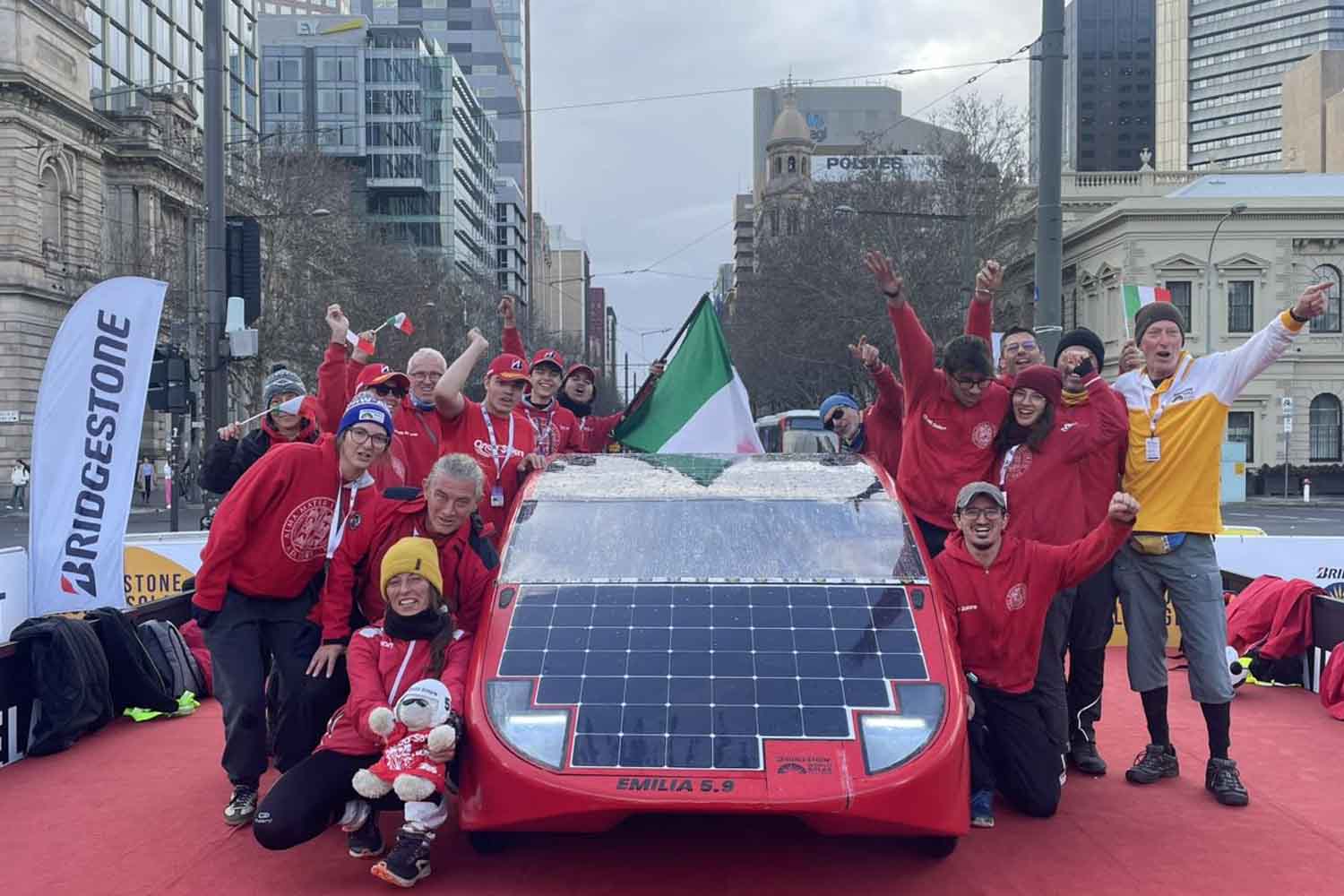
The most encouraging news for Italy comes from the Cruiser Class. The Solar Onda team, based in Emilia-Romagna, won third place with its Emilia 5.9, despite the fact that the car arrived in Darwin only three days before departure. A company that tells the tenacity of a group of researchers and students who have been working on sustainable and ultralight prototypes for years.
The victory went to the VTC Solar Car Team of Hong Kong, with their vehicle Sophie 8x, while the second place went to theononia, with Solaride III Enefit, also awarded for the best balance between comfort, sun efficiency and safety.
Special prizes for sustainability, safety and innovation
During the final ceremony, broadcast live and followed by supporters all over the world, several special prizes were delivered. Among these:
Special recognition also went to Dr. David Rand, a scientist and historical figure of the event, who retires after following all the editions of the World Solar Challenge as an expert in batteries and technical regulations.
The research continues: from the Australian desert to the street, between better batteries and lighter cars, as Chris Selwood, ambassador of the event explained:
Many of the innovations we see here find application in the real world. In particular on the batteries front, lightness and aerodynamic efficiency. It is also thanks to people like David Rand that the industry is managing to reduce his environmental imprint.
Meanwhile, we already think about the next edition. 2027 will mark the 40 years of the World Solar Challenge, an event that continues to inspire new generations of engineers, designers and technicians. And that reminds us how the mobility of the future can – and must – be cleaner, lighter and intelligent.
View this post on Instagram
Don’t you want to lose our news?
You may also be interested in:
