
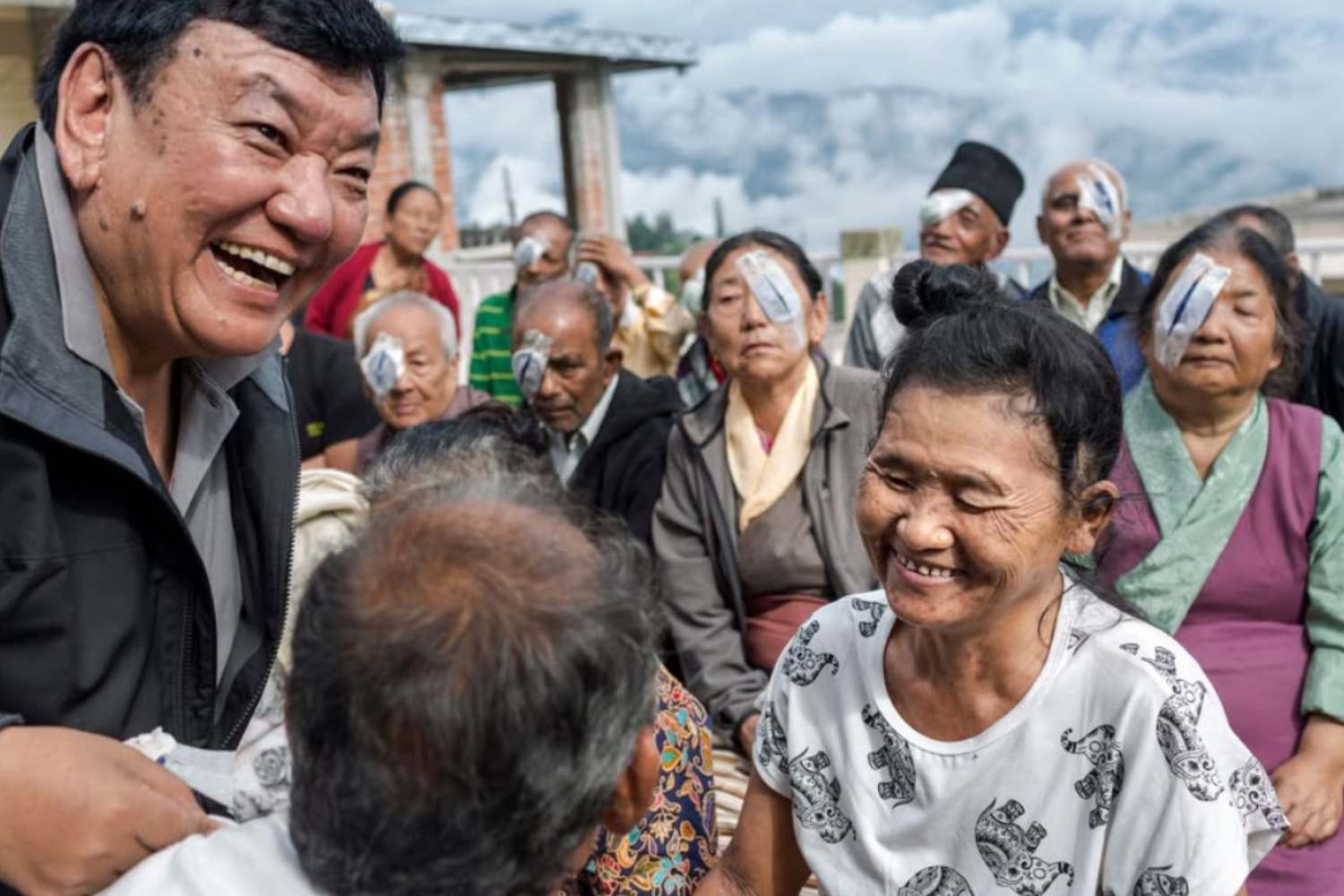
Dr. Sanduk Ruit, Nepalese ophthalmologist nicknamed the “god of vision”, has changed the life of over 100 thousand people in Asia and Africa, returning them the opportunity to see. Thanks to an innovative surgical technique and an accessible approach, Ruit brings medicine even to the most remote places, overcoming the economic and geographical barriers that often prevent quality ophthalmology treatments.
Instead of modern hospitals, his team sets up improvised operating rooms in the most isolated communities. Despite the difficulties, thousands of people recover the sight and return to conduct an independent life, demonstrating how dedication and competence can transform entire communities.
View this post on Instagram
The SicS technique and the global impact
The great revolution was born from the Sics cataract surgery, developed by Ruit. This intervention does not require sutures, can be performed quickly and has low costs: while a similar procedure in rich countries can reach $ 3,000, he creates it with only $ 25, thanks to lenses produced locally at $ 4. The result is a drastic decline in avoidable blindness in Nepal, with models replicated then in more than 20 countries and taught in prestigious universities such as Harvard.
In addition to surgery, Ruit founded the Tilganga institute in 1994, together with the Australian surgeon Fred Hollows. The Institute produces accessible lenses and forms new surgeons, while the Cataract project of the Himalayas, in collaboration with Geoffrey Tabin, Porta Team Medici in the most inaccessible areas. Only in Africa, over 50 thousand people receive care every year thanks to this sustainable model.
View this post on Instagram
He lost his sister at 17 for lack of medical care
Ruit’s path is not without obstacles: it deals with extreme altitudes, difficult climatic conditions and impervious soils to bring assistance. The motivation was born from a personal tragedy: at 17 he lost his sister for lack of medical care, an experience that prompted him to dedicate life to reducing the suffering linked to poverty.
Today its institute carries out around 2,500 interventions per week, half of which are free, spreading the culture of accessible health. The surgeon has received international awards, including the Bahrein Isa prize, but always stresses that the real reward is to see joy in patients and restore dignity, independence and hope.
View this post on Instagram
Don’t you want to lose our news?
You may also be interested in:
