
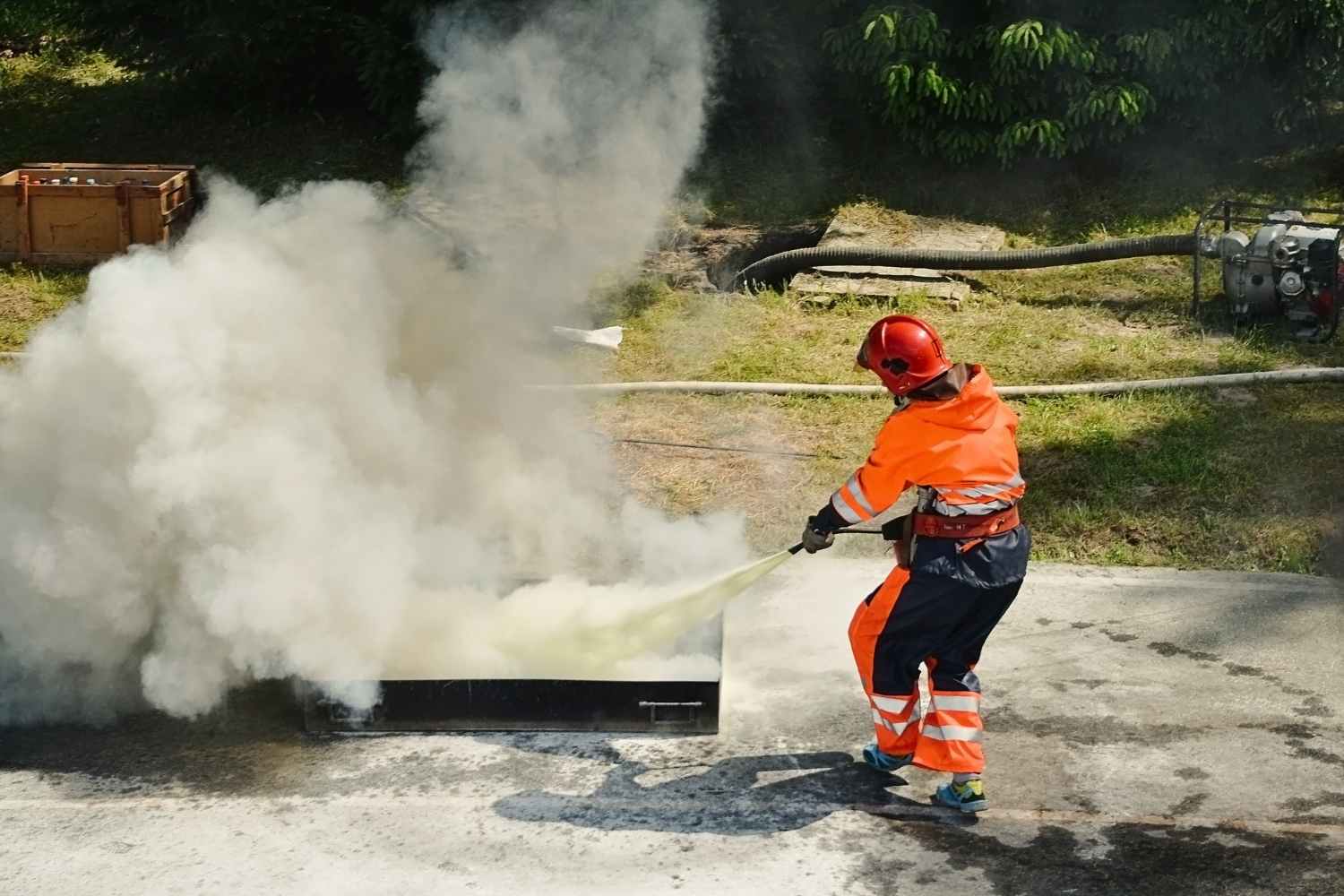
The protection of the health of the firefighters can still wait for Europe. The European Commission has in fact decided to further postpone the prohibition on the use of the Pfoa, the dangerous “eternal pollutants” present in the fire foam. The decision, taken after a comparison with industries and Member States, effectively prolongs the professional exposure to chemical risk for all rescue operators.
This choice assumes a particular gravity in the light of the scientific evidence that document the danger to which this category is exposed, not only through foams but also through their own individual protective equipment (PPE).
The risk was sanctioned at the highest levels: already in 2022, the International Agency for Cancer Research (IARC) ranked the professional exposure of the Fire Brigade as a carcinogenic for man (group 1), recognizing the PFAS among the main danger factors. Scientific research then clarified the ways of contamination. Pioneering studies, such as those conducted by the University of Notre Dame, have shown that protective suits are also treated with PFAS, which degrade with usury and heat, releasing toxic dusts that can be inhaled or absorbed by the skin.
These results have been confirmed by government bodies such as the American National Institute of Standards and Technology), which in a 2025 report found the presence of these substances in the fabrics of new equipment. The consequences on health were further investigated by a recent research by the University of Arizona (July 2025), which has connected exposure to the PFAS in the firefighters with epigenetic alterations, suggesting a biological mechanism that could favor the onset of pathologies. Finally, an Italian investigation conducted by Greenpeace and the USB union VVF in June 2025 detected the presence of PFAS in the blood of some firefighters in quantities higher than the risk thresholds, bringing a concrete proof of contamination also at national level.
In light of these scientific evidence, the need for a concrete action plan to protect the health of these operators emerges. The requests of the scientific community and trade associations are divided into clear and urgent points:
Don’t you want to lose our news?
