
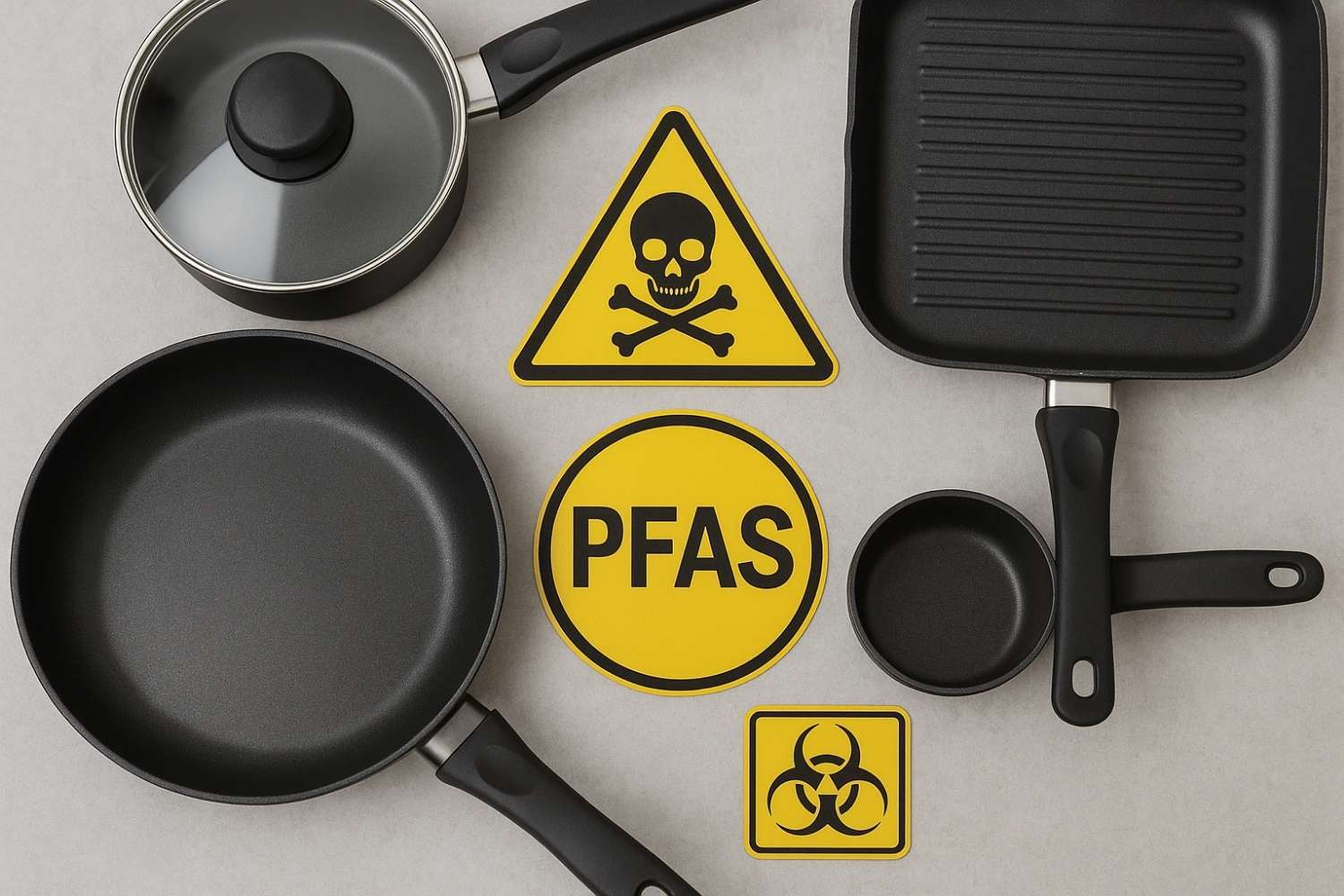
The European Agency for chemicals (Echa) has published an update to the proposal to restriction of the PFAS at the EU level which, frankly, is very disappointing. After years of work and over 3,500 pages of dossier, instead of definitively closing the tap to the “Forever Chemicals ”, The agency chooses to backward: 8 categories of use of the PFAS will in fact be excluded from the ban. And it’s not the only questionable choice.
To comment on this decision, expressing great concern for our future, is Chemsec, an international independent network that promotes the adoption of safer alternatives to dangerous chemicals. According to the organization, this decision represents a dangerous and unacceptable precedent.
Although the update reiterates the urgency of reducing the use of the PFAS, the Echa seems to ignore that these substances remain among the most persistent and pervasive of the environment. They are already present in the waters, in the soil, in food and have also arrived in human organs and blood. Each derogation and exception means further years of exposure for citizens and ecosystems.
The excluded categories
The categories now excluded from the Echa are:
However, remember that Echa has only the role of technical consultant: it proposes restrictions, assessments and prohibitions to the European Commission, but only the EU Commission can then adopt a binding regulation that all Member States must apply. And for the Pfas it will be like this.
In any case, excluding these categories means leaving a huge “tap” of dangerous chemicals open, compromising the protection of the environment and public health. But there is more: European industries will have no limitations in the production of PFAS for export. What is the trick? We explain it to you immediately.
Produce PFAS for non-EU export
In practice, the updated dossier allows PFAS producers to continue to produce for export to extra-see countries (outside the European economic space) indefinitely, regardless of the expected use. This means a pass to produce infinite chemicals, with self -imposed and never updated emission limits, ignoring the technological progress and the best available techniques.
As Chemsec’s experts are rightly commented on:
This does not make sense (not even from a strictly European perspective). We live in a global world and EU citizens will continue to be exposed. (…) We already know where this road leads. Throughout Europe, about 23,000 contaminated sites have been documented, many of which caused by production plants that polluted the waters and damaged local communities. Choosing to allow even more unlimited production and emissions in the future does not protect the citizens of the EU, but repeats the same mistakes that have brought us here.
Other weaknesses of the proposal
For the first time in its history, Echa has decided to divide a chemical restriction into several parts. Such a fragmented approach puts transparency and the entire PFAS regulation process at risk. Since the scientific committees will not evaluate all aspects and the European Commission will not have a complete picture when it will have to process the final restriction proposal.
This choice therefore appears unacceptable and contradicts the commitments of the EU strategy for the sustainability of chemicals, which provides for the gradual elimination of the PFAS from all uses, allowing only those strictly necessary for which there are no alternatives.
Among other things, the ACHA decision ends up rewarding the industries which, during public consultation, omitted information: a totally unacceptable result. On the contrary, it should encourage transparency.
Other gaps highlighted by Chemsec, who carefully analyzed the updated dossier, concern too many long -term derogations, the use of checks on ineffective emissions and the failure to enhance the alternatives already available, elements that weaken the effectiveness of the restriction on the PFAS and slow down innovation.
The alternatives
Contrary to what Echa suggests, there are already safer solutions for many of the excluded categories. Technical textiles, for example, have effective and certified replacement options. Ignoring these possibilities means slowing innovation and letting the planet continue to be polluted.
Chemsec also points out that the restriction proposal, as it is, does not enhance innovation or competitiveness. A ban on the PFAS should be a stimulus to develop safer alternatives, not a brake.
In the last five years, in fact, the innovation has grown aimed at replacing the PFAS, with numerous alternatives already available on the market and others in the development phase. These solutions could position Europe at the forefront of competitiveness worldwide, showing that a rigorous and at the same time innovative approach is possible.
In this context, it surprises and worries that the update weakens the “green innovators”: instead of facilitating the path towards a future without PFAS, there is a risk of erecting new obstacles that slow down the transition, penalty those who have invested in safe and sustainable solutions.
Chemsec repeats it forcefully: the only effective way to face the Pfas crisis is a universal ban without exceptions. Each derogation is a flaw in the system, an invitation to pollution and a mockery for future generations.
Don’t you want to lose our news?
Sources: Echa / Chemsec
You may also be interested in:
