
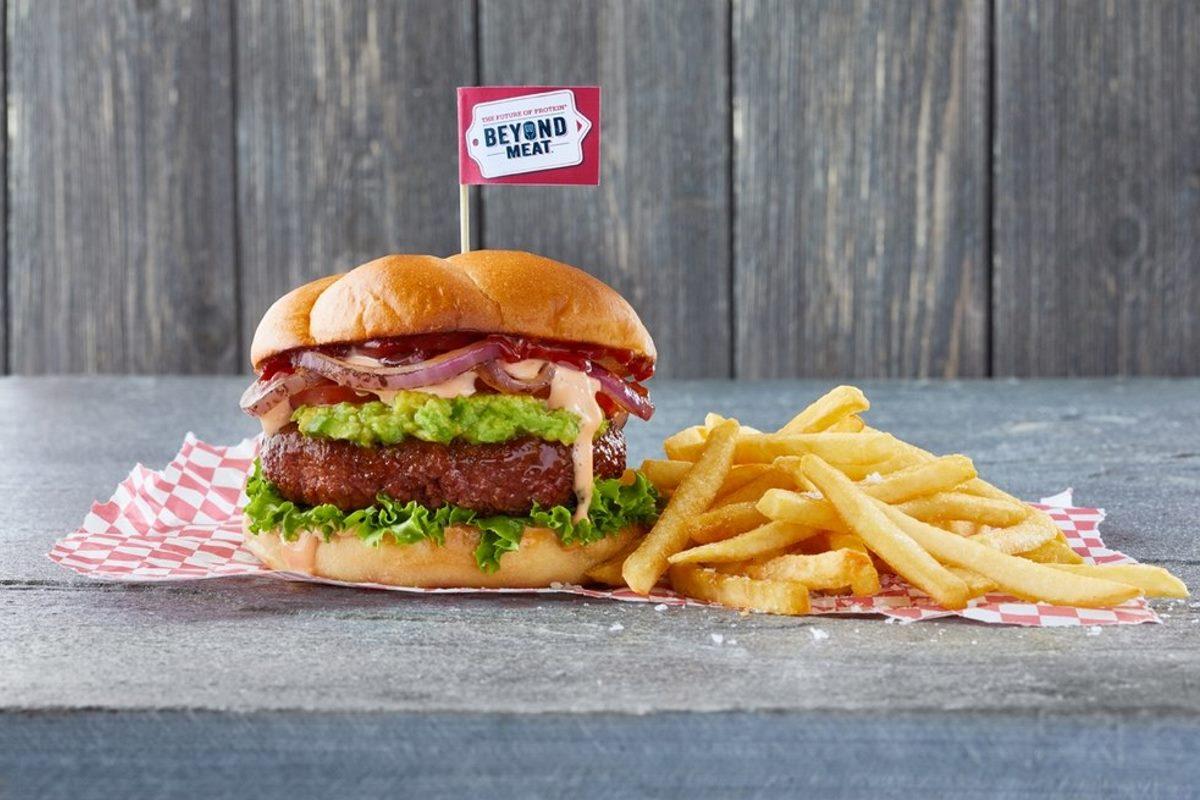
It seemed that the vegetable alternatives to the meat should change the world, leading millions of Americans to reduce the consumption of animal proteins and to choose more sustainable foods. But, unfortunately, it didn’t go right.
After a first period of great successes, vegan hamburgers are struggling to impose themselves in the United States, where traditional meat continues to dominate.
The collapse of sales
The vegetable meat sector has faced a particularly difficult period. Companies like Beyond Meat and Impossible Foods recorded a falling sales of refrigerated products of 17% in 2025, following the flexion of 7% in 2024. Result: about 75 million units of plant less sold than 2022.
Despite the noble objective of reducing the consumption of animal meat for environmental reasons, these alternatives seem to have failed and today represent only 1% of the US market.
In addition – paradoxically – while the vegetable alternatives arrange, the meat has known a return of popularity, supported by influencers and American politics, which promote its consumption as a symbol of health and strength. Even government initiatives, such as the “Make America Healthy Again” program, contributed to strengthening the cult of meat.
The battle is cultural
According to Ethan Brown, CEO of Beyond Meat, “It is not our moment“And added that the meat industry:
He did a masterful job, convincing people that there were something wrong with products, or who were ultra-processed or things like that.
The problem is also cultural. The meat is deeply rooted in American daily life, a symbol of tradition and identity, and the environmental message struggles to change food habits in the USA.
Furthermore, another key factor is that vegetable products remain more expensive than traditional meat and have to face the competition of bars, drinks and hyperproteic snacks, often equally hyperlavrated but on which there are less prejudices.
To try to resist, Beyond Meat has eliminated “Meat” from her name and is focusing on vegetable protein products that do not imitate meat or chicken. Impossible Foods is also adapting, exploring hybrid solutions that combine meat and vegetable. Despite this, the challenge remains enormous.
And the environmental factor? It seems that the Americans, in this historical period more than ever, are not many interested in the theme and surely this will not convince them to eat less meat and opt for vegetable alternatives. As Christopher Gardner, nutrition expert at Stanford University said:
I have been trying for 30 years to convince people to eat less meat, but in the United States the numbers have not moved. I would like consumers to be confused. Appreciate what is their familiar. Not everyone must become vegetarians, but we will have to eat much less meat. At a certain point people will wake up and wondering: ‘Where are the rainforest ended? We are coming to the point where we will no longer have land or water to support the amount of meat we would like to eat. I hope people finally understand it. They have to understand it. We are facing an existential moment.
And in Europe?
In Europe, vegetable products face similar problems, also on the regulatory front. On September 8, 2025, the Agriculture Commission of the European Parliament approved an amendment that could deeply change the market of vegetable products. With 33 votes in favor, 10 against and 5 abstentions, the members of the Commission supported the proposal of the French deputy Céline Imart, aimed at prohibiting the use of terms traditionally associated with meat on vegetable -based products.
Put simply, the European Parliament proposed to prohibit terms such as “steak”, “scaloppine”, “sausage”, “burger” and “hamburger” for vegan products, promoting the lobby of the meat.
Univegan and Veganok, which represent hundreds of certified Italian companies, are fighting against this proposal through Safe (a European organization that deals with consumer protection and food safety), carrying out the battle for consumer rights and food innovation.
Studies and surveys confirm that the majority of European citizens includes and recognizes Plant-Based products, denying the official reasons for the ban. Limiting the use of terms such as “burger” would simply mean disadvantage local companies and curbing the growth of a strategic sector for the future food.
Sources: The Guardian / Veganok
