
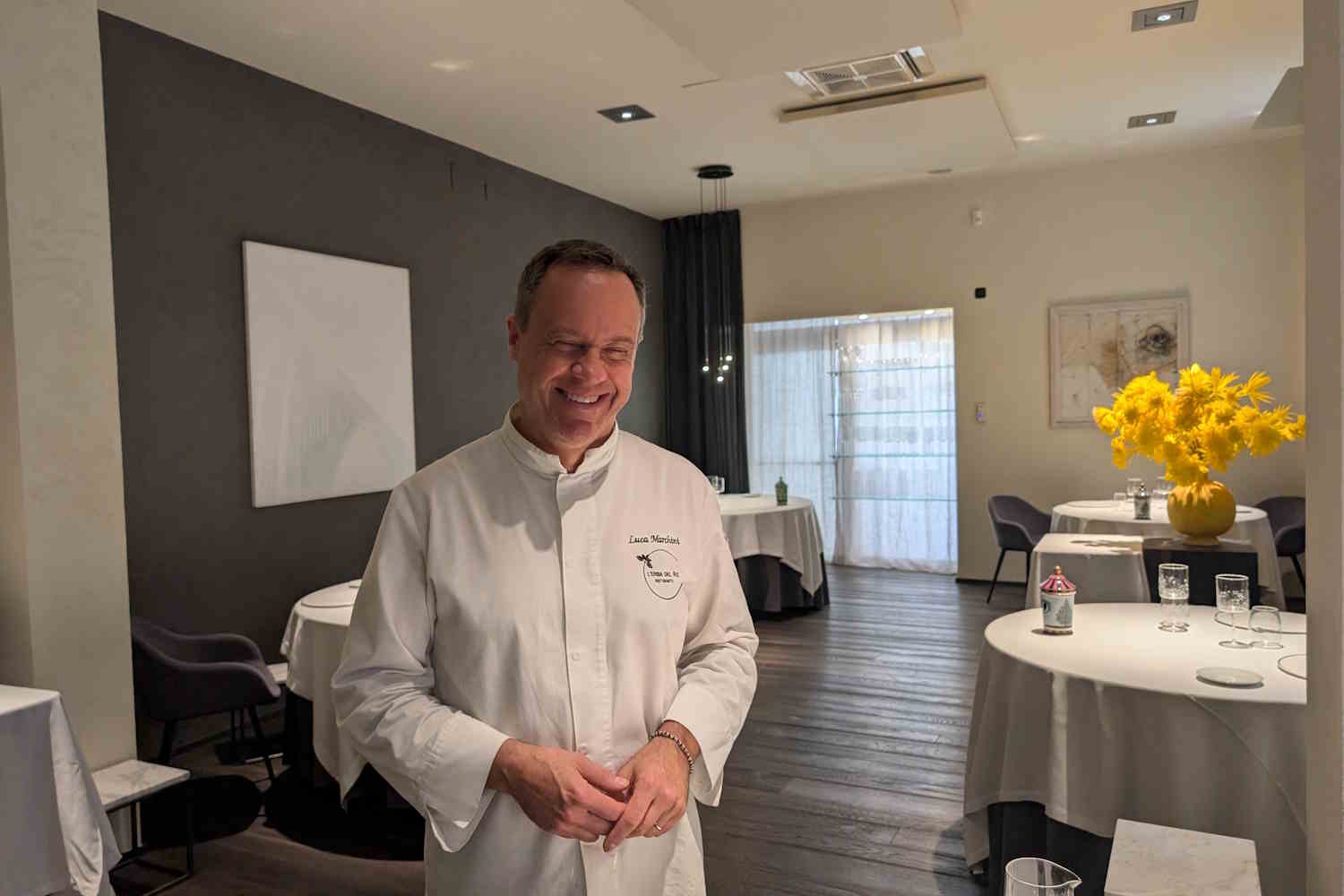
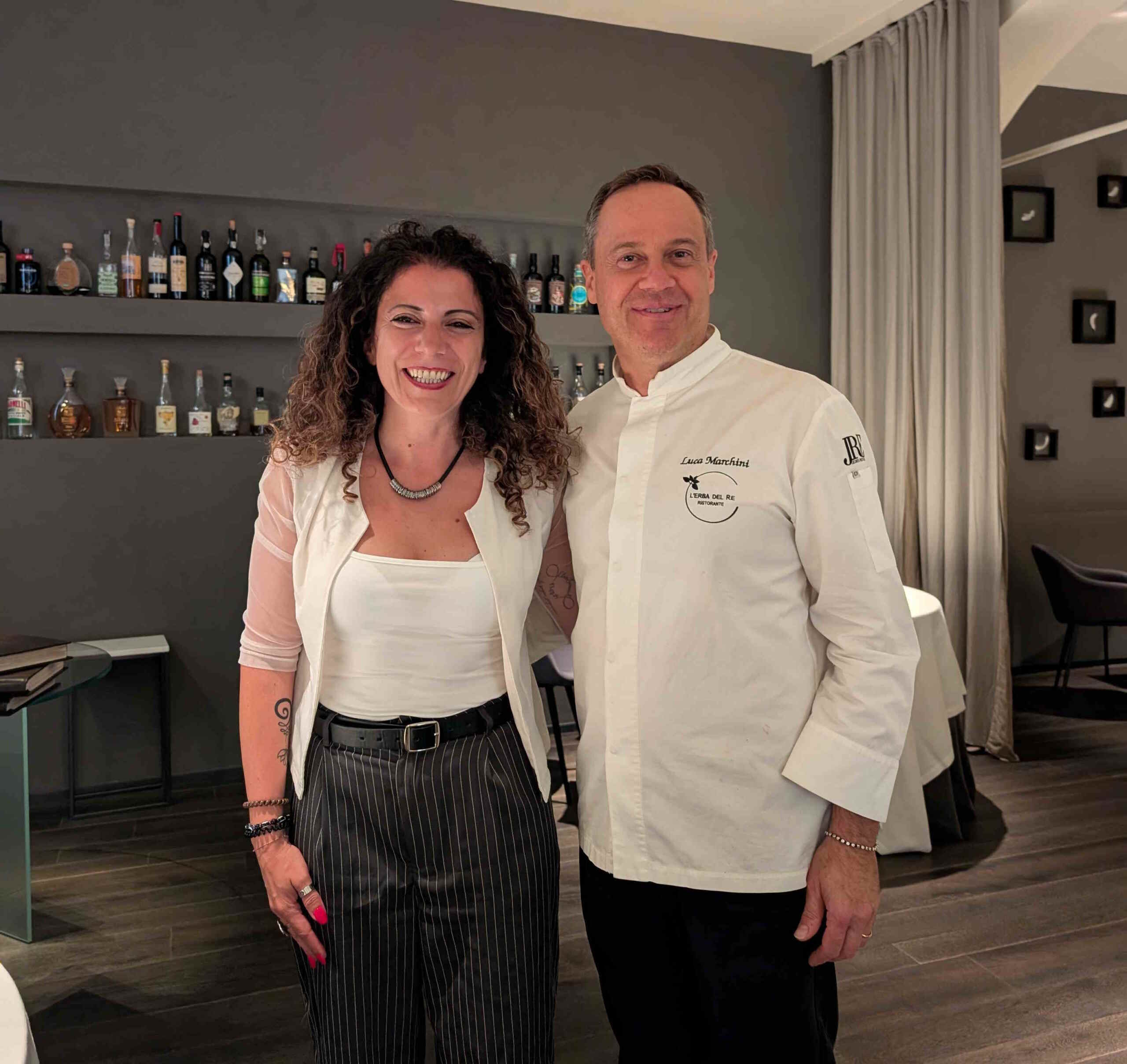
Sitting at a table, the atmosphere is relaxed and the wait mixes with a palpable curiosity. We are in Modena, in the heart of Emilia, guests of Luca Marchini in his starry restaurant the king’s grass. We are not here only to taste extraordinary dishes: we are here to understand the man behind the chef jacket, a professional for whom the word sustainability is not only a trend of the moment, but a real philosophy of transversal life that characterizes his work. Always aware that true innovation is not only in the creation process, but in creating with awareness.
The meeting with Marchini was an immersion in his world, a journey that starts from the deep bond with his land, Emilia, to project himself to a future in which respect for the environment and creativity merge into a single, harmonious narrative. His ability to transform an ethical choice into an unforgettable sensory experience, without ever falling into rhetoric, is what makes it unique.
Because the deep philosophy that animates its cuisine is never a simple exercise of style, but the expression of a wider thought enclosed also in the same name that decides to be at its restaurant more than 22 years ago.
From the economy to the kitchen: the path of a (non) accountant
The story of Luca Marchini, Tuscan by birth and Emilian of adoption, is fascinating, a story of destiny and passion. Despite his life path he seemed already traced by a degree in Economics and Commerce and by a future as an accountant, an apparently marginal decision has changed everything. He chose to work as a cook for a single summer season before starting the practiced. What was supposed to be a brief parenthesis has turned into a real vocation. In those months, he understood that his working life would have been made of flavors, not of numbers.
After this electrocution, he was lucky enough to work closely with a giant like Massimo Bottura in the first Osteria Francescana, an experience that has consolidated his choice. He then refined his talent in France, with the chef Jean-Louis nomicosand in Italy, with Bruno Barbieri. A path that prepared him to open his first restaurant, the king’s grass in 2003.
And the name itself, as mentioned, tells a lot about its philosophy. Marchini confided to us that the inspiration derives from the Greek “Basilikon“, Which means” king’s grass “, or basil. This choice does not only celebrate the simplicity and excellence of a humble and at the same time regal raw material, but also contains its leadership philosophy. For Marchini, the real” king “of the kitchen is not the single chef, but it is the” we “, that is, the whole team. Each person, from the director of the sommelier, is a fundamental tax and the rotation of the staff Its various places (including the Pomposa trattoria and the Tre Pizzeria) is not only a managerial choice, but an opportunity for growth and experience for everyone.
In this picturesque glimpse of Modena, in fact, what we could call a small sustainable ecosystem of taste came to life: from the Amaltea cooking school, which forms the professionals of tomorrow, to the Bottega da Re, born in 2020 during the Lockdown, where natural preserves and artisan products are prepared without a thread of artificial preservatives (as well as hand packaged to preserve nutrients and reduce plastic); Passing through the Pomposa trattoria, which uses the same raw materials as the restaurant for daily dishes, creating a virtuous circle that supports local producers, stabilizes the group’s economy and, in fact, democratizes the culinary experience making it accessible to a wider audience.
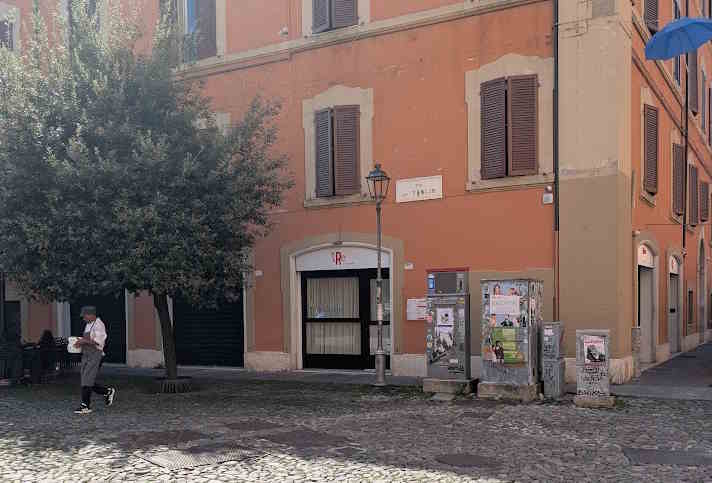
And finally, the last born, the Tre Pizzeria, inaugurated in 2024 right in front of the grass of the king who offers pizzas with a dough based on mother dough left to rise 36-48 and cooked at controlled temperatures (340-350 ° C) for a crunchy and not inflatable result. Pizzas also share suppliers and laboratory with other rooms, optimizing resources and reducing logistical emissions.
A cuisine that respects the planet, traditions and the palate
In a world where high cuisine often stumbles in unsustainable excesses due to costs, rampant waste and controversial raw materials – the fois gras an example of all, editor’s note – In the kingdom of Luca Marchini everything revolves around the balance through local and seasonal ingredients, zero splashes implicit in total respect for each element and a menu that evolves with the seasons, reducing the carbonic imprint of unnecessary imports. Local suppliers chosen with care to minimize transport and support the circular economy.
A dip in iconic dishes: when history becomes taste
The tasting was an exciting experience, a path that has allowed us to savor the dishes that over the years have made it famous. Marchini, in fact, delighted us with a combination of historical recipes of the restaurant, creative innovations also made of a growing integration of vegetarian and vegan options, often developed unconsciously through the search for quality ingredients.
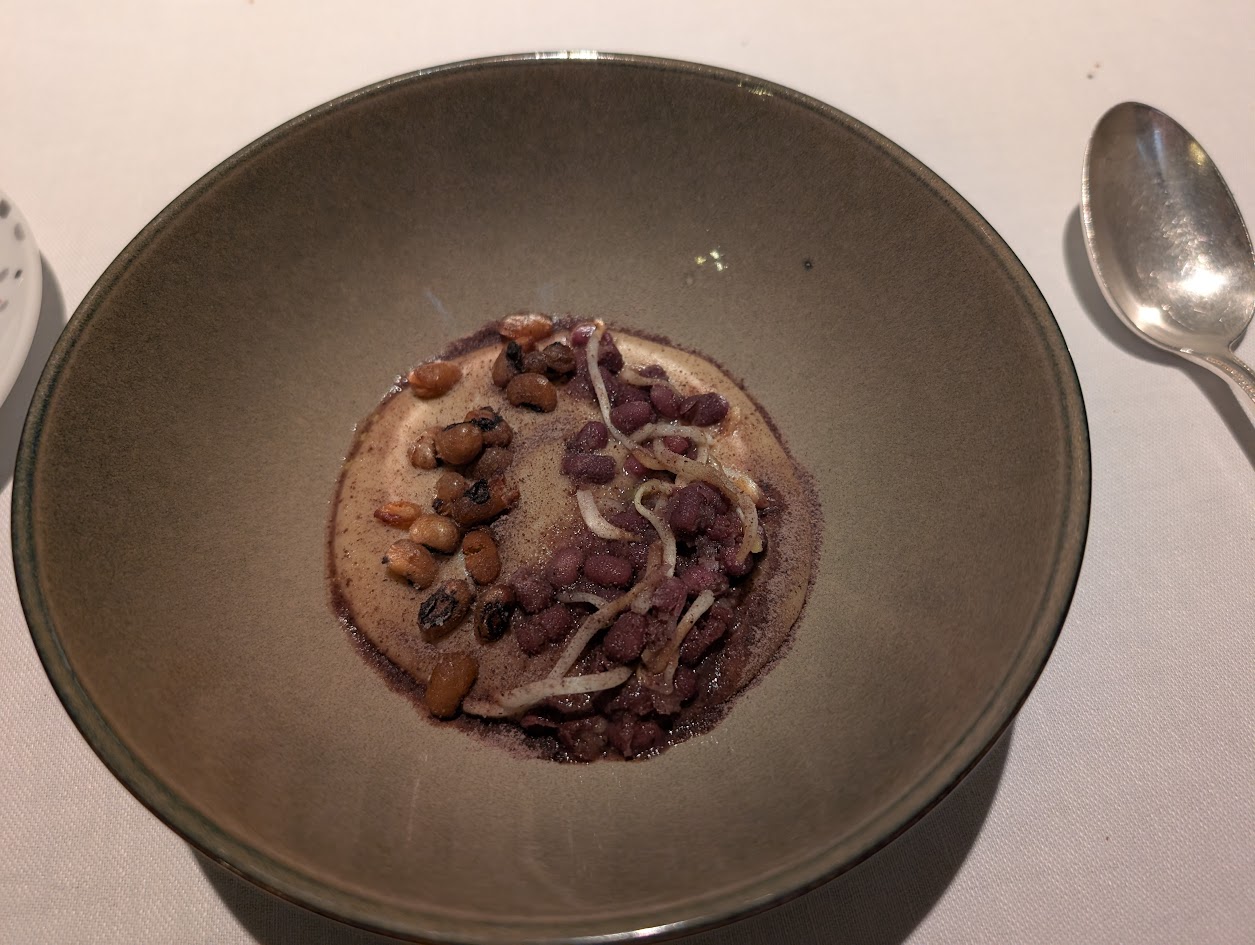
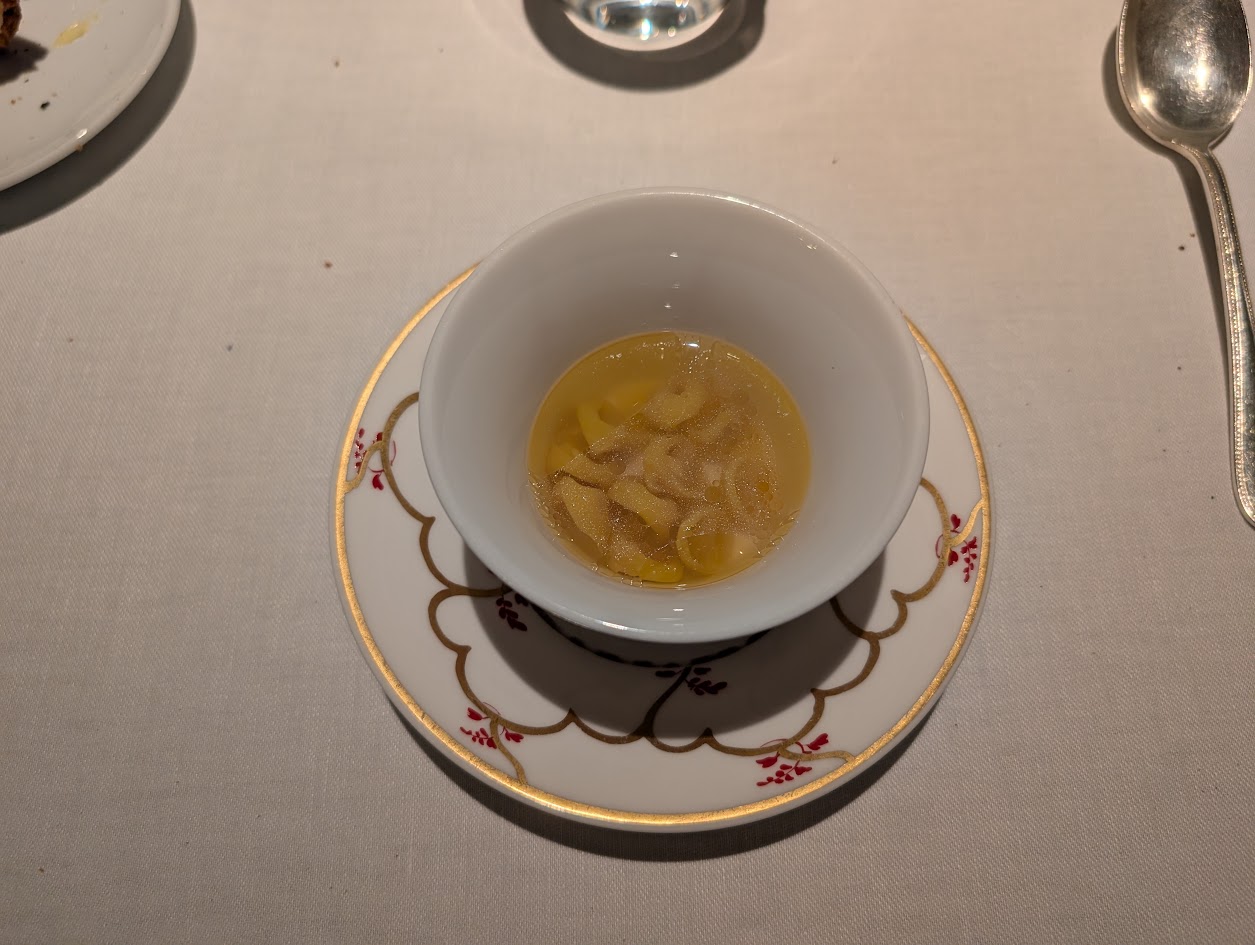
A perfect example of its cuisine that combines past, present and sustainability is its legendary bean soup. A dish that is not only a soup, but a work of high cuisine that uses the same raw material, the bean, in four different ways. There are cannellini transformed into a slightly acidic sauce, the beans with a crunchy eye, the azuki in a salad with Tropea onion, and finally the borlotti, which become a dense and rich broth, with hints of hazelnut and chocolate, obtained by cooking the beans three times in their own water. A process that maximizes the flavor and reduces waste, showing that sustainability is also a question of method and patience.
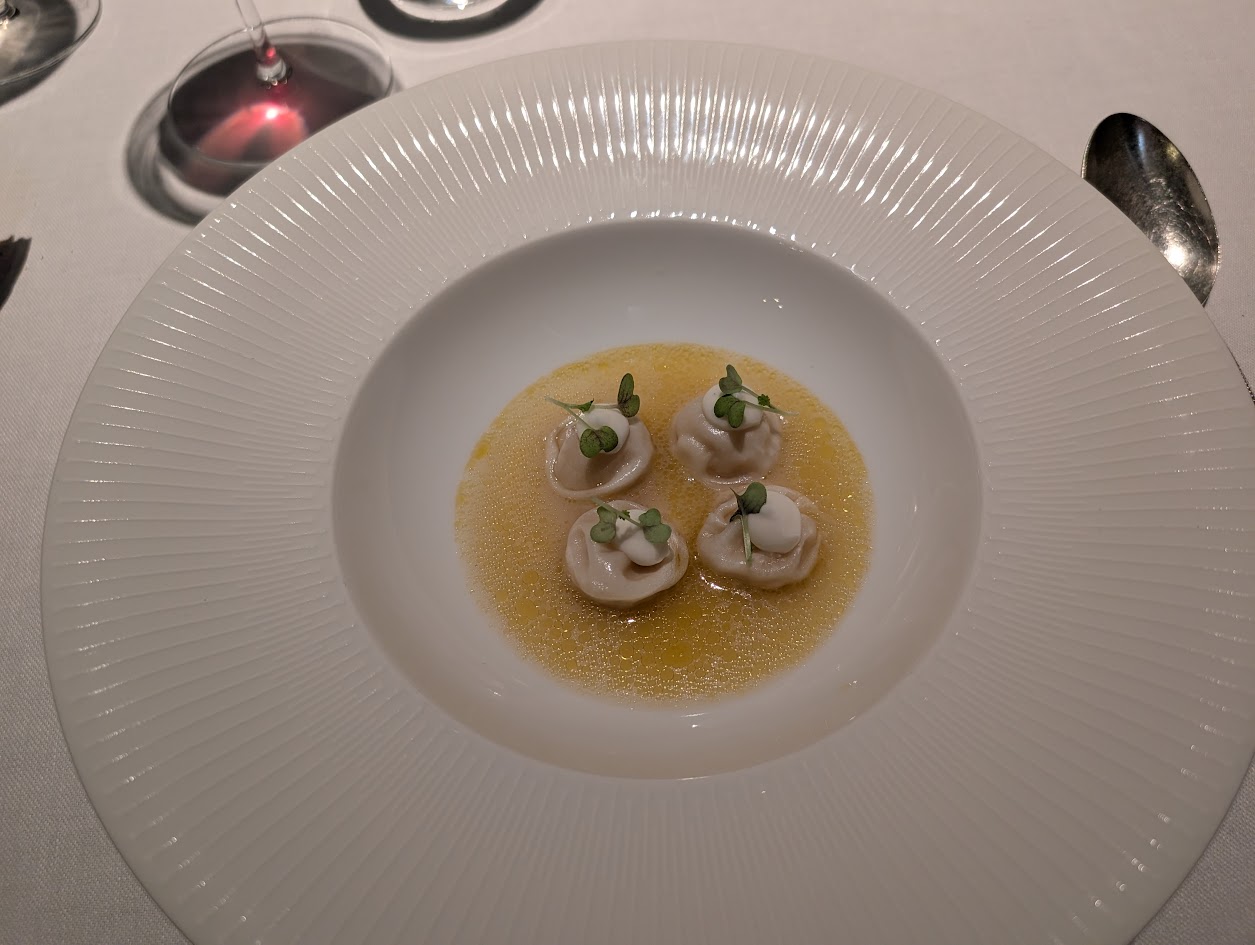
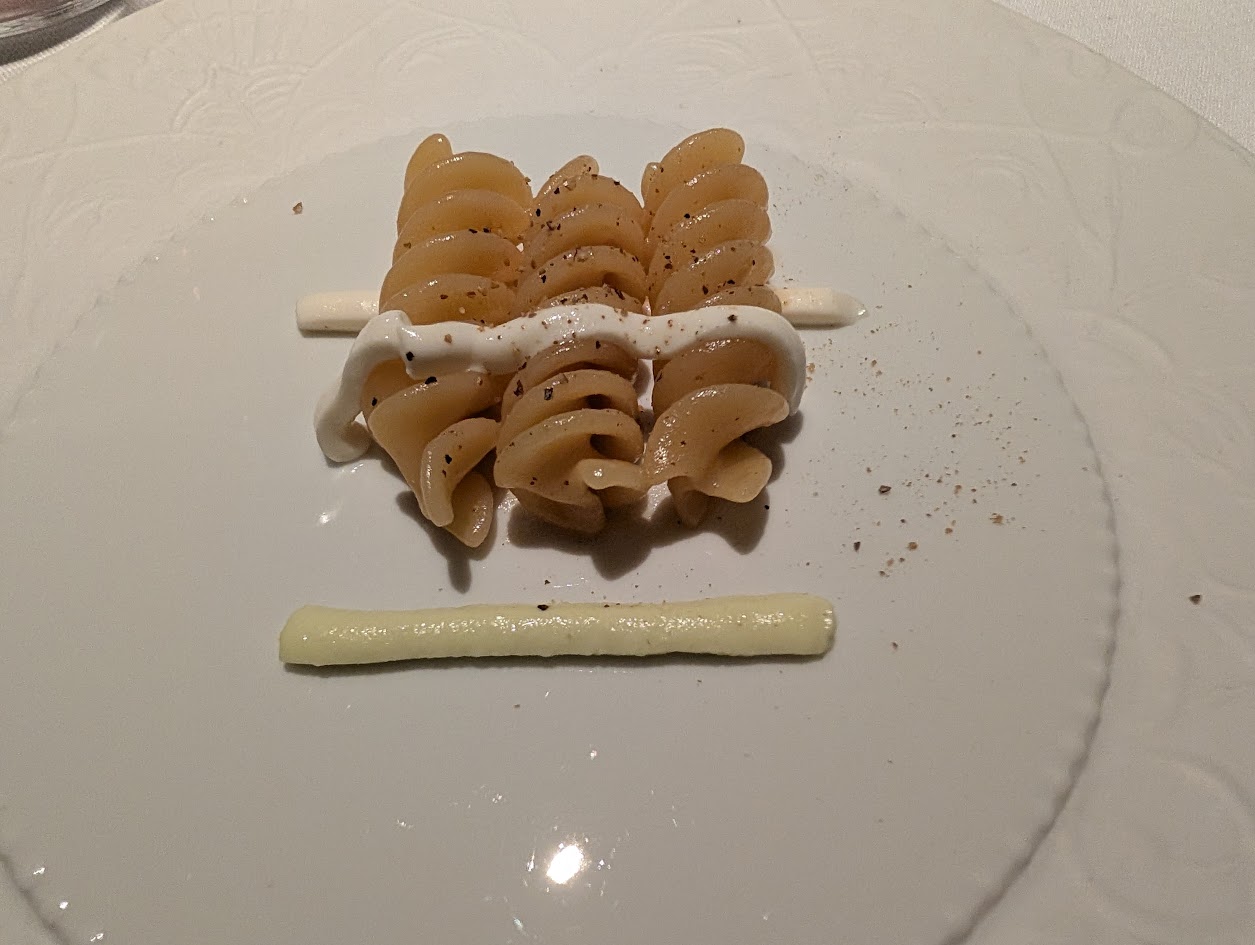
Another milestone of his menu is a dish of dry pasta, the liar tortellini without filling that evoke a family inheritance of the Emilian foothills, the hills between Modena and Bologna, where in period poverty, when the meat was scarce, empty tortellini were prepared, only with flour and eggs, to simulate the classic filling full of overflow and Parmesan. Marchini reinterprets this poor tradition in a sustainable and innovative key that leaves the most refined palates amazed.
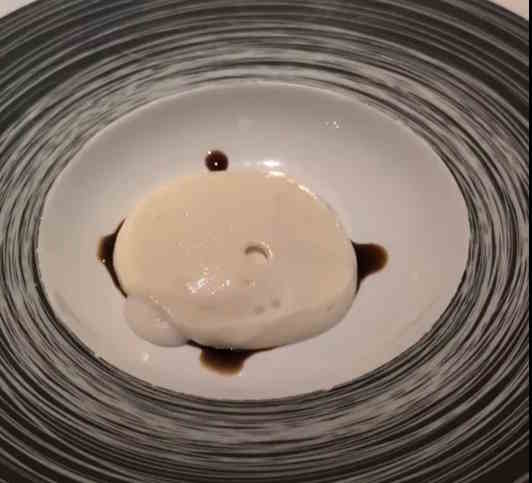
The peak of our experience was the dessert, a dish that has taste and courage: black garlic. An emulsion of fermented garlic for about thirty days, which Marchini serves in small pieces behind the dish and as a base for a sauce that covers a soft coconut cream wrapped in chocolate. A bold sensory experience, where tropical sweetness clashes and merges with the spicy and complex notes of fermented garlic. A final touch that perfectly embodies Marchini’s approach: by combining humble and bold ingredients with complex techniques to create something unexpected and wonderful.
The vegetarian turning point: a natural evolution
One of the most fascinating aspects of Marchini’s cuisine is his approach to the vegetable kingdom. It is not a choice of trend or an imposition, but of a profoundly natural, almost unaware evolution. Marchini explained to us that, over the years, his brigade and he himself found themselves creating more and more vegetarian and monothematic dishes, discovering the wealth and infinite variety of a culinary world often underestimated. It is a path that he defines “natural, not forced”, born from the simple will to explore and enhance ingredients that could really give a lot.
Forget the idea of the vegetarian dish as a simple outline or alternative of falling back: in the hands of Marchini, vegetables, herbs and legumes they become the real protagonists, capable of expressing complex and satisfying flavors, without the need to resort to elements of animal origin. It is the living proof that excellence, creativity and sustainability can travel together, offering a gastronomic experience that is at the same time good, ethical and respectful of the earth.
The future is now: awareness in the kitchen
Luca Marchini has shown that starry cuisine can also be a sustainability manifesto. That you can be creative, innovative, maintaining a profound respect for the earth that gives us its fruits. His cuisine is not only a pleasure for the palate, but also an invitation to reflect on our choices, to ask us where our foods come from and how they were produced. The meeting with him was an important lesson: the real excellence lies in balance, awareness, in the ability to look to the past to build a better future.
They could also be interested in:
