
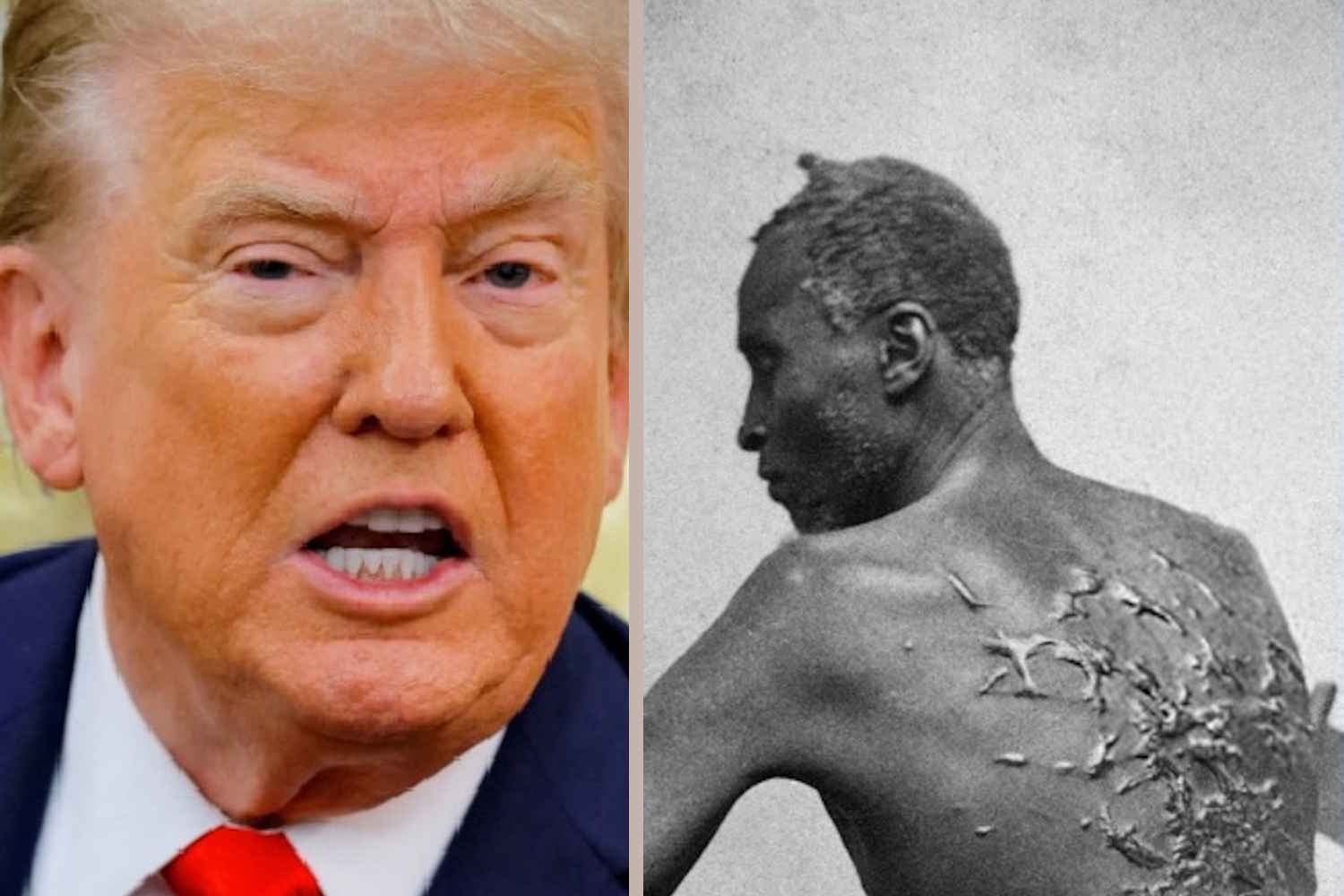
A body marked by bruises, scars and wounds. It is the image of a man that history knows with the names of Peter or Gordon, Schiavo della Louisiana, immortalized in 1863 in one of the most powerful and upsetting photographs of the 19th century: “The Scourged Back ”.
That photo, reproduced and widespread in thousands of copies during the American civil war, contributed to shaking consciences in the north of the United States, where much of the population had never seen the horror of slavery with its own eyes.
For many it became the tangible proof of the systematic violence on which that system was held, strengthening the abolitionist cause.
A story of escape and resistance
According to the testimonies of the time, Peter managed to escape from a cotton plantation in Louisiana in 1863. After days of walking, dirty and with tangs clothes, he reached the lines of the Union, thus obtaining the freedom guaranteed from the proclamation of emancipation of Lincoln.
His back, tormented by the lashes inflicted by the supervisor, forced him to bed for months. Precisely those scars, however, became the most powerful complaint. In a photographic study by William D. McPherson and J. Oliver three versions of the portrait were made, with the third – the one that showed more clearly the profile of the man – destined to become an icon of the fight against slavery.
Photography that became “viral”
Printed as “cards of visits”, a relatively cheap type of small -format photography commonly sold, shared and exchanged by the soldiers of the civil war, the image spread rapidly. It was sold, shared, sent by mail: a sort of “social media” ante litteram.
Abolitionist newspapers such as The liberator They used it to disassemble the propaganda of the masters of slaves who described that system as “human”. In July 1863, even the popular magazine Harper’s Weekly He published the portrait, bringing it to an even wider audience.
As historians explain, it was not so much the story of Peter’s escape that hit the public opinion, as the visual force of that image: a devastated back who shouted more than a thousand words.
A photo that continues to speak (and that Trump wants to censor)
After more than 160 years, “Scourged Back” continues to be exposed in American museums and universities, and remains a point of reference for those who reflect on the memory of slavery and its inheritance. But not everyone likes.
The image was taken up by the artist Arthur Jafa in his sculpture Ex-Slave Gordonappeared in 2020 on the cover of New Yorker In a collage dedicated to George Floyd and inspired the famous shot by Viola Davis for Vanity Fair. In 2022, Peter’s story was also told in the film Emancipation With Will Smith.
In recent years, however, photography has returned to the center of the controversy and now the Trump administration has started the removal of explanatory signs and entire exhibitions considered “non -compliant” or “denigration”, following the executive order signed in March and entitled Restoring Truth and Sanity to American History.
The measure affects exposures dedicated precisely to crucial themes such as slavery, the spoliation of native populations and climate change. And among the materials involved there is also that famous nineteenth -century photograph The Scourged Back.
Because “Scourged Back” still counts today
That photography is not just a historical document: it is a universal warning. It represents the memory of millions of people reduced to slavery and the visual test of the systemic violence that has marked American society for centuries. As scholars recall, confirms the power of photography to become a tool of justice and social change. And it reminds us that the past cannot be deleted or “embellished”: it must be included in its hardness, because only in this way can we build a fairer future.
Telling images like “Scourged Back” means not forgetting. It means recognizing that today’s rights and freedoms have been conquered at a high price, and that historical memory is a collective duty.
