
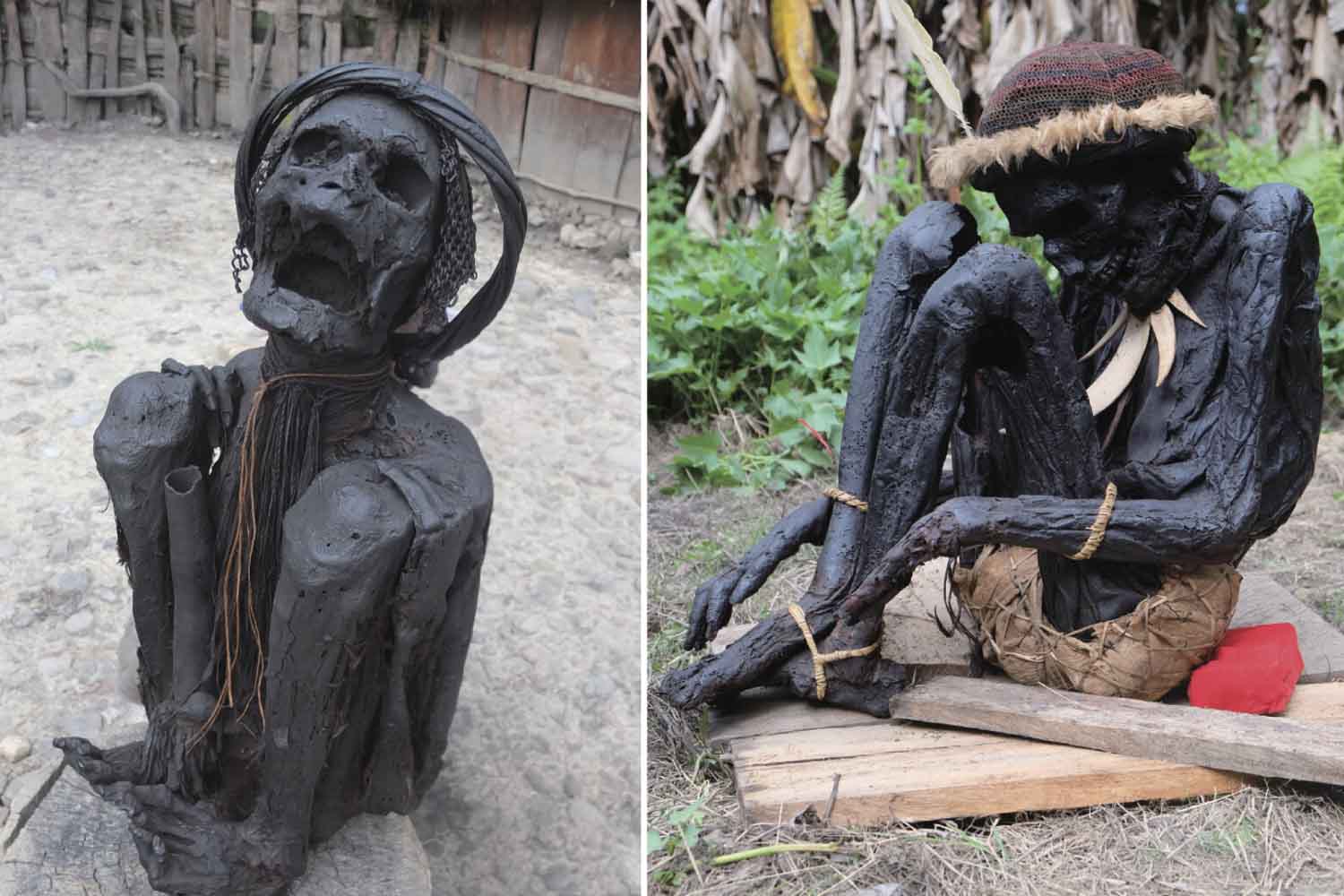
Let’s forget, for a moment, pyramids and pharaohs. The history of mummification may not start in Egypt at all, but much earlieron the other side of the world. A new study conducted by a group of researchers from theAustralian National University brought to light the oldest mummies ever uncovereddating back to About 12,000 years agoor to the period pre-neolithic.
And the real surprise? They are not natural mummies, but intentionally smoked With a slow, complex and extraordinarily lasting ritual process.
The results of the study, published in the magazine Pnasradically change our idea on when and where mummification was born: no longer a phenomenon limited to a few civilizations of the past, but one widespread, elaborate and much older funeral practice of what we believed.
The researchers analyzed 69 individuals
The team studied 69 human remains from 54 burials scattered between the Southern ChinaThe Northern Vietnam and theIndonesiadated between 4,000 and 12,000 years ago. These burials belonged to communities of hunters-cacogliersand the techniques used to analyze the bones – such as the X -ray diffraction and the Infrared spectroscopy – They revealed an impressive fact: almost 90% of the champions had signs of heat exposurebeyond traces of soot And cuts compatible with body drainage techniques.
The treatment reserved for the bodies was very precise: they came seats in a fetal position, tiedand then exposed to low fires For long periods – weeks or months – Until the body was completely smoked. Only later they were buried.
This type of mummification is surprisingly similar to that still practiced by some populations of the New Guinea Highlandslike i Daniwhich continue to preserve the bodies of the ancestors by smoking them slowly. A cultural bond, this, which according to the researchers would have remained for millenniaovercoming enormous geographical barriers.
An ancient ritual, shared and surprisingly lasting
To hit is not only the age of the finds, but the complexity of the ritual and his spread. The study suggests that this form of mummification, but a tradition widespread in a huge area that goes fromNortheastern Asia up toWestern Oceania and toAustralia.
The similarities between the Asian remains and the funeral practices of the Australian and Papuan indigenous peoples are not limited to the methods: Genetic and cranio -fack analysis They show a clear relationship between these populations. In other words, the cultures that smoked their deaths 12,000 years ago They shared biological and cultural traits with the companies that still today, in some isolated areas of the world, carry on this rite.
Smoking mummification is one of the strongest tests of long -term cultural continuity between Asia and Oceania.
And it is not a simple archaeological curiosity: it obliges us to rethink how human beings have moved in the past, as they have traveled, shared knowledge, practices and visions of the world.
