
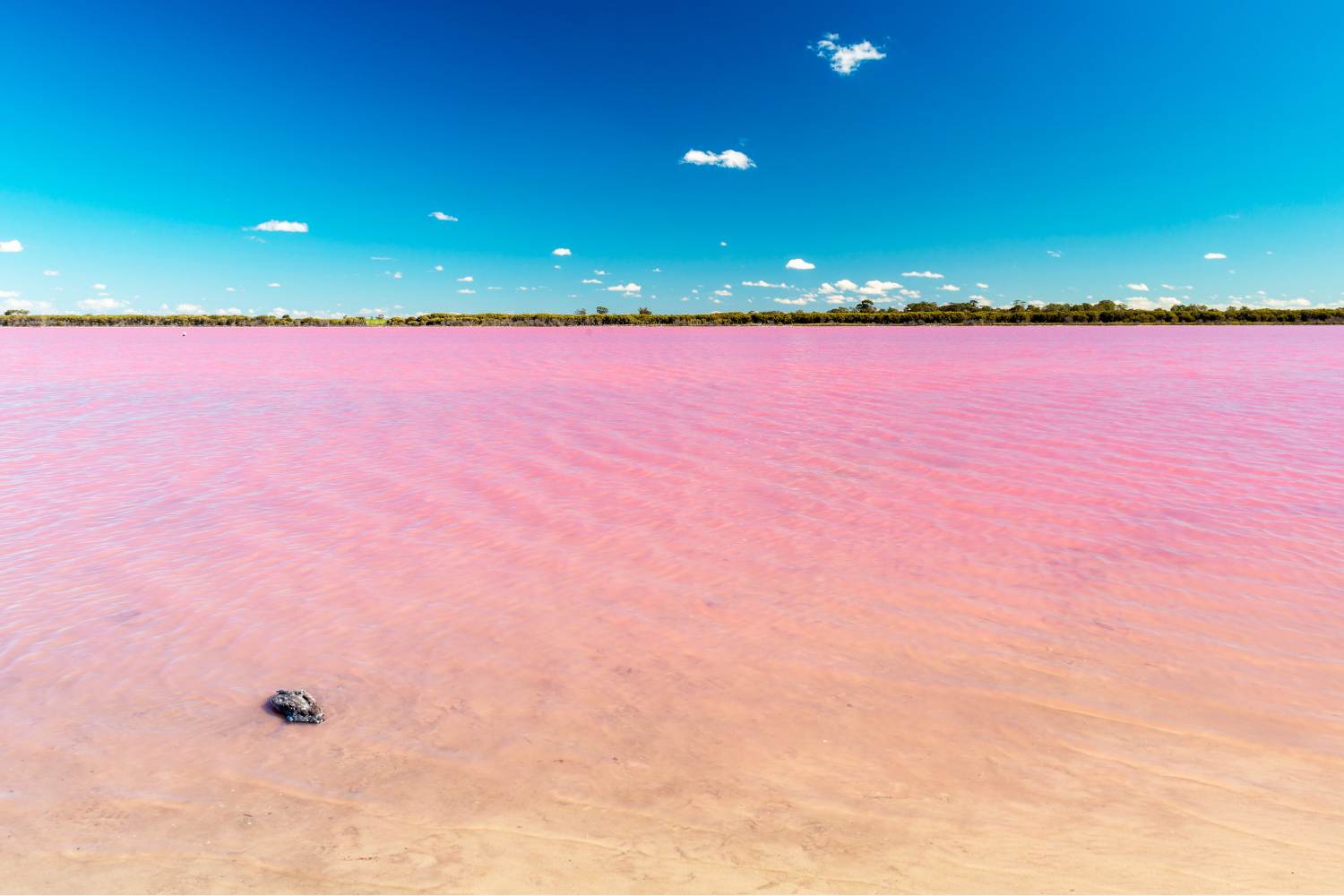
Two hours of car from the capital Astana, in the Akmola region, one of the most extraordinary natural wonders on the planet is hidden. We are talking about Lake Kobeituz, also called the Rosa lake of Kazakhstan, a basin that paints the Kazake steppes with shades ranging from pale pink to intense crimsis, a real show of nature that seems to have come out of another world.
The small salted water mirror, which lies 253 meters above sea level, owes its color to the alga Dunaliella saline. This explains why: when the temperatures rise and the water evaporates, the concentration of salt increases drastically and the seaweed responds by producing carotenoids, pigments that transform the water into a palette of impossible colors. The same phenomenon occurs in very few other places in the world, such as in Australia and Kenya.
View this post on Instagram
The name of the lake tells its story: in Kazakh “Kobei” means multiplying and “tuz” rises. A name that the local inhabitants have chosen to describe the abundance of white crystals that covers the banks when the water retires. Know that the waters of the Kobeituz just reach the twenty centimeters of depth and those who cross them has the feeling of walking on pink ice, with the salt that stick to boots as fresh snow.
The crisis of 2020
The 2020 summer marked a dramatic turning point for the lake. During the months of Lockdown, while most of the tourist attractions remained closed, the Kobeituz became viral on social media and thousands of people began to crowd the normally deserted shores of the lake, transforming it into the most photographed attraction of Kazakhstan.
The situation is rapidly degenerated: some visitors brought cars directly to the lake bed for spectacular shots, others filled buckets and bags with salt and sludge, convinced by the fake news that circulated online according to which these elements could have cured the Covid-19. On July 18, an Instagram user denounced that more than half of visitors collected the salt that creates the pink glow, ignoring the signs that warned how this behavior could make the lake lose its unique properties for over fifteen years. In the face of what happened, the local authorities have seen themselves forced to close access to the lake to protect the delicate ecosystem.
The rebirth and the tourist boom
After years of closing, the Kobeituz has finally reopened to the public with new rules and more severe controls. Visitors can finally admire this wonder again, but with the awareness that every gesture counts for its conservation. It is forbidden to collect salt, mud or sand and even the smallest refusal can alter the natural balance of the lake.
The reopening coincides with a golden moment for Kazakh tourism, given that in the first half of 2025 the country welcomed over 7.5 million visitors, 600 thousand more than in the same period of 2024. The government aims to reach 15 million tourists per year by 2029, with an estimated turnover of 10 billion euros.
Investments in the sector grew by 20% in 2024, reaching 1.6 billion euros per year. One hundred new hotels opened doors and tourist revenues have increased by 30%. The new Nomad Visa, which allows citizens of 48 countries to work and travel to Kazakhstan for a year, is attracting a new generation of digital visitors.
Future perspectives
The country is also focusing on UNESCO recognition. He currently hosts sixth assets sites-Khoja Ahmed Yasawi’s mausoleum, the petrolfi of Tamgaly and Sarnyarka, the Western Tien-Shaan, the deserts of Turan and a stretch of the silk streets, known as a corridor Chang’an-Tianhan-and quite other eleven sites are candidates for 2026. As the Prime Minister said Olzhas Bektenov: “These are our national treasures. We must transform them into tourist attractions, so that the world can know them”.
Kobeituz lake perfectly represents this new philosophy: a natural treasure that must be protected and shared with respect. The challenge is to maintain the balance between the desire to show the world this wonder and the need to preserve it for future generations.
Don’t you want to lose our news?
