
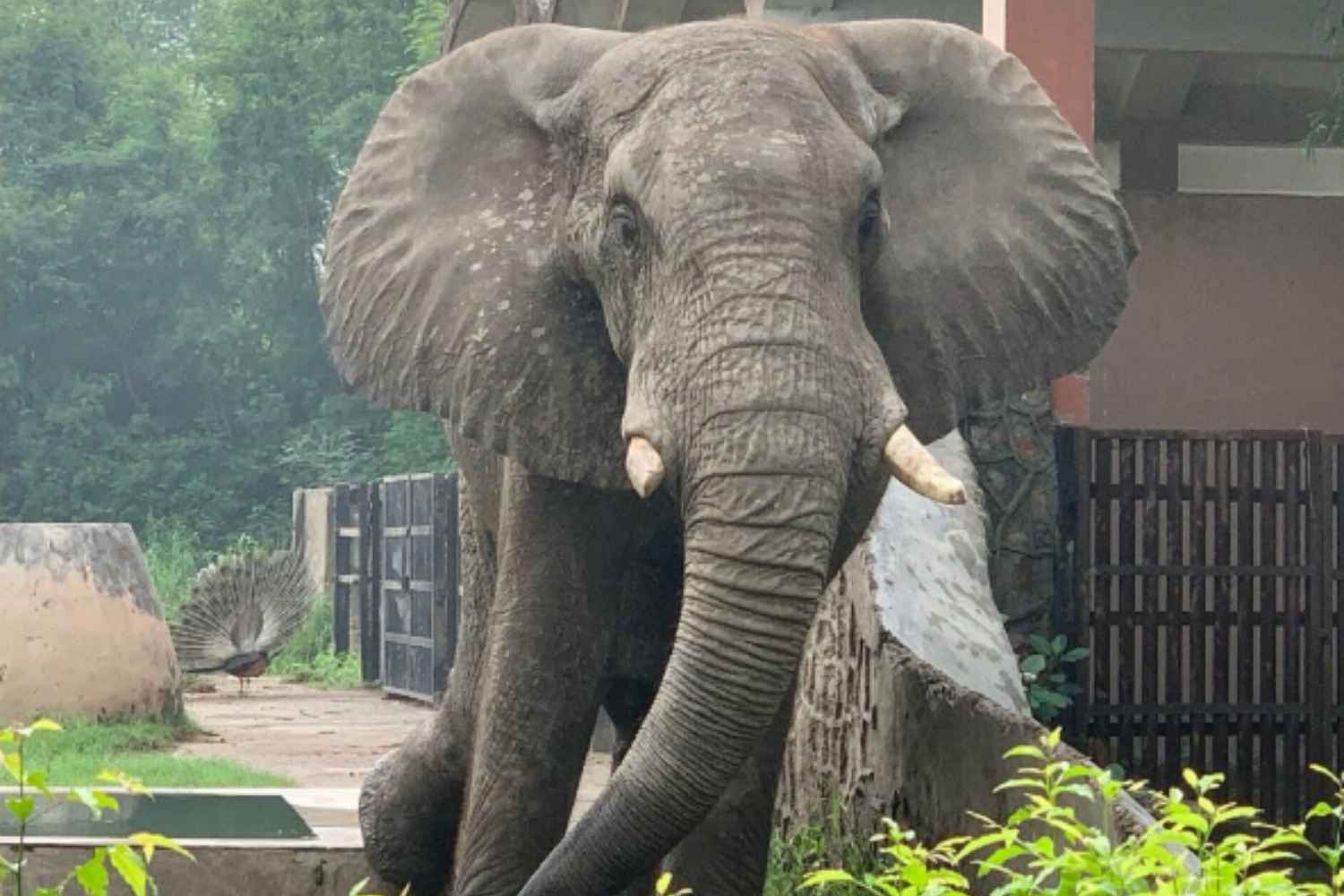
Shankar, the last African elephant present in the Delhi zoo, died at the age of 29. In the morning he had refused the food and after a few hours he collapsed. The director of the zoo, Sanjeet Kumar, announced that an investigation has been started on the cause of the death, underlining how no signs of illness or abnormal behaviors had been recorded until the same morning.
The event aroused great resonance, not only for the young age of the animal, but above all for the living conditions that characterized the last twenty years of the pachyderm. Arrived in India in 1998 as a diplomatic gift from Zimbabwe, Shankar was initially accompanied by another African elephant.
After the death of his partner in 2001, the pachyderm was temporarily transferred with Asian elephants, but coexistence did not work due to aggressiveness between species. As a result, Shankar has been maintained in isolation, a condition that has deeply influenced his well -being and behavior.
Petitions and regulations ignored
Despite the 2009 federal legislation forbids to keep an elephant alone for more than six months, Shankar has remained isolated in his new enclosure from 2012 until his death. In 2021, a petition presented to the upper court of Delhi asked for the transfer of the animal to a sanctuary with other African elephants. The Court, however, postponed the decision to the competent committee, without guaranteeing an effective change.
The difficulties in finding a partner for Shankar were linked to high costs, complex regulatory procedures and animal welfare issues. The other African elephant of the town is located in the Mysore Zoo, in the state of Karnataka.
Nikita Dhawan, founder of the NGO Youth for Animals, claimed that this end was easily predictable and is inexplicable in other ways if not solitude since Shankar had no serious health problems and was too young. The activist Gauri Maulekhi underlined the years of institutional apathy and negligence, asking for a real assumption of responsibility for the protection of animals in captivity.
Shankar’s death highlights once again the critical issues of the management of wild animals in the zoo. Shankar has been a symbol of the silent suffering of animals in captivity for years. Its history can only invite us to rethink the role of the zoo, to encourage natural sanctuaries and promote policies that put the well -being of animals in first place, instead of exploiting them as attractions or diplomatic tools.
View this post on Instagram
 (@youth_for_animals)
You may also be interested in:
