
The Smart City Index 2025 of the IMD – International Institute for Management Development He certified an alarming figure: no Italian city is among the first fifties in the world. Out of 146 metropolises analyzed globally, Italy is completely absent from the top positions.
Rome suffered a dramatic collapse, falling to 139th place. Milan stops in the 97th, while Bologna retreats until 83rd position. A result that highlights a worrying structural delay on innovation and urban sustainability.
The international comparison that hurts
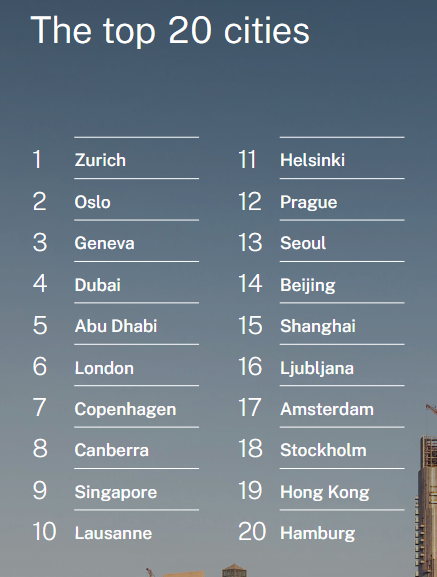
The world podium speaks European: Zurich in first place, Oslo Secondo and Ginevra third. Seven of the ten cities at the top of the ranking are located in Europe, but Italy remains completely out of it.
The success of the cities of the Middle East is even more significant. Dubai conquers the 4th position and Abu Dhabi the fifth. These metropolises have invested massively in cutting -edge digital infrastructure, intelligent public services and sustainable mobility.
Singapore also firmly maintains the top 10 in 9th place, confirming the smartest city in Asia. In the meantime, American cities record a significant decline: no US city is present in the top 20 for the second consecutive year.
The structural problems that brake Italy
The critical issues that condition Italian cities have been known for years: vehicular traffic, air pollution, unbelievous governance. To these are added territorial inequalities, difficulties in retaining talents and poor ability to attract investments.
While international metropolises such as Zurich and Dubai invest in predictive mobility based on the artificial intelligence and automated sanitization of urban spaces, Italy is braked by a fragmentary and not very far -sighted urban vision.
The strengths of the top 10 cities
The metropolises that dominate the world ranking have winning common strategies. Singapore stands out for the effectiveness of hygienic-sanitary services and public safety. Abu Dhabi and Dubai, new entries in the top 10, excel in medical services and in the availability of urban green spaces.
Copenhagen receives high assessments for recycling services and city safety, while Canberra stands out for air quality. London, while remaining in the top 10, shows critical issues on public safety.
The message is clear: the future of cities lies in their ability to act as autonomous economic and social centers in an increasingly fragmented world.
Download the complete report here
