
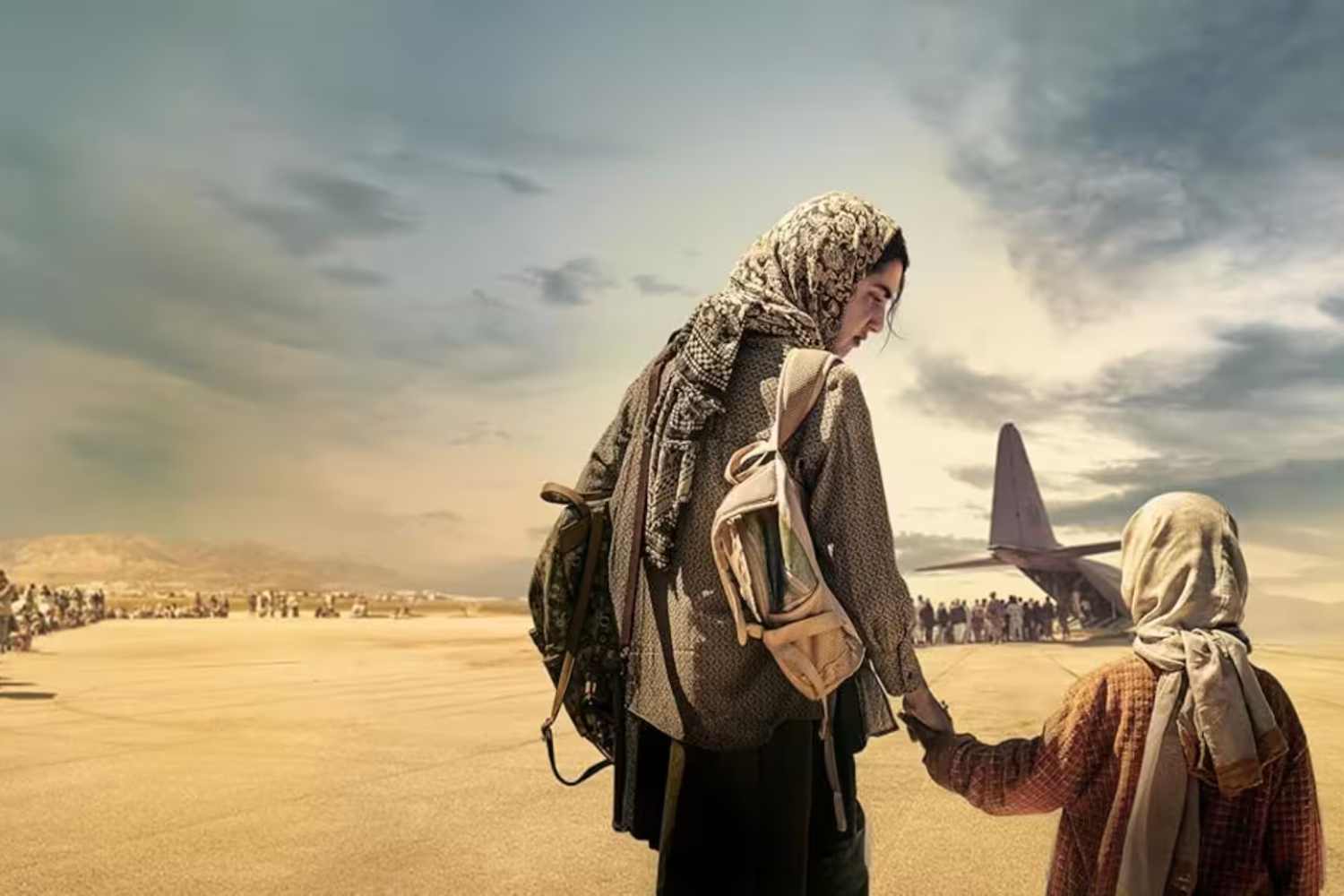
The miniseries Kabulaired on Rai 3 and available on Raiplay, brings one of the most dramatic episodes of recent history to the small screen: the western retreat from Afghanistan and the return to power of the Taliban in August 2021 until the dramatic attack on Kabul airport. Six intense episodes, unfortunately passed to the most to the most, which intertwine historical reconstruction and fiction, with a realistic cut and a rhythm that returns the tension of those days.
We are not in front of a classic action series: here there are no superheroes or international conspiracy to be misfortune. There is the fear, chaos and despair of those looking for an escape route in view of the arrival of a new period of terror. There are families divided and destroyed, children who remained without parents. But there are also diplomats forced to look at reality for what it is: not everyone can be repatriated. A series to look at and concern because it is a symbol of a collective defeat and a still open wound.
The plot: five days of extreme choices
The story follows the Nazary family, divided between those who want to escape and those who choose to resist. Zahara, a magistrate who investigated the Crimes of the Taliban, becomes a direct target. Her husband Baqir tries in every way to protect his children: Fazal, the army soldier, sees his unity dissolved in front of him and finds himself involved in secret missions; Amina, a young doctor, remains in the hospital to help a patient, notorium, until the last minute before realizing that for a woman there is no future in a country under the aegis of the Taliban.
Next to them, the figures of European officials and diplomats also emerge, such as Giovanni, a young Italian overwhelmed by the responsibilities and “made to become” quickly and furious console of the embassy after the escape of diplomats, true, agent of the German services that returns to Kabul, facing all the psychological postmates of a attack to save a key figure, and Gilles, responsible for French security struggling with thousands of Afghan citizens who are looking for a refuge France. In a context of desperate evacuations, betrayals and attacks, each choice has a very high cost.
The international cast
The cast stand out Lina El Arabi, in the role of Zahara, and Hamza Meziani in that of Baqir, with intense and credible interpretations. Among the European faces we find Sylvie Testud (Vera), Louis-do de Lencquesing (Gilles) and the Italian Andrea Sartoretti in the role of Giovanni. The chorality of the actors, coming from multiple countries, reflects the nature of production: a European co -production between Rai, France Télévisions and Zdf, which shows how the story of the present can and should be shared.
A fiction for nothing sweetened
The series, shot in part in the former Athens airport to faithfully reconstruct the evacuation scenes, shows the collapse of a system and the fragility of western institutions. He does not try to sweeten the pain, but returns it to its more naked form: gates that close in the face, convoys that leave leaving back entire families, expected infinite expectations in front of the airport entrances.
The result is a choral narrative, far from the patriotic rhetoric and closer to the daily experience of ordinary people. There is no spectacularization, but rigor. And precisely this narrative choice causes that Kabul He deeply affected anyone who looks at it.
The drama experienced by women
Watch Kabul It also means remembering what Afghan women – to whom the series is dedicated – have lost in a moment with the return to power of the Taliban. Rights conquered with difficulty have been deleted in a few days: closed schools for girls, prohibited universities, denied work, personal freedom canceled. The women were reduced to silence, excluded from the public space and forced, in many cases, to flee.
The character of Zahara, courageous magistrate, is the symbol of those professionals who have seen each other remove everything: role, dignity and security. Amina, on the other hand, represents the new generation, the one who dreamed of a different future and found himself in front of a very different reality. Kabul It is not only a TV series, but also a warning: television can turn on the spotlight on those who no longer have a voice today. Telling these stories means not forgetting.
In a panorama dominated by reassuring fiction and investigative plots, the choice to tell the Kabul fall with this tone represents a strong signal. The series does not indulge in easy dramatization, but returns the truth of an event that marked the geopolitics and the lives of millions of people. It is an invitation to look beyond our borders, not to forget who lives the war and has no voice to tell it.
You may also be interested in:
