
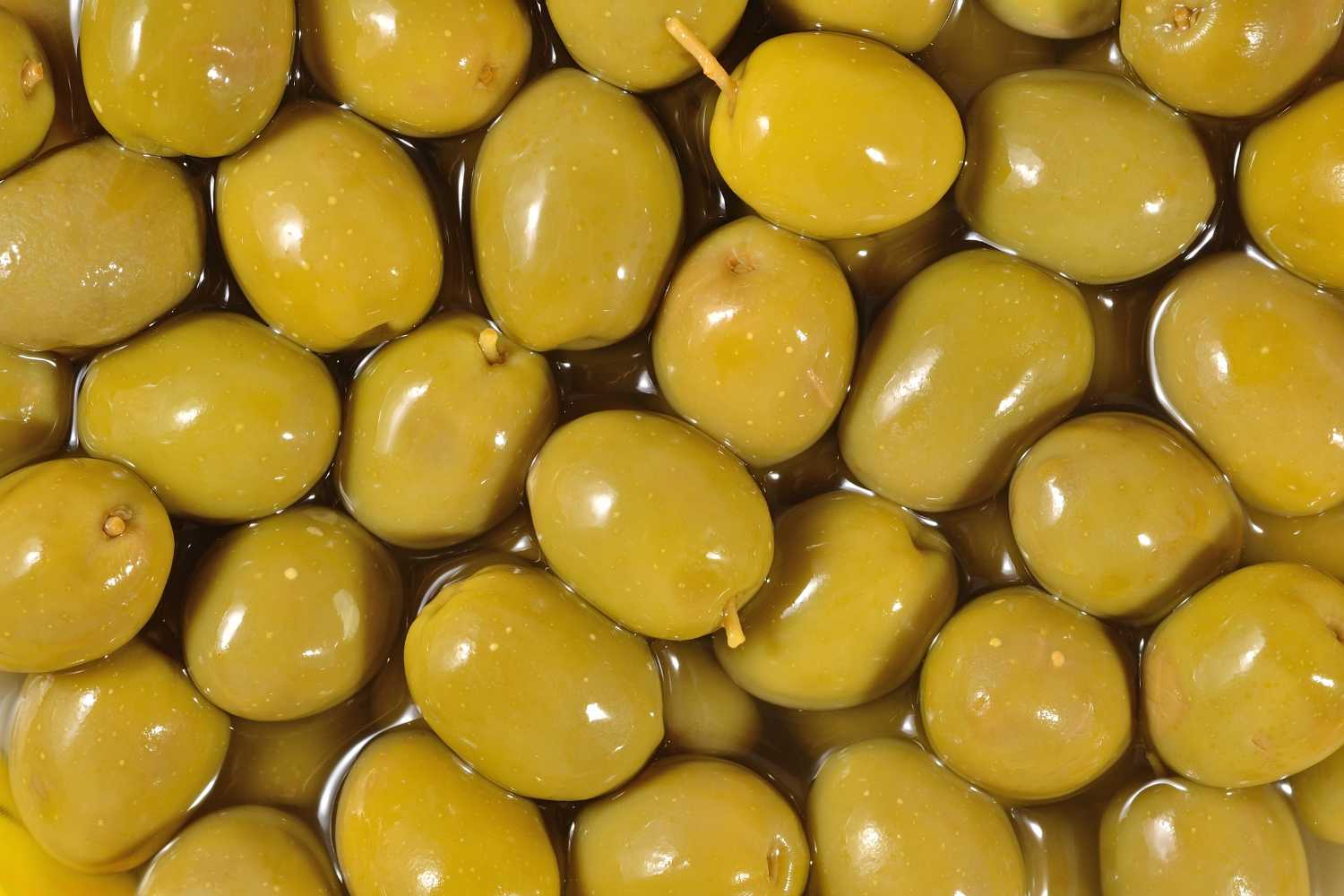
If you have the habit of preserving the olives you will surely have noticed, at least once, that thin whitish film that forms on the surface of the salami, a dairy veil that floats in the jar and that often triggers panic: have the olives go badly? Do you have to throw everything? The answer is no. That apparently suspicious patina actually hides a fascinating story of food microbiology.
A completely natural phenomenon
The white film that develops on the preserved olives is nothing more than a biofilm made up of lactic bacteria, mainly of the genre Lactobacillus. They are probiotic bacteria, of good ones, like those that are found in the intestine and help fight bad bacteria that cause diseases. These are the same microorganisms that make the fermentation of yogurt, sauerkraut and kimchi possible.
The phenomenon occurs when the olives come into contact with oxygen: the salary vinegar oxidizes and lactic yeasts, activated during fermentation, form a film on the surface of the olive. The process is particularly common when the ambient temperature exceeds 25 ° C, but also if the brine should contain little salt.
The protagonists of fermentation
Fresh olives are immaid because of the extremely bitter flavor, due to the presence of Oleuropein, and to make them edible you need a fermentation process that can last from three to seven months. During this period, lactic bacteria play a fundamental role and more than 40 species belonging to nine genres of lactic bacteria were described in the table olives.
The main actors of this transformation are Lactobacillus pentosus And Lactobacillus plantarumtwo species that dominate most of the fermentations. These microorganisms are not limited to eliminating the bitter taste, since they produce lactic acid that lowers the pH of the salami, in order to create an acid environment hostile to pathogenic bacteria.
An ally for health
White patina does not represent any danger to health. On the contrary, the bacteria that compose it have different beneficial properties documented by scientific research. A study published on Pubmed has shown that the probiotic strains successfully colonize the surface of the olives while maintaining populations between 6.0 and 7.0 log CFu/G throughout the fermentation.
Probiotics offer several advantages: they improve lactose tolerance, favor digestion, fight chronic constipation, enhance the immune system and can even reduce cholesterol levels. The fermented olives thus prove to be not only a tasty food but also a natural vehicle of probiotics, like yogurt or kefir.
How to distinguish biofilm from mold
We must know how to recognize the difference between the charity biofilm and the potentially harmful mold:
Manage the white patina
If the appearance of the white film disturbs you, you can easily remove it with a clean spoon: the underlying olives will remain perfectly edible. To prevent its formation, just add a teaspoon of vinegar on the surface of the brine after removing the biofilm: the acidity of the vinegar will prevent bacteria from forming the film again.
Another strategy consists in keeping the jar in the refrigerator. Low temperatures slow down bacterial activity and reduce the formation of biofilm. Remember to always keep the olives completely immersed in the brine: those that float on the surface are more subject to the development of yeasts and mold.
A millennial heritage
The fermentation of the olives is a practice as ancient as the Mediterranean civilization. For millennia, the man unconsciously exploited the action of lactic bacteria to transform an immaid fruit into a delicacy. Today science allows us to understand and appreciate a completely natural process.
The fermented olives represent a perfect example of how microorganisms can be our allies in the conservation and improvement of food. The next time you notice that white patina in the Olive Jar, remember that you are observing billions of bacteria beneficial to work, the same ones that have allowed our ancestors to enjoy this extraordinary fruit of the Mediterranean.
