
How many times do we turn on a fragrant candle, do we put a diffuser into operation or do we spray a deodorant for environments without thinking too much about it? However, what we often underestimate is that these fragrances release chemicals in the home air, some harmful or even carcinogenic.
A new French test of 60 Millions de Consommateurs He analyzed 20 products of five categories – incense, perfumed candles, sticks, electric speakers and spray speakers – and the results are worrying.
What really contain incense and perfumed candles
The test showed clear differences between fragrant candles and incense. The incense are the most dangerous: all four tested products (Sattva “Indian cedar incense”, Zara Home, Nippon Kodo and Bio-Ethic) release numerous proven or probable carcinogenic substances, including Formaldehyde, benzene, waters, nar naphilles, toluene, ethilbenzene and furfural, with concentrations well superior to the limits recommended by the health authorities.
In particular, formaldehyde varies from 42 µg/m³ for Sattva to 102 µg/m³ for Zara Home, values that far exceed the threshold recommended by the ANSES (10 µg/m³ as long -term average and 50 µg/m³ in two hours). While emitting relatively lower formaldehyde, Sattva stands out for the particularly high concentrations of benzene (123 µg/m³) and SITRENE (142 µg/m³), in addition to the emission of Naftalene.
To these chemical risks is added the issue of large quantities of microparticles (both PM10 and PM2.5), which can penetrate deeply into the lungs and irritate the respiratory tract.
The scented candles, on the other hand, are a less risky alternative: three products on four tested have obtained “good” for the risk of inhalation and their total Cov emissions are the lowest of the five categories of products analyzed. The microparticles produced are also significantly lower: while all incense have been evaluated inadequate, three candles obtained the “very good” score and the fourth, Maisons du Monde, received “good”.
It must be said, however, that fragrant candles still release carcinogenic substances but less than incense products. In detail:
In addition, the Esteban candle is approaching the safety limits for carbon monoxide emissions and nitrogen dioxide.
Scented speakers and sprays
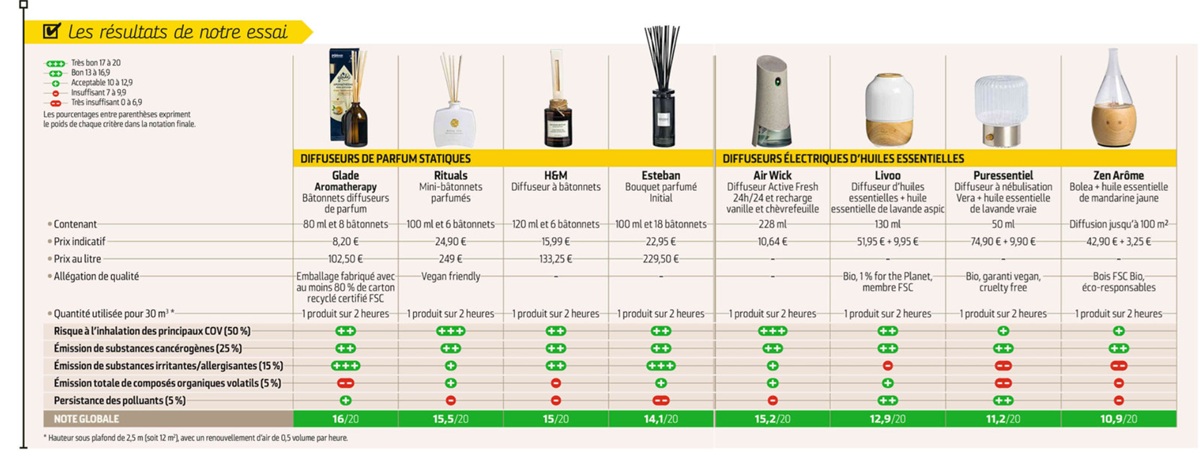
The diffusers without combustion represent in general the safest choice to perfume environments: they do not release combustion gases or microparticles, eliminating one of the main risks related to incense and candles. Among these, the static static speakers are distinguished by Cov’s emissions, which are low, and due to the risk of inhalation, evaluated from “good” to “very good”. For example, the rituals diffuser obtains maximum votes, while Gladde, Esteban and Esteban receive “good” or “very good” scores due to the low presence of irritating or allergenic substances.
Electrical speakers, in particular those based on essential oils, instead present greater risks. Some products release irritating and allergenic terpenes in high quantities, which increase the risk of respiratory irritation. Only Air Wick has achieved an “acceptable” evaluation for the issue of irritating substances, while Livoo was “insufficient” and PureSentiel and Zen Arôme “very insufficient”. This is above all due to the concentration of terpenes in the essential oils of lavender and mandarin, which are emitted at high doses in the internal air.
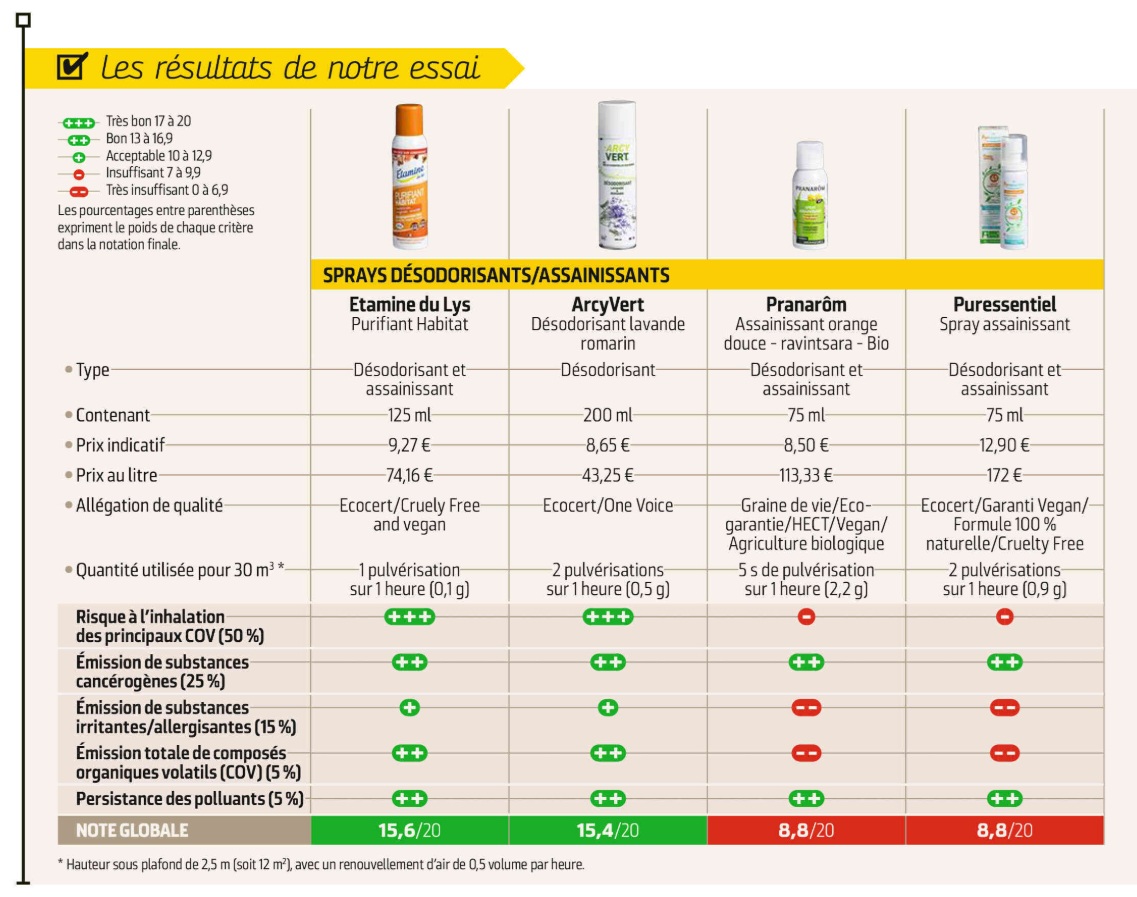
As for the scented sprays, all four tested products were based on essential oils:
Some of these sprays are presented as “sanitizers” or “purifying”, but the positive effect on the internal air is doubtful: while Arryvert and Etamine Du Lys have low Cov emissions and receive very good assessments, Pranarôm and PureSentiel release very high quantities of terpenes (1,145–1.600 µg/m³) and of total peaks (up to almost total. 3,500 µg/m³), being inadequate for respiratory health.
They should change the rules
Experts of 60 Millions de Consommateurs They ask for more severe and transparent measures to protect consumers from domestic pollution linked to fragrances:
