
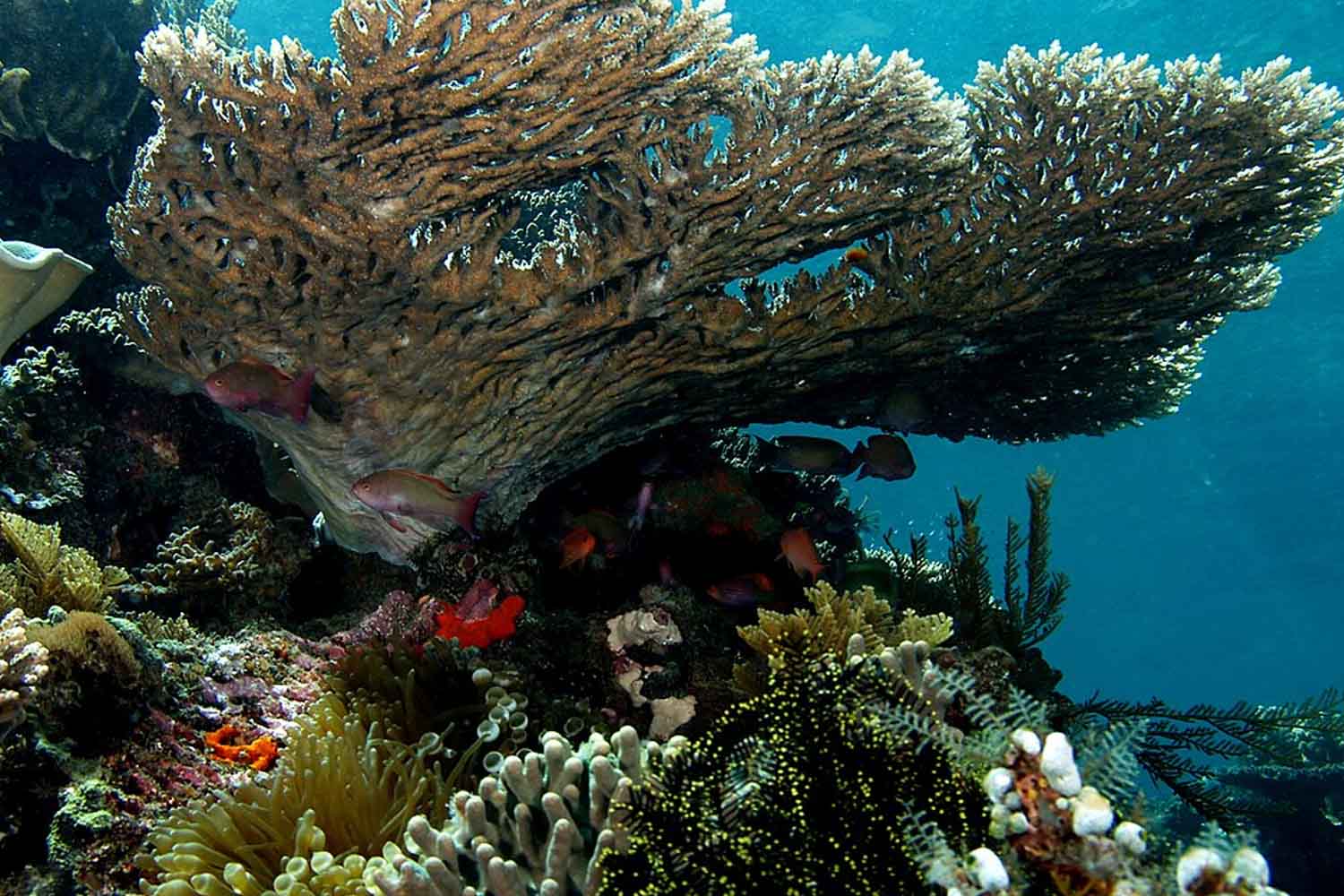
When you think of biodiversity, the mind immediately runs to the Amazon, green lung of the planet. Yet, under the surface of the ocean, an equally vital ecosystem is hidden, nicknamed “Sommersed Amazon”: the coral triangle. This vast marine area extends into the waters of Indonesia, Malaysia, Philippines, Papua New Guinea, Solomon Islands and Timor Est, and is now recognized as the richest casket of marine life in the world.
A natural laboratory with multiple species of corals of the entire Caribbean Sea
The coral triangle houses about 76% of the known species of barrier builders and over 37% of barrier fish species. Numbers that have no comparison. To make the idea: the Indonesian archipelago of Raja Ampat, located inside the triangle, houses over 550 species of corals, while the whole Caribbean Sea has about 70.
This extraordinary concentration of marine life makes triangle not only a paradise for marine and divers biologists, but also a crucial element for the balance of the planet. It is not just about corals and fish: in this area they live in sea turtles, whale sharks and hundreds of species still little known.
A precious, but fragile ecosystem
Like the Earth’s Amazon, the “Amazon of the seas” is also under pressure today. The main threats are superpeca, use of destructive practices such as dynamite and cyanide, extractive activities related to gas, oil and mines, in addition to the increasingly evident effects of the climatic crisis: acidification and overheating of the water.
It is not only biodiversity to risk. According to independent estimates, over 120 million people in the coastal communities of the area depend directly on these resources, and the number rises to 400 million if you consider the indirect subsistence means. The loss of marine habitats would mean, for them, losing food, income and safety.
Sustainable tourism as a key to conservation
Despite the difficulties, the coral triangle also represents a possible model of protection. In recent years, responsible tourism projects have been developed in collaboration with international organizations such as WWF and Coral Triangle Initiative. Dedicated portals present operators who respect environmental criteria and involve local communities.
Protecting this area does not only mean saving fish and corals, but guaranteeing cultural continuity to the populations that live in traditional fishing, like the last nomads of the sea. Their future, like that of the entire ecosystem, is closely linked to the ability to implement effective and shared conservation practices.
The coral triangle is now considered the beating heart of the oceans. His survival will depend on the decisions taken in the coming years: to reduce the pressure of industrial fishing, contain the emissions that heat the oceans and promote sustainable economies. It is not a remote and far heritage: the health of this ecosystem is connected to climatic stability, food safety and, ultimately, to our common future.
You may also be interested in:
