
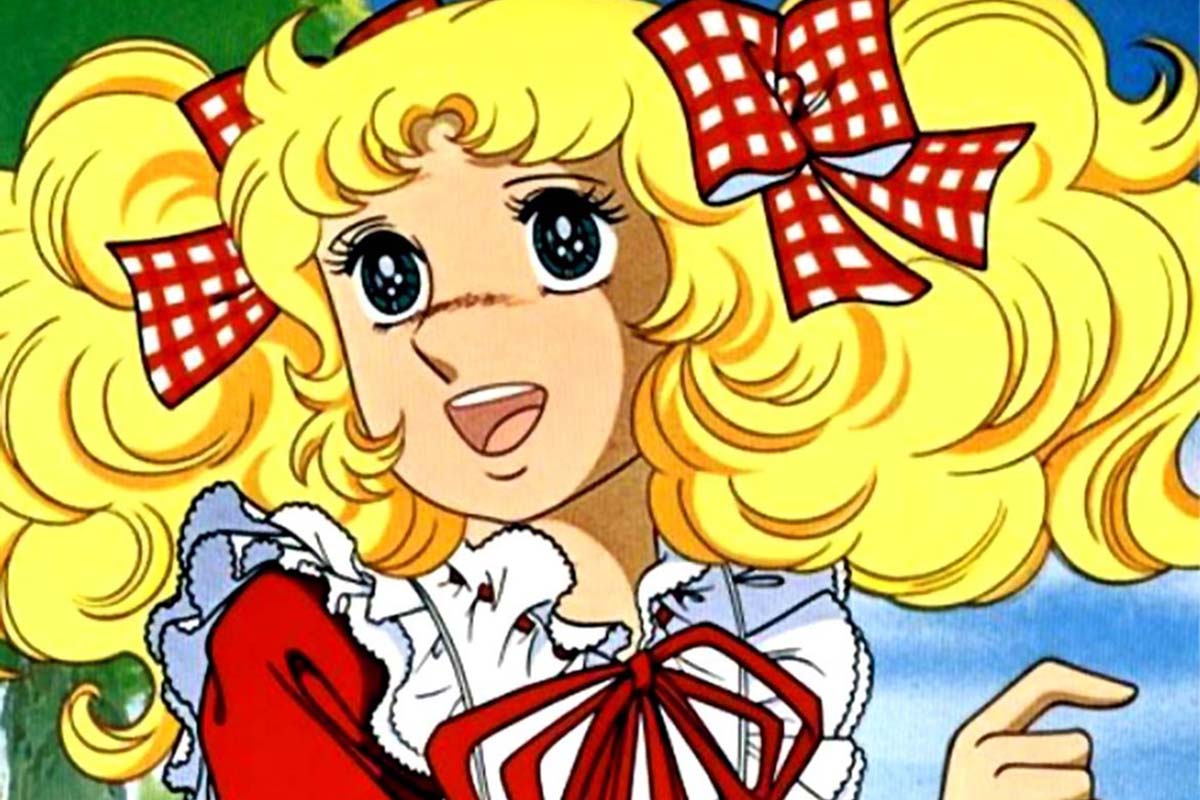
It was October 1, 1976 when the Japanese channel Asahi TV broadcast the first episode of Candy Candy, a cardboard that then 4 years later arrived in Italy, becoming one of the most loved and followed by an entire generation of children and teenagers.
For lovers of Candy and the unforgettable and beautiful Anthony and above all Terence (who made practically all the girls of the time fall in love), today is a day to celebrate. In fact, 45 years have passed since the first apparition of the cardboard so loved in the 80s that made his debut on October 1st when, in Japan, the first of the 115 episodes of which it is made up.
However, the Italian children had to wait 4 years before they could know the history of the Ortfanella Candy who made a whole generation cry and excite. To make Candy Candy was Kyoko Mizuki but the story, as often happens in Japan, is taken from a manga.
The arrival in Italy and the adaptation of the ending
When Candy Candy arrived in Italy in March 1980, it was immediately a success.
Candy has been able to conquer the young audience of our country thanks to its often tragic and always sentimental history. The protagonist is in fact a child without parents who grow up in an orphanage and then he is adopted by the aristocratic family of the Legan, in which, however, there is discomfort. From there begins his story made of loves, the first with Anthony (who however dies falling from the horse) and then with Terence, a young nonconformist known in London.
There are many other vicissitudes and dramas that must overcome Candy who, as you will all remember, chooses to become a nurse.
The Italian adaptation, curated by Giorgio Paolucci, detached himself in some aspects from the original Japanese version, in particular in the final. While in the Japanese version Terence remains with Susanna, the Italian ending was modified in dubbing, making Terence’s character reunited with Candy, to the delight of Italian fans. This change was designed to satisfy the public who, in the Italian context, was looking for a happy more romantic end, as confirmed by numerous interviews with the members of the cast and team of dubbing of that period.
The merchandising phenomenon
Candy Candy’s success was not limited to the television broadcast only. In fact, as pointed out in several historical articles in the sector (see for example the adventure of Italian comics, 2017), the series became a real merchandising phenomenon. During the 1980s, in fact, several objects such as stickers, notebooks, and even Candy dolls were produced. These products, often created without the direct supervision of Toei Animation, conquered the Italian market, fueling a consumer circuit linked not only to the animated series but also to the youth culture of the period. Candy Candy became part of the newspaper of many Italian girls, not only as a cardboard, but as a real parallel universe.
Crocerossin syndrome
But Candy also has in a certain sense “ruined” the generation of the 80s. Why? Precisely for his innate “Crocerossina” spirit, a sort of innate need to help others always and in any case, even at the expense of himself.
He showed us the image of a protective woman who completely dedicates himself to those who love, often putting aside their needs and sacrificing everything in front of men, as in the case of Terence, decidedly shady and problematic. Oh yes because, of course, the crocerossin woman does not dedicate her care to those who know how to appreciate them but to those who need more and are often the most difficult men.
This aspect of the series has been the subject of psychological studies, such as the essay The days of the youth of Silvia Rosi (1985), which explores how the female figures in the cartoons of the 80s have modeled the behavior and expectations of the young spectators. Although romantic and exaggeratedly, Candy Candy has fueled a certain vision of the woman as a “saving”, an ideal that she had, at an unconscious level, a significant impact on female culture in Italy.
It must be said that fortunately not all the girls have let themselves be influenced by this stereotype!
If you have come nostalgia for the times gone by you can always listen to the acronym …
