
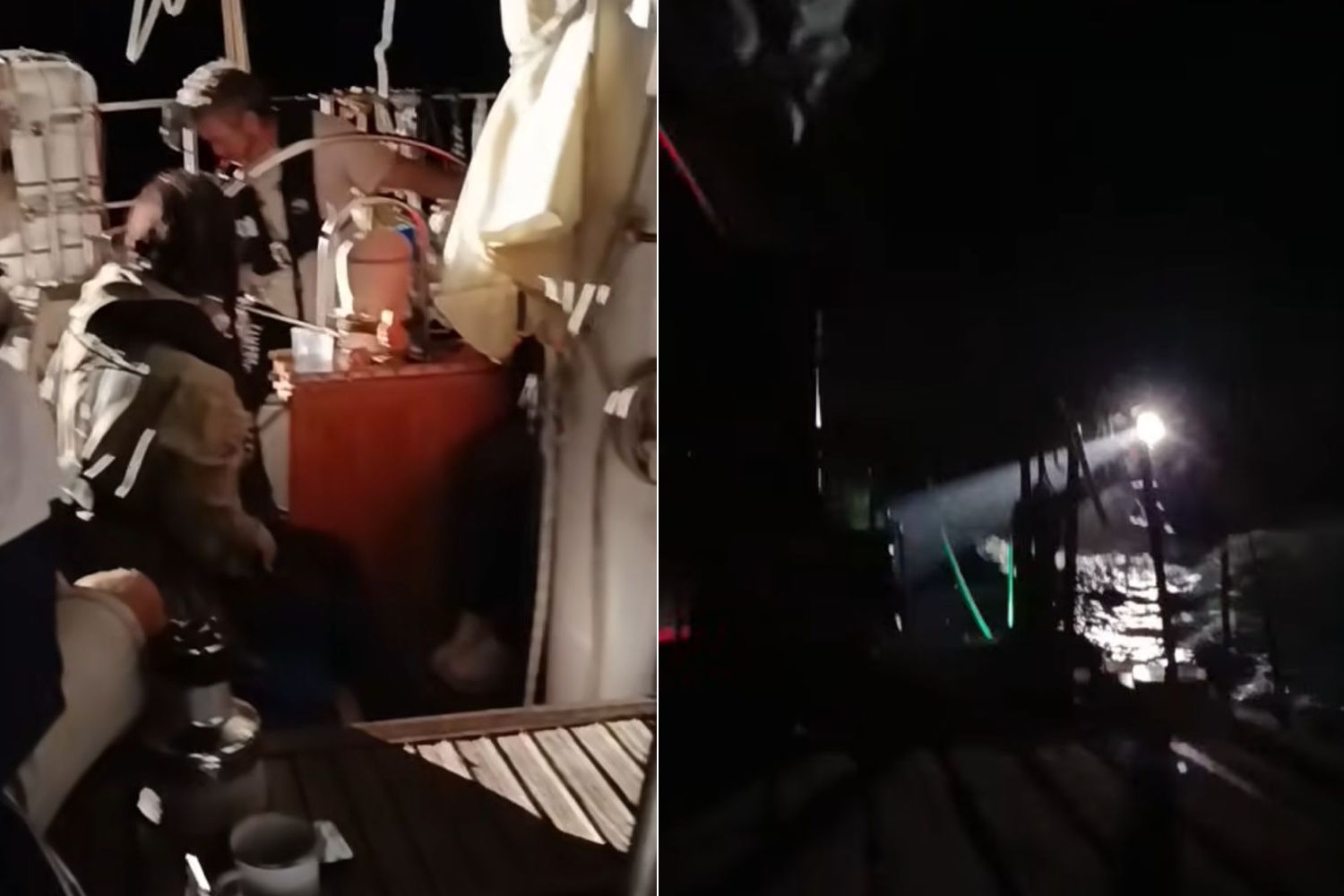
The Global Sumud Flotilla, the humanitarian mission consisting of over 40 boats and about 500 activists from over 40 countries, was intercepted by Israeli forces in the past few hours, while heading towards Gaza to challenge the naval block imposed by Israel.
The ships were stopped at about 70 nautical miles from the coast of Gaza, in international waters, and the activists were arrested and transferred to the Israeli port of Ashdod to be expelled.
But now what will happen to them?
What will happen to the arrested activists?
According to the Italian Foreign Minister, the Italian activists involved will be transferred to Israel and subsequently expelled. The Israeli authorities have confirmed the intention to proceed with the expulsion of all the members of the Flotilla, scheduled for 6 and 7 October.
Among the arrested, in addition to Thunberg, there are also 22 Italians, including Abderrahman Amajoupresident of Actonaid Italia, our colleague Lorenzo D’Agostino and Annalisa Corrado (MEP PD), Arturo Scotto (deputy of the Democratic Party), Margherita Cioppi, Michele Saponara, Paolo Romano, Saverio Tommasi and Romano Notarianni.
And then the Spanish deputy Pilar Castillejo and the former mayor of Barcelona Ada Colau, who denounced the arrest as “illegal” in a video released before losing contact:
View this post on Instagram
Israeli forces have used drones and disturbing technologies to prevent communication between flotilla ships, and some activists reported having been exposed to irritating chemicals during abroad.
The reaction of the international community at the Global Sumud Flotilla stop was surprisingly diversified and polarized, reflecting the different political and ideological positions of various countries and organizations. On the one hand, governments like the Spanish one expressed a strong solidarity with activists, believing that the humanitarian mission was justified and that their cause deserved international support. Spain, in particular, underlined the importance of promoting freedom of movement and the right to provide humanitarian assistance, despite the naval blockage imposed by Israel. On the other hand, countries like Italy have harshly criticized the mission, accusing it of not bringing concrete benefits to the population of Gaza and feeding further tensions in the region. According to these positions, the sending of the flotilla could compromise diplomatic efforts and peaceful solutions, instead of helping to improve the situation.
At the same time, human rights organizations and some legal experts raised concerns about the ways in which Israeli forces stopped ships and arrested activists. These groups have defined the operation as an act of piracybelieving that international waters must guarantee freedom of navigation, in particular for humanitarian missions, beyond regional policies. The violation of international norms, according to them, undermines confidence in compliance with human rights at a global level and asks questions about the justice of such an action.
The future of the arrested activists, in short, now seems to be marked by the expulsion, but the legal and political implications of this action raise numerous questions. This is an operation that not only questioned the legitimacy of the Israeli naval bloc, but also raises doubts about international law regarding humanitarian aid and on the protection of civil missions in international waters.
Sources: The Washington Post
