
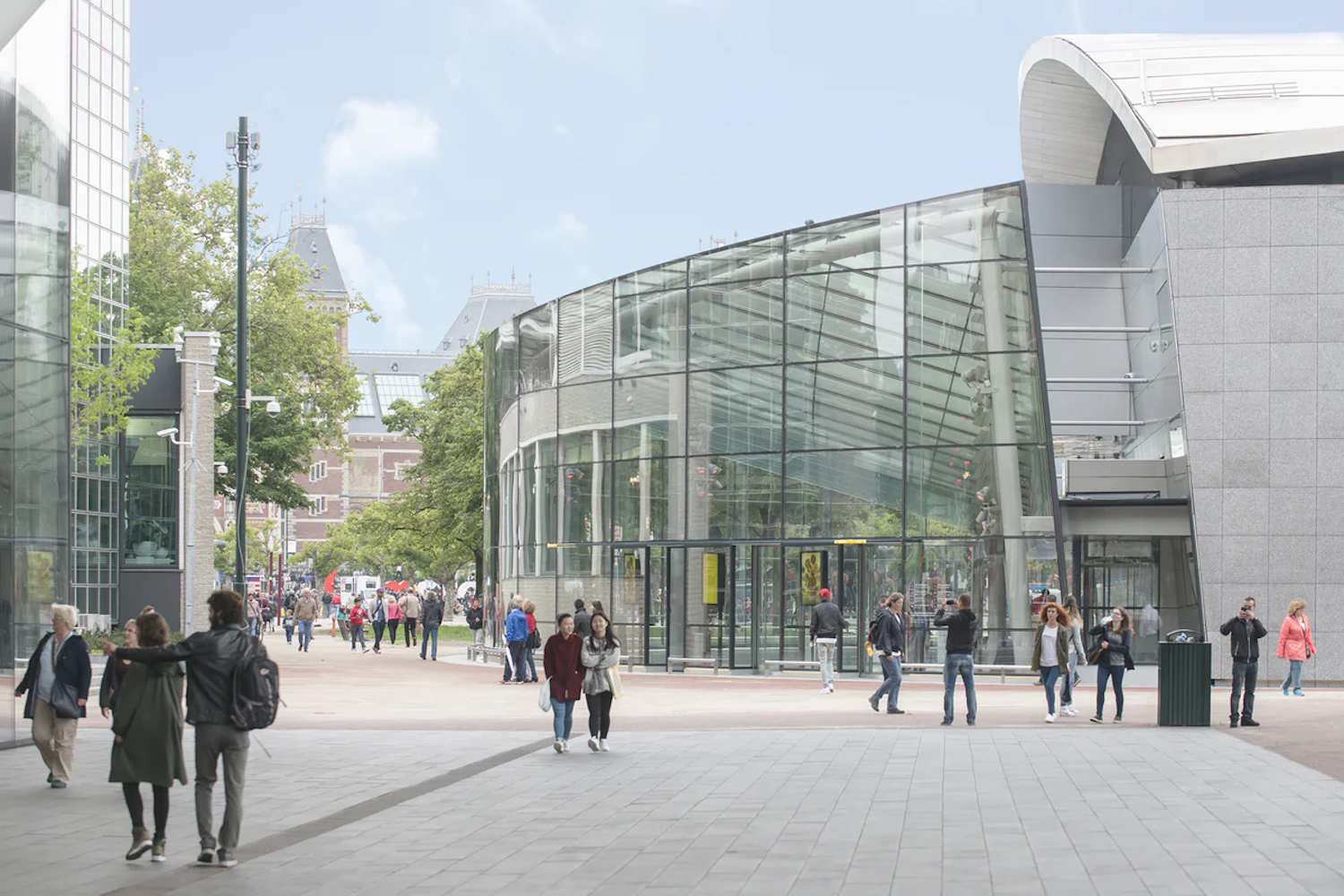
A controversy with the Dutch state on the funding and maintenance of the building would have jeopardized the Van Gogh Museum, home to the largest collection of the Flemish artist in the world.
This would be precisely the reason for the feral news that the museum risks definitive closure. And yes, there is also the question of theOverurism.
The museum said that the project could not go on unless the Dutch state honors an agreement from 1962 with Vincent Van Gogh’s grandson providing the necessary funds.
Because the Van Gogh museum could close
The Dutch government is not keeping the promise made in the historic 1962 foundation agreement with VW Van Gogh Msc., Nephew of the painter also known as “The engineer”, who leaves the future of the Van Gogh Museum in Amsterdam, says the director Emilie Gordenker on New York Times.
In practice, as stated in the museum note, after the death of Vincent Van Gogh, much of his collection remained within the family. VW Van Gogh and the Dutch government crawled an unprecedented agreement to prevent the collection from being dispersed. The family thus transferred the ownership of the entire collection – over two hundred paintings, five hundred drawings and twentieth century letters, as well as works of art of the contemporaries of Vincent who were collected over the years – to the Vincent Van Gogh Foundation, established specifically for this purpose.
In return, the Dutch state undertaken to provide sufficient resources for the construction and maintenance of a new museum in which the collection would have been preserved permanently and exhibited to the public.
Inevitable maintenance
The success of the Van Gogh Museum also has a downside: from its opening in 1973, it has attracted almost 57 million visitors, with a peak of 2.6 million people in 2017, but the building of the Museum owned by the Dutch government was not designed for such an turnout.
After more than fifty years of intensive use, the museum building no longer meets the current requirements. It is not up to terms of sustainability, safety and climate control.
The buildings are in bad condition, requesting huge investments to keep them safe and suitable for accessing the public – we still read most of the technical systems has reached the end of its operational life, it is conceptually obsolete and increasingly difficult to maintain due to the lack of spare parts. As a result, continuous maintenance is no longer feasible and the plants must be replaced.
In addition, the improvements of sustainability are mandatory for all Dutch public buildings starting from 2024, which requires extensive and expensive changes of the structures. Finally, important maintenance is needed to comply with legal and contractual obligations.
The Masterplan 2028
In addition, the Van Gogh Museum has commissioned an indispensable maintenance and sustainability plan of maintenance and sustainability, called sustainability Masterplan 2028. The start of the works is scheduled for 2028 and should last about three years. During this period, the museum will remain partially open to the public. The total cost of the Masterplan 2028 amounts to 104 million euros, of which 76 million euros intended for maintenance, replacement and investment works; 23 million euros for sustainability; and 5 million euros for improvements.
The museum is not able to finance the Masterplan 2028, because the government has not provided sufficient subsidies for the buildings and structures of the Van Gogh Museum. The museum is already using its resources to make renovation possible.
In short, what they require are further funds to cover the necessary renovations and mandatory sustainability efforts, to finance the project and to save for subsequent important periodic maintenance.
If the Dutch state does not honor its historic agreement with the “engineer” Van Gogh, and therefore does not provide sufficient funds for renovations, the improvements of sustainability and enough for periodic maintenance in the future, the planned project cannot proceed. In this case, the museum risks closing, because it will not be able to guarantee the safety of the collection, visitors and staff.
The solution is simple: the government must allocate sufficient resources for renovations, the improvements of sustainability and the savings for the main maintenance.
Because a promise made is a promise kept. Even when it comes to a government.
Sources: Van Gogh Museum / Nyt
