
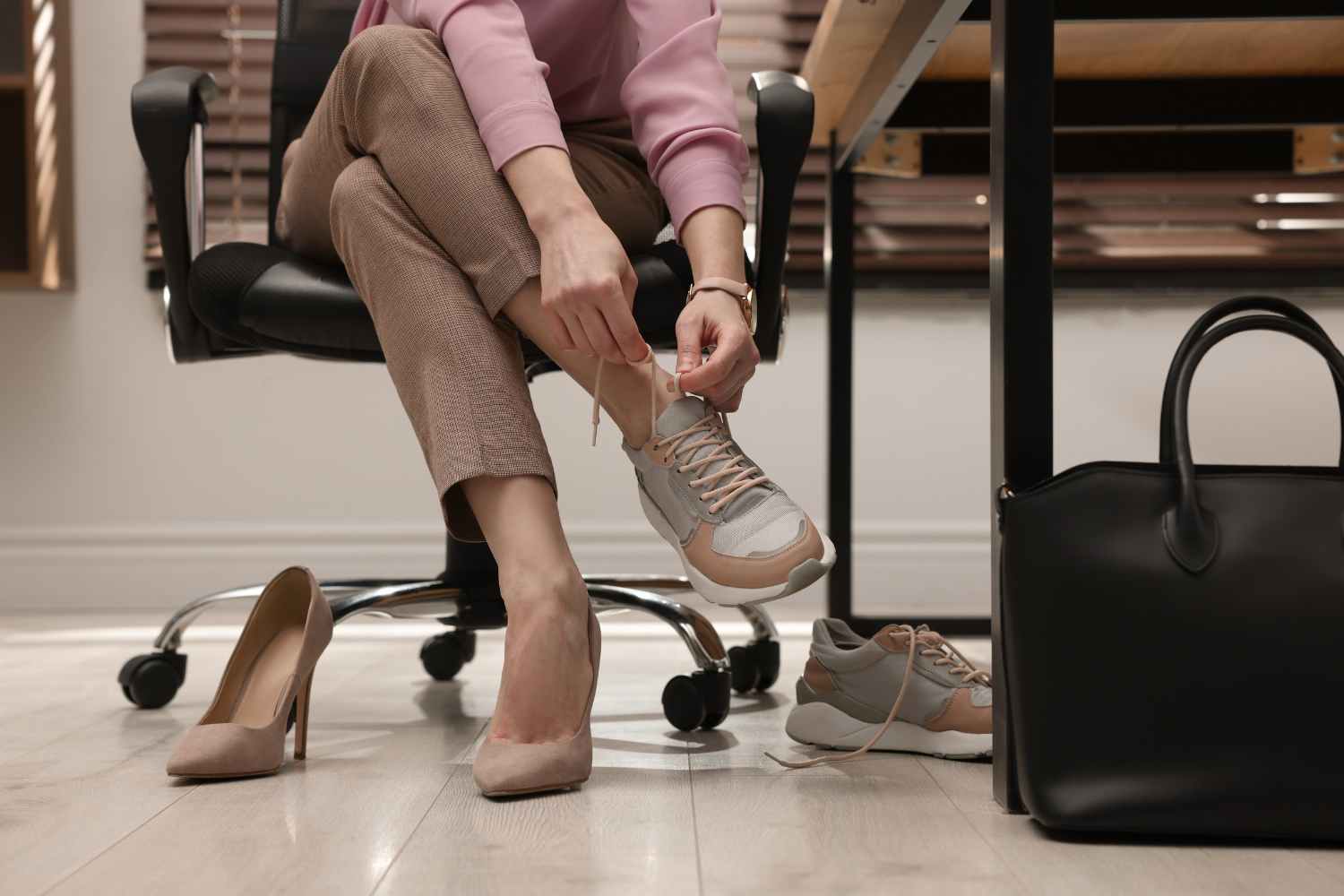
The offices have long been associated with rigid clothing codes and the need to “separate” working life from the domestic life. But the new wave of flexibility and attention to well -being is bringing a surprising change to the corporate policies of some startups all over the world: no shoes in the office.
What was born in Silicon Valley companies, with artificial intelligence unicorns such as Cursor and Speak, is quickly taking hold in the United Kingdom, as we read on The Guardian. The goal is clear: to make work spaces less formal and more welcoming, thus stimulating creativity, comfort and collaboration of staff.
The benefits: calm, concentration and less stress
For supporters of this policy, which often provides only the use of clean socks (no bare feet) and the obligation to get back shoes in areas such as kitchen, bathroom and outdoors, the advantages are tangible.
Natalie James, founder of the startup of Helloskin’s skin care products, introduced this rule in his company. Interviewed by the Guardian, he explained that the offices are “by their own nature, stressful environments” and if “a small thing how to take off your shoes makes you feel more comfortable – and therefore more creative – then it is obvious”. James noticed a “increase in calm, and with this they have added a better concentration and greater creativity”.
A sentiment shared by Gary Byrnes, CEO of the Tao Climate Technological Company, who encourages colleagues to work barefoot all over the world. Byrnes, as he said to the Guardian, believes that the office is “a super boring and super demanding place” and “anything that makes things easier is good for productivity, well -being and happiness”.
For some, like Andy Hague, CEO of Tech West Midlands, working without shoes is not just a preference, but a necessity. Hague explained that wearing shoes makes him feel “disconnected from the floor”, a “lack of sensitivity” which is “deeply destabilizing”, reducing its concentration to 70%. In a panorama in which the well -being of employees and the needs of neurodiversity are increasingly central, this small change can have a significant impact.
The trend is not limited to tech companies. Amanda Nicols, vice-administrator of the Delapré Abbey Conservation Trust of Northampton, works without shoes even in a historical environment, claiming that it helps her to “run and move faster” and that her event team started following her example.
There is no shortage of skeptics
Not everyone is convinced that removing shoes is the right solution for a successful corporate culture. Aaron Asadi, CEO of the Enterprise Nation’s support platform, expressed his skepticism: “We believe in shoes. We encourage startups to develop their business culture as they believe, but when we offer advice, we try to focus less on the comments in the office and on the socks and more on collaborative tools”.
There are also concerns related to the risk of obscuring professional boundaries and creating internal tensions. Professor Mustafa Özbilgin, who studies the inclusion in the workplace at Brunel University in London, underlined two potential problems:
Despite the reserves, the spread of this “politics” in offices and startups suggests that attention to comfort, flexibility and employee’s flexibility has become a priority, also through unexpected and simple changes such as leaving shoes out of the door.
