
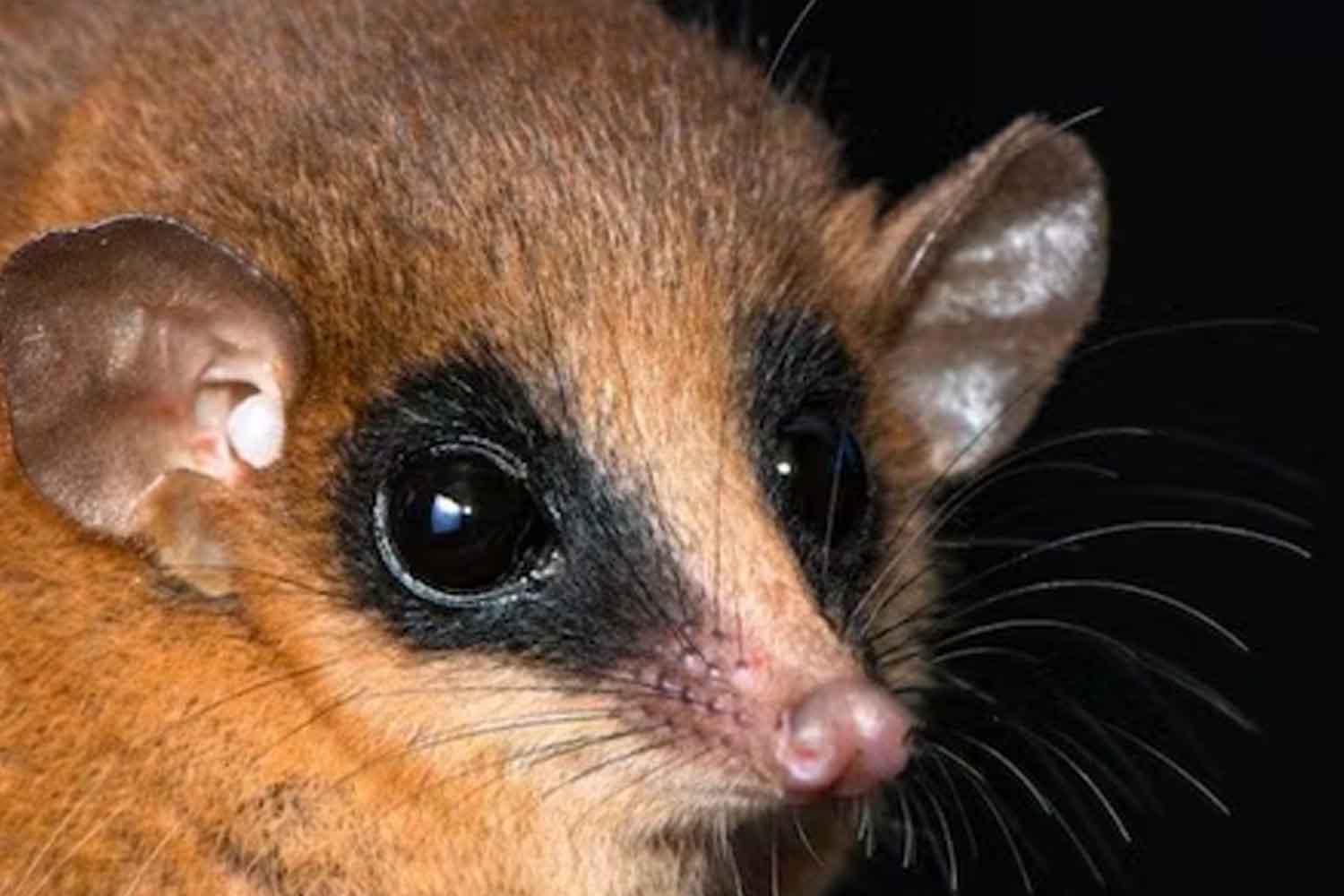
On August 16, 2018, during an expedition in the remote Parque Nacional del Río Abiseo, the biologist Silvia Pavan, professor at the Cal Poly Humboldt, was looking for a mysterious squirrel. But it was another creature who captured his attention: a small marsupial never seen before, surfaced by the edge of a trap between the fog and the lush vegetation.
That animal, as large as a mouse, with the elongated muzzle and the longest tail of the body, belongs to the marble genre, a group of American marsupials known for its diversity. However, it did not correspond to any of the known species.
After years of detailed anatomical comparisons and in -depth genetic analysis, the confirmation has come: it is a new species. The researchers baptized him Marmosa Chachapoya, in homage to the ancient civilization of the Chachapoya, who lived these forests well before the rise of the Inca empire.
Marmosa Chachapoya
The new species belongs to the stegomarous subgenre, which includes only two other known species: Lepida marmosa And Marmosa Andersoni. These are marsupy arboric, night and very difficult to spot, even for local populations. But M. Chachapoya It distinguishes itself clearly from its relatives.
In addition to the reddish fur and black facial mask, what makes this animal special is the altitude in which it was found: 2,664 meters. So far, no other kind of Stegomarous Over 1,581 meters had been observed.
The reference sample, or olotype, is a young adult male today preserved at the Natural History Museum of the San Marcos University of Lima. The researchers analyzed every detail: from the shape of the skull to the dentition, to the microscopic hair of the tail. Subsequently they sequenmed four genes – mitochondrial and nuclear – comparing them with those of dozens of opossum from all over America.
The result? M. Chachapoya is genetically similar to M. Lepidabut with an 8%mitochondrial DNA divergence, a sufficient value to identify a new species. In addition, there is no post-orbital bone crests, it has a more elongated and thin muzzle, teeth with distinctive spaces (diastems) and even the Stapes bone-part of the medium ear-has a different form.
The Parque Nacional del Río Abiseo, a UNESCO World Heritage Site, is found in Northern Peru and is known for its incredible biodiversity and for pre -Columbian archaeological testimonies. In the same area where the Marmosa Chachapoya – near the archaeological site of La Playa – there are ruins of the chachapoya, orchids, bromelias, ferns and even the rare woolly laceful monkey with a yellow tail, once believed to be extinct.
During the shipment, the team also collected other specimens of probably new species, including a semi-aquatic rodent still to be described:
These discoveries have enormous relevance for the conservation of biodiversity. They indicate that this region could host many other species unknown to science, many of which potentially vulnerable if not adequately protected.
Although the Marmosa Chachapoya It has just been discovered, it could already be at risk of extinction. Its habitat is limited to a single mountain side, which makes it particularly sensitive to climate change, deforestation and environmental fragmentation.
However, the fact that the animal lives within a protected area offers a glimmer of hope. The researchers hope that this discovery contributes to strengthening protection efforts and promoting new scientific explorations in one of the most mysterious and fascinating areas of South America, as Pavan points out:
It is a clear reminder of how essential it is to continue to explore and protect places such as the Abiseo Río.
You may also be interested in:
