
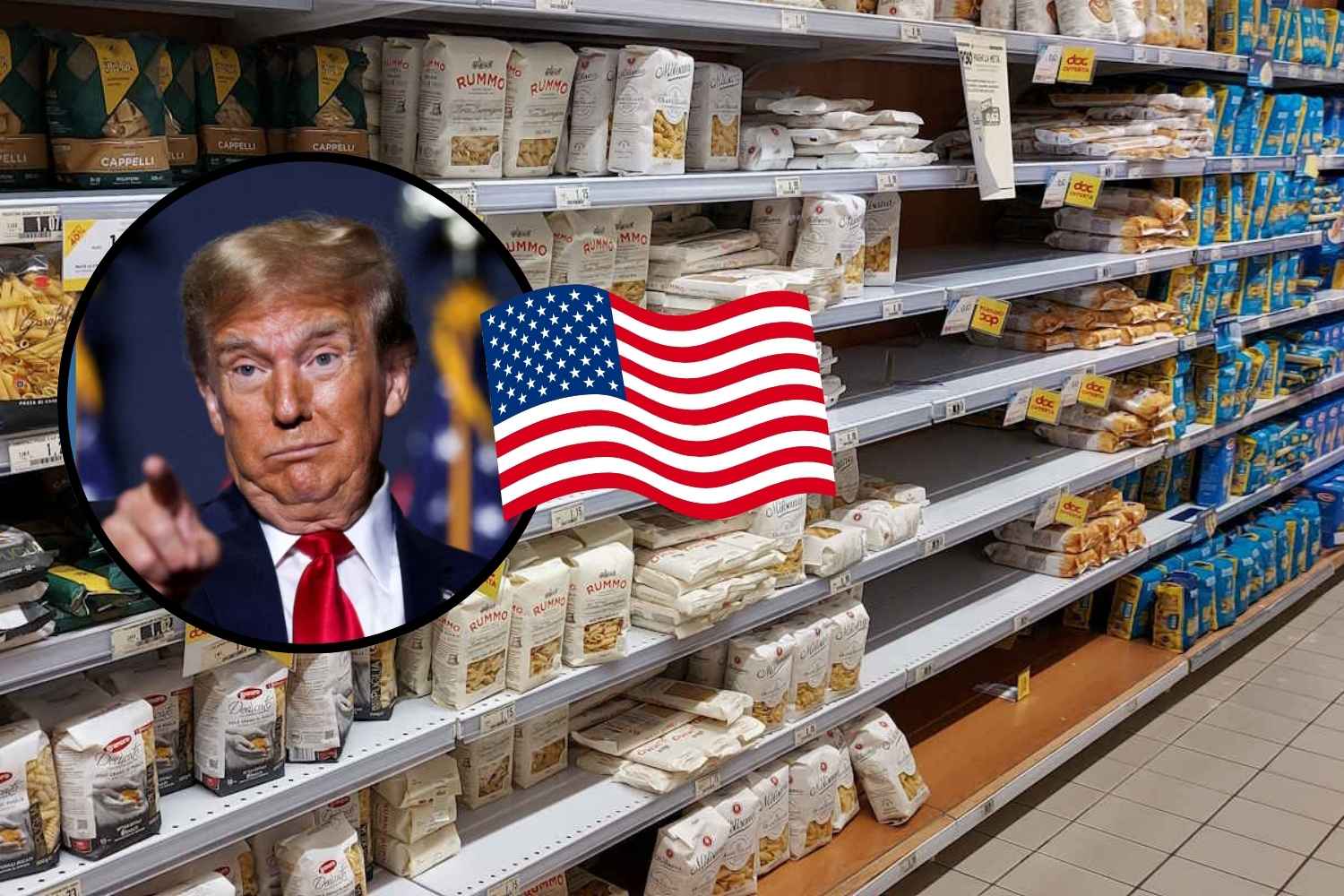
Italian pasta, a symbol of Made in Italy in the world, risks becoming another victim of the new American protectionist measures. The Department of Commerce of the United States has in fact announced its intention to introduce a 107% super-Dazio on imports of pasta from Italy, a measure that could come into force from 1 January 2026.
At the basis of the US decision there is the accusation of dumping: according to the US authorities, some Italian producers would have sold their pasta at prices deemed too low compared to those practiced on the internal market, creating competition considered unfair for local producers. In practice, Washington claims that Italian exports would be “below cost” and therefore penalizing for the American market.
The investigation conducted by the American authorities examined in particular two historical Italian brands: La Molisana and Garofalo. According to Washington, both companies would have applied too low prices in the period between July 2023 and June 2024. The penalty, however, would not only concern the two pastures mentioned, but would extend to a long list of Italian producers: from Barilla to Rummo, passing through smaller realities such as Pastificio Sgambaro and ancient traditions of Gragnano. In all, thirteen companies would have to face rates that would make it almost impossible to export to the United States.
In practice, the proposal is to add a rate of 91.74% to that of 15% already in force, thus reaching a total duty of 107%.
To make the story even more controversial is the origin of the complaint: among the companies that urged the investigation there is Winland Foods, an American giant but controlled by the European Fund Investindustrial, the same that gave birth to the Windoric Agri -Food Pole (together with La Doria). An intertwining that makes “friendly fire” speak, given that a company linked to European capitals would have contributed to turning on the spotlight on the alleged incorrect practices of Italian companies.
Reactions
The news aroused immediate reactions from the Italian government. Farnesina and the Ministry of Agriculture have already taken official contacts with the American administration, declaring the desire to defend the correctness and transparency of Italian producers. The Embassy in Washington is also at work to avoid the entry into force of the duty, defined by several parts “unjustified” and “harmful” for bilateral commercial relations.
The words of the main Italian organizations are very hard. Italian chain defined the “unacceptable” measure, denouncing arbitrary and punitive methods. Coldiretti spoke of “mortal blow for Made in Italy”, remembering that in only 2024 the export of pasta towards the USA exceeded 671 million euros. For the Italian Food Union, the Maxi-Dazio represents a political attack, more than economic, to the symbol of the Italian food tradition.
Confagricoltura also intervened with clear tones:
We immediately asked our government for a strong position towards the American administration – said President Massimiliano Giansanti – it would be an unfair frozen shower. The US market is fundamental for our productions, and even more for pasta, appreciated by American citizens precisely for the quality and goodness recognized all over the world.
Giansanti reiterated trust in the action of Italian diplomacy, underlining how the country’s agri -food sector has always operated correctly on international markets.
If the super-Dazio really came into force, the consequences for Italian producers would be devastating: the price of pasta in America would rise to the point of making exports unsustainable. A serious blow for one of the strongest sectors of national agri -food and a worrying signal for commercial relations between Italy and the United States, which in recent years have already experienced moments of strong tension.
Sources: Federal Register / Ansa / Confagricoltura
