
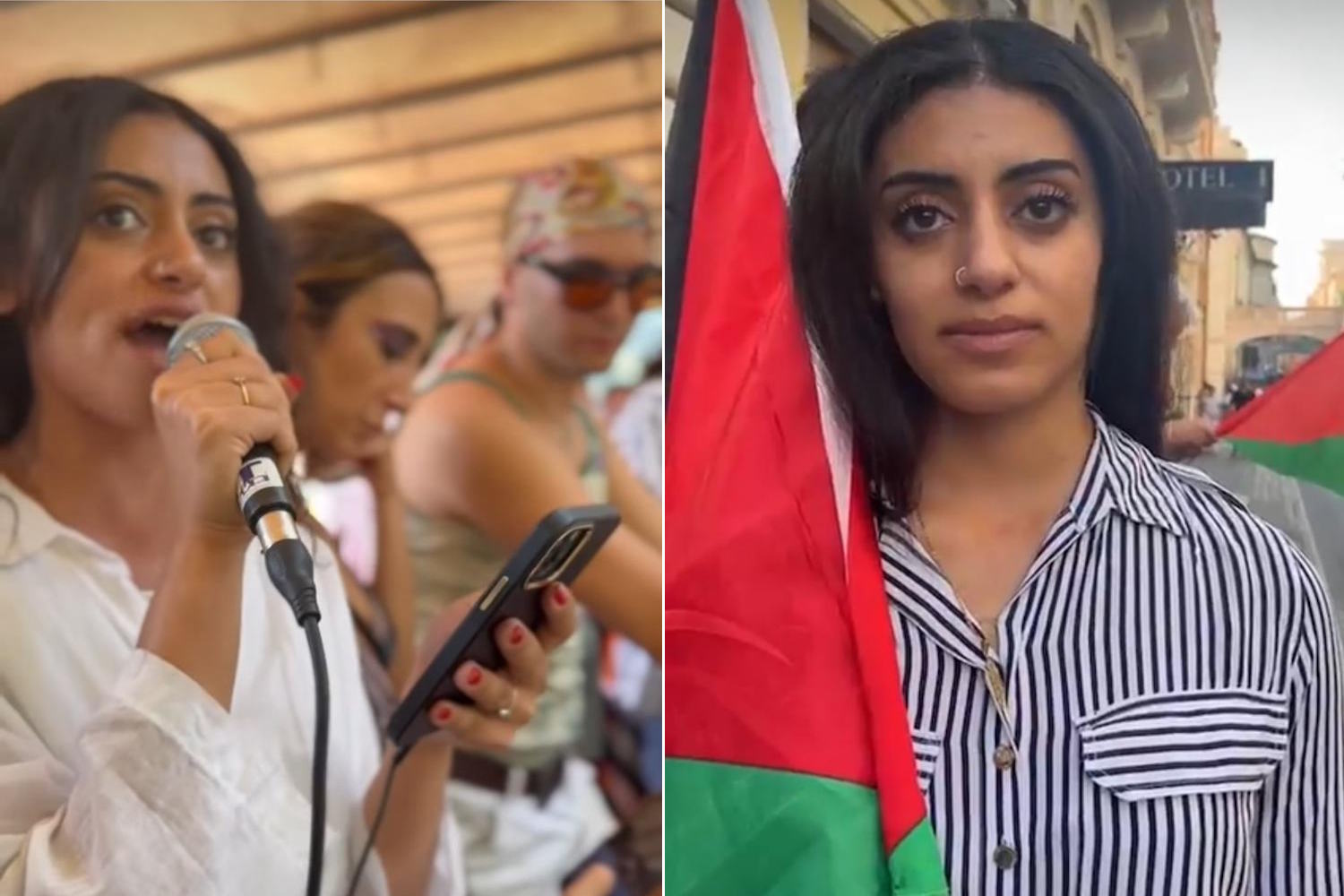
Maya Issa was born in Italy, but her roots have in a land that has never been able to trample. His parents are Palestinian refugees, and up to eighteen years his identity was enclosed in a Lebanese passport for refugees, a document that denies her the right to enter the land of her ancestors. An invisible but insurmountable border, which separates his daily life from the story from which he comes.
Even after obtaining Italian citizenship, Maya continues to bring with him a suspicious look, a name that tells more than many want to listen, an activism that often makes it target of prejudices. Because his simple existence is political.
Since the early years of school, Maya has experienced the hardness of exclusion. AND “the Arab”, The little girl with a difficult name, the one that”does not exist on the map“They said. Words that, instead of eraseing her, affect deep furrows in her heart and become new roots: they push her to seek, understand, not to surrender.
Maya defines himself “Italian-Palestinian“With pride, like those who embrace two worlds without choosing only one. Two identities, two skies, two stories coexist in her. But with them they also coexist the fractures: how do you keep a land together and a homeland that does not always welcome you? How are memory and justice intertwine when your story seems not to have a place?
Maya lives in this suspended, fragile and powerful space at the same time, transforming it into voice, struggle and love for its roots.
Its public role: voice and symbol
Maya has long been active in the Palestinian student movement in Rome and on a national scale. He intervened in events, public events, pride, media direct to denounce the silence and complicity with respect to the tragedy that Gaza and the occupied Palestine is experiencing.
At the Pride of Rome, he made a strong intervention: solidarity is not true if it is not also against the oppression of the Palestinian people. In an interview a The Republicas president of the Palestinian students of Rome, criticized the prohibition of pro-Palestine processions as unfair: “It was not provocation, let’s take off every Saturday“.
View this post on Instagram
It is no longer a “niche” voice: it has become a recognized face, often the subject of attacks, but also of solidarity, precisely because of the courage to speak without filters.
Maya is not a risk -free warrior. His words cause harsh reactions, so much so that he was also physically attacked during an event “Not one less“: A woman tried to tear the Palestinian flag. It undergoes the pressure of those who would like to” delete “her voice or introduce the doubt: media manipulations, cut pieces, defamations. In one case, a phrase outside context has been spread on social media attributed to her – the complete video shows that in reality condemns all the violence.
View this post on Instagram

 (@mayaissa .__)
Because we should admire it (and others and others like her)
Maya Issa represents a practical lesson: you don’t have to wait for power to be one voice, Even when everything seems to row against. From his personal experience – discrimination, fragmented identity, absence of his own land – he drew the push not to remain silent. His courage is double: contact those who do not want to listen and do it while maintaining integrity and truth. It is not hidden behind inflated phrases, it no longer makes suffering “digestible”: challenge indifference.
We admire her – and in these days especially girls and boys like her – because they recover hope in places where others want to sow silence. Because they testify that memory is not only personal, but collective.
If we really want to change something, we should start looking at with respect to those who dare to challenge dominant narratives, those who resist not only with words, but with their lives. And don’t just do keyboard lions.
