
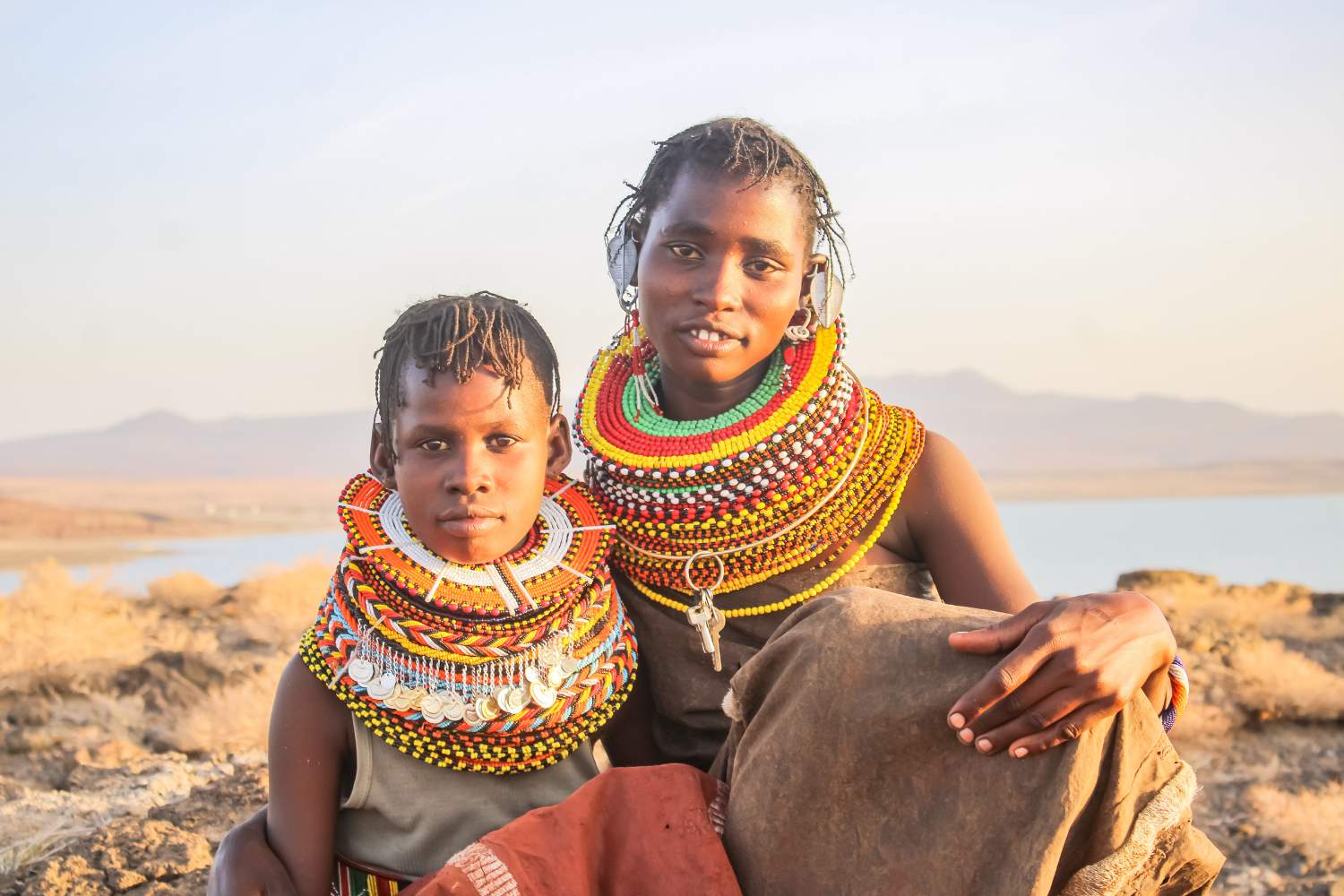
In one of the hottest regions on Earth, where the thermometer often exceeds 50 degrees, lives a population capable of overturning the laws of biology. The Turkana, a nomadic community in Kenya, move between East Africa, Uganda, South Sudan and Ethiopia, surviving on very little water and an almost entirely animal diet.
They drink an average of 1.5 liters a day, an amount that would be insufficient for anyone else to survive. Yet, against all odds, the Turkana are healthy, active and free of the chronic diseases that such dehydration would normally entail.
A genetic mutation that saves lives
The secret of this resistance was revealed by a study published in Sciencewhich analyzed the genomes of over 300 Turkana individuals. Scientists discovered the presence of eight modified DNA regions, among which a gene called STC1 stands out. This gene, highly active in the kidneys, allows the body to retain more water and filter waste substances better.
The upregulation of the STC1 gene not only avoids dehydration, but also protects against kidney problems caused by a diet based on red meat, milk and animal blood, rich in purines and potentially harmful for those who do not have the same evolutionary adaptation.
The history of the Turkana woman is deeply intertwined with the rich cultural heritage of the Turkana people of…
Posted by The Turkana TV on Monday, June 2, 2025
A balance between evolution and environment
For the Turkana, this mutation represents an evolutionary advantage in an extreme habitat, but not without risks. In fact, scholars speak of evolutionary maladaptation when these individuals move to the city and abandon the nomadic lifestyle. In an urban environment, the same mutation that protects them in the desert can become a problem for their metabolism and kidneys.
According to the researchers, better understanding this adaptation could pave the way for new therapies against dehydration and kidney disease, which are increasingly widespread in areas affected by chronic drought. Ultimately, the Turkana body is the living demonstration of how far evolution can go, rewriting the rules of human survival in the desert.
You might also be interested in:
