
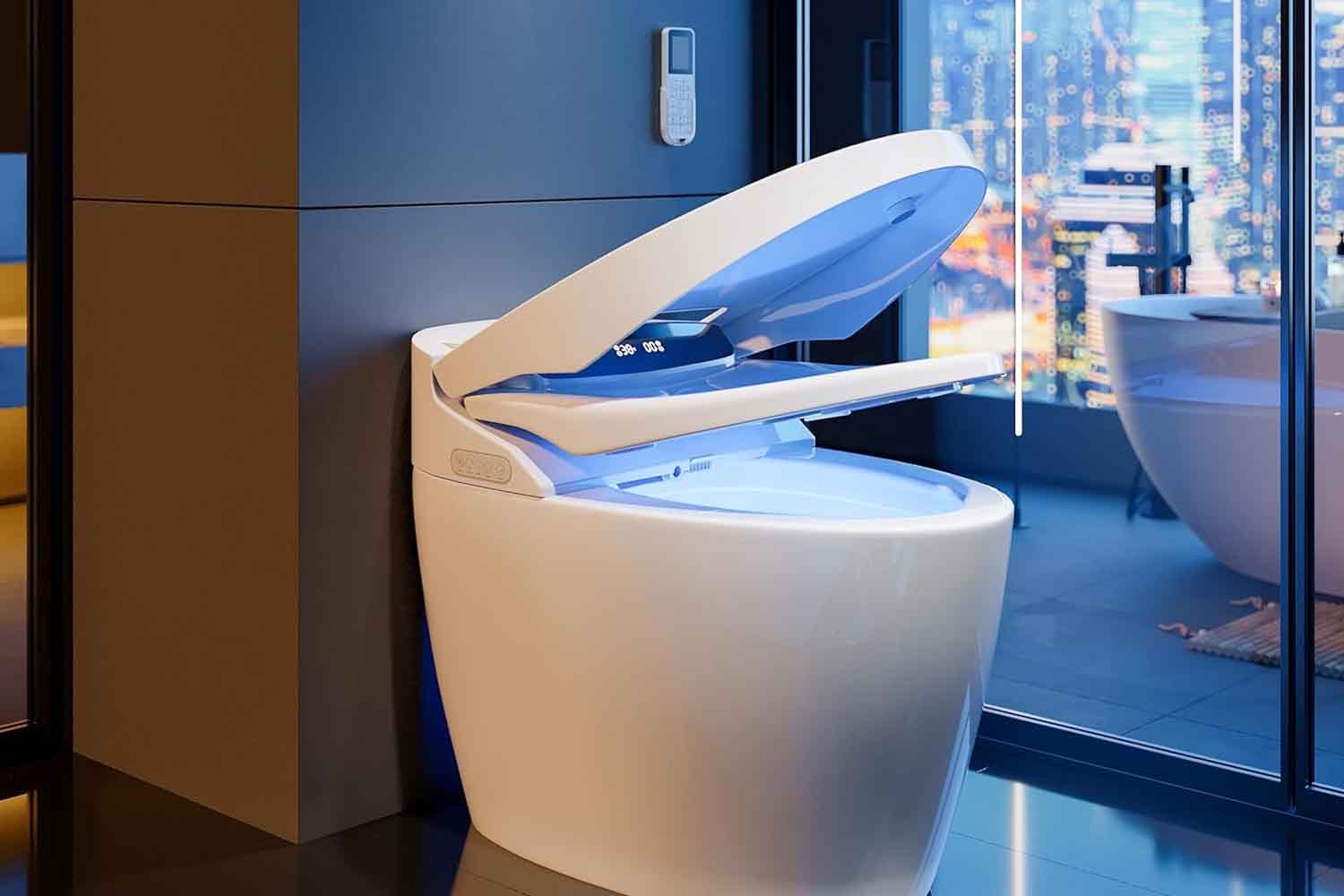
There is a place in the house where we spend more time than we imagine, and no, it’s not the sofa: it’s the toilet. According to some estimates, we spend an average of three years of our lives there. Yet we continue to treat them as if nothing could change: water drain, roll of paper, and so on.
But in Japan things work differently. Toilets there have been smart for decades, and it’s not just a technological question. It is an ecological, economic and practical choice, which starts from a daily gesture: using the bathroom more consciously.
And no, you don’t need to be a technology enthusiast to understand its meaning. Just sit down and try.
Goodbye toilet paper: water cleans better and doesn’t knock down trees
Anyone who tries a Japanese toilet will immediately notice the difference: no paper, but a jet of warm water, adjustable in intensity and position, followed by a delicate flow of hot air for drying. The result? It feels really clean. And above all, you do the environment a favor.
Every day around the world, around 27,000 trees are cut down just to produce toilet paper. An enormous consumption, to which is added the water necessary for production: up to 178 liters for each roll. Not to mention that paper may contain PFAS, persistent chemicals suspected of having health effects.
Choosing a Japanese toilet means cutting this waste at the root, without sacrificing hygiene. In fact, the opposite.
One of our colleagues has installed a seat with integrated bidet at home (cost: around €200). Result? The husband has eliminated the card altogether, and the monthly expenses have visibly decreased. For her, use varies depending on the day. But both confirm one thing: the hygiene is impeccable. And yes, it is a particularly useful system even during the menstrual cycle.
Less water does not mean less cleaning
One of the most common objections is: “But if there is a jet of water, doesn’t it consume more?”. The answer is no. Traditional toilets use up to 9 liters per flush. The Japanese ones only take 3 or 4. And for washing with the jet you need just 150 ml of water.
If we add to this the water saved by avoiding paper production, the balance is entirely in favor of the Japanese model. Less consumption, less waste, and a reduced environmental impact.
In practice, it is as if there were a small circular system in the bathroom: water is used only where needed and when needed.
The integrated handwasher: the brilliant idea that reuses water twice
Then there is a discovery that deserves to be told. In many Japanese models, there is a small faucet with a sink above the waste tank. It works like this: after using the bathroom, you wash your hands right there, and that water is collected for the next flush.
Simple, effective, intelligent. Water is not wasted, space is optimised, and you always have the feeling of using a resource with respect.
Those who have tried this system in Japan describe it with enthusiasm. You wash your hands, the water slowly flows into the basin, and you have the physical perception of a gesture that makes sense. It’s not just a convenience: it’s a new way of thinking about the bathroom.
Comfort for all and accessible technology (also in Italy)
If you think this is stuff for futuristic homes, it’s time to change your mind. In Italy more and more companies offer seats compatible with traditional toilets, easy to install and without the need for structural modifications. Just a few steps are enough, and the bathroom becomes a more comfortable and sustainable space.
Newer models include additional features such as:
And there’s no need to worry about consumption: the electrical absorption is comparable to that of a light bulb.
The price is variable, but can be repaid in a short time thanks to savings on toilet paper and water bills.
The idea that a toilet can help the environment may seem curious, but it is absolutely concrete. With Japanese toilets, water waste is reduced, paper is eliminated and hygiene is improved. And all this without sacrificing comfort, indeed, increasing the quality of the experience.
Yes, you need to overcome a certain cultural resistance. Some guests in the house may be perplexed. But those who try often never go back.
What is certain is that these devices are no longer a luxury for the few: they are now accessible, installable anywhere and designed to last.
Homary Smart Toilet with Integrated Bidet, Automatic Opening and Closing Lid, White Elongated Japanese Toilet Heated Seat, Automatic Flush, LED Display, Foot Sensor – Bidet
You might also be interested in:
