
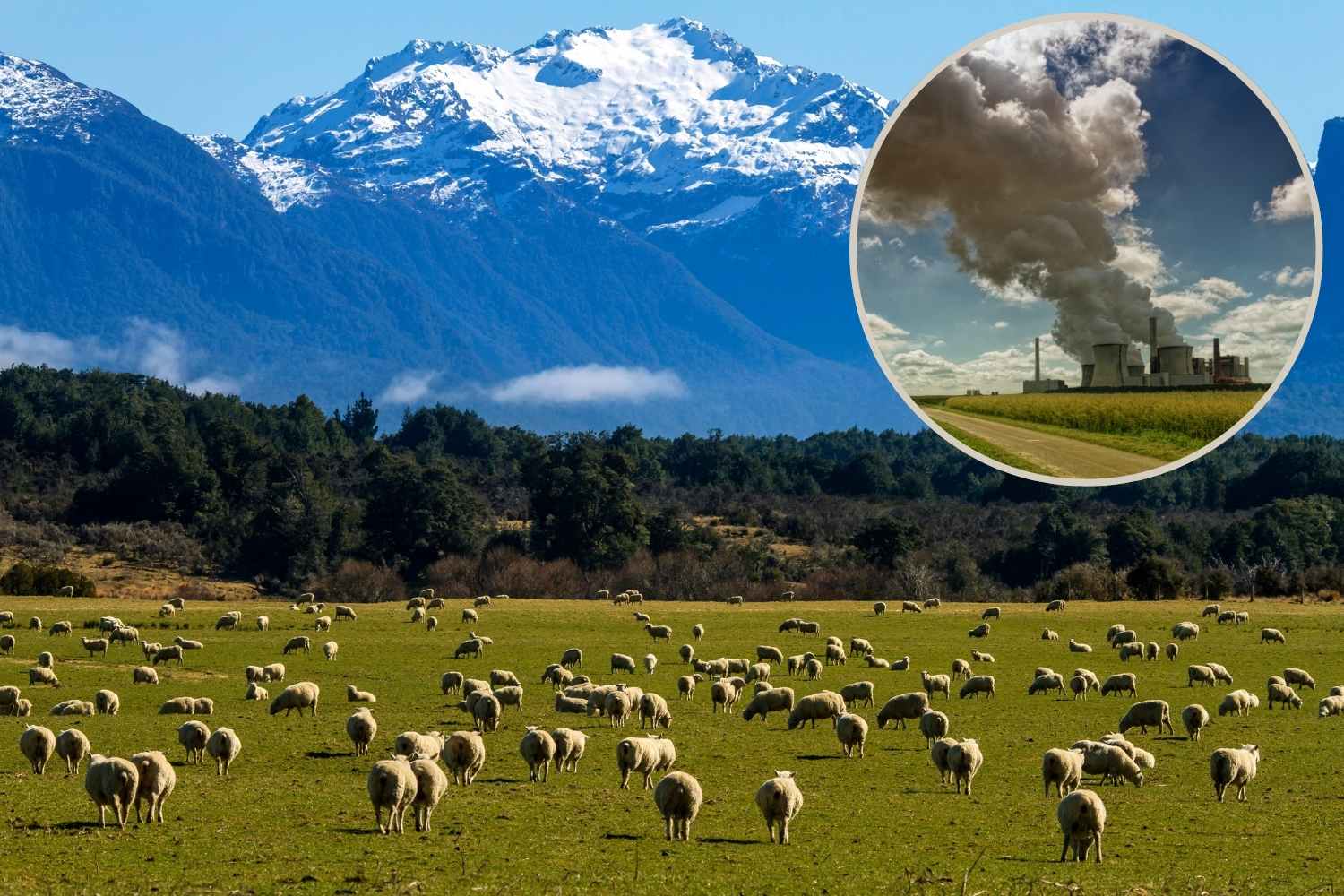
A strong wave of controversy has engulfed the New Zealand government after the announcement of a significant reduction in the targets for cutting emissions of biogenic methane, a greenhouse gas with significant global warming potential. The decision, taken by the right-wing coalition government, has been applauded by farmers but has raised a chorus of harsh criticism from environmentalists, scientists and opposition figures, who define it as a “weak” and “unambitious” choice.
Cutting goals
On Sunday, the government outlined new plans for methane reduction: the emissions reduction target by 2050 (compared to 2017 levels) has been narrowed to a range between 14 and 24%. The move represents a clear step backwards compared to the previous objective, which envisaged a much more incisive cut, between 24 and 47%.
Biogenic methane is closely linked to the agricultural sector, in particular livestock farming, given the presence in the country of approximately five million cows and 23 million sheep. Agriculture, according to government data, is responsible for almost half of New Zealand’s total greenhouse gas emissions.
Opposite reactions: farmers and environmentalists
The change of direction was welcomed with relief by farmers’ trade associations, who had harshly contested the previous target. Wayne Langford, president of the Federated Farmers of New Zealand (a farming lobby), called the old targets “absolute madness” and expressed satisfaction, saying that farming families, under severe pressure, seem to have finally found some breathing space.
Environmentalists have a completely different opinion. Greenpeace’s New Zealand office accused the government of a policy that “amounts to total climate change denial.” Amanda Larsson, the group’s climate campaigner, directly criticized Prime Minister Christopher Luxon, claiming he is “choosing… corporate profits over the future of our children.”
Scientific criticism and image damage
The scientific world has also expressed strong concern. Ralph Sims, a climate mitigation expert at Massey University, highlighted a flaw in the government’s plans: the government has confirmed that it will not impose a tax on agricultural methane emissions for fear of business closures and will invest NZ$400 million (about US$230 million) in methane reduction technology. Sims, however, cautioned that there is “no guarantee” that scientific research can provide concrete, near-term solutions for biogenic methane. However, Climate Change Minister Simon Watts said total agricultural emissions could be reduced by up to 14% over the next decade, provided 30% of farmers adopt technologies expected to be available before 2030.
Scientists and advocacy groups fear the decision could damage New Zealand’s international reputation. Climate Action, an influential lobby group, said reducing the target risked tarnishing the country’s image. Jocelyn Turnbull, a senior scientist at the government’s Earth Sciences New Zealand, joined the chorus, saying the policy change could dent the “clean and green” image of New Zealand, whose climate situation is already critical, with oceans warming 34% faster than the global average, according to one report.
Despite the criticism, Minister Watts wanted to reassure, stating that the government “remains committed to our national and international commitments on climate change, including the target of net zero emissions by 2050”. He also added that agriculture “will continue to make an important and fair contribution to achieving this reduction”. The government also agreed that it will conduct a legislative review of biogenic methane targets in 2040, while confirming there are no imminent taxes on agricultural emissions.
Sources: Ministry of the Environment New Zealand
