
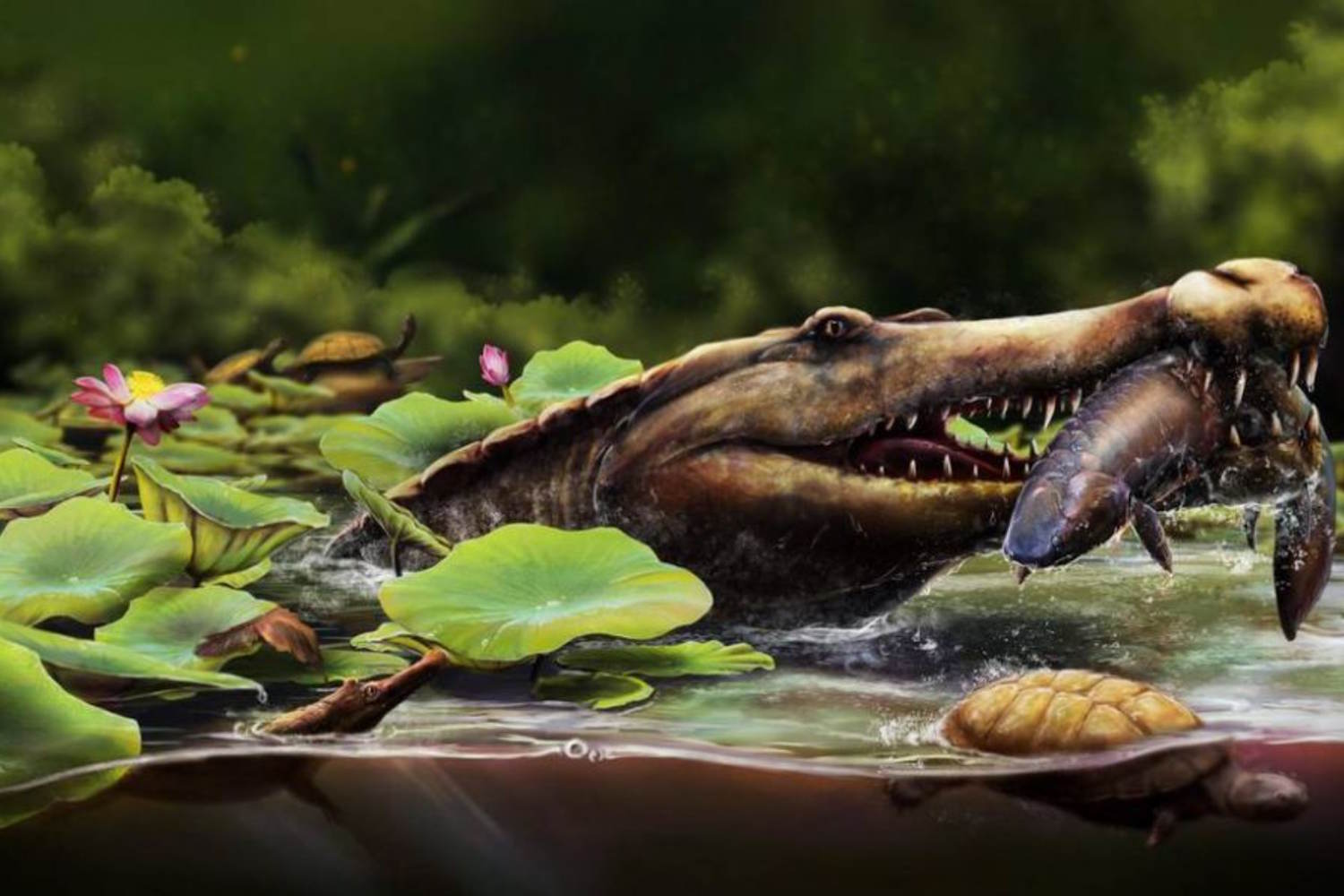
Crocodiles may have had a very different history, which will most likely be told to us by the ‘Valley Crocodile’, just discovered by a research group fromUniversity of Mansoura (Egypt), lived in Egypt in the era of the dinosaurs, about 80 million years ago.
Given its “age”, the crocodile is the oldest member of the dei family Dirosauridsa group of marine crocodiles that survived the extinction of the dinosaurs and then thrived, and is therefore a rare witness to a crucial phase in the evolution of ancient reptiles.
As the researchers explain, unlike today’s crocodiles, which inhabit rivers and swamps, this ancient species lived in shallow, coastal seas. The long snout and sharp teeth made the crocodile a skilled predator that survived the disappearance of the dinosaurs.
And no, it is not just a beautiful scientific curiosity: according to all the experts, this discovery is one of the most significant in the history of Egyptian paleontology: in fact in the oases of Kharga And Baris skulls and snouts of several individuals at different age stages were found, thus offering scientists a unique opportunity to understand the evolution of this crocodile species.
The research was conducted using 3D CT scanning techniques, which allowed us to reveal anatomical details never seen before, and therefore to have a clearer picture of the internal structure of these marine creatures that roamed the coasts of ancient Egypt.
Sara Saberfirst author of the study, explained that this species was distinguished by unique characteristics that make it an important transitional link in the history of crocodilian evolution, underlining how the findings provide new insights into how reptiles adapted to marine environments after death.
With a length that varied between 3.5 and 4 meters and a very long snout and sharp teeth, it was a specialized hunter, which preyed on fish, differing among other things from its relatives by having four front teeth instead of five, nostrils located above the snout to help it breathe from the surface of the water and a deep cavity at the junction of the jaws.
The last but not the leastthe results of the evolutionary analysis indicate that the diversification of this family began in Africa earlier than previously thought, giving the discovery a global dimension that reinforces the importance of the Egyptian geological heritage in understanding the history of organisms on planet Earth.
The importance of this discovery lies not only in adding a new chapter to the history of ancient crocodiles – concludes Hesham Sallam, who led the work, but also in shedding light on the scientific treasures hidden in the Egyptian western desert”
And it won’t end here, everyone is convinced of it.
The Egyptian desert still holds enormous secrets about the distant past and that our mission as scientists is not only to discover them, but also to protect them for future generations, as they represent an integral part of Egypt’s scientific and human identity
The work was published on The Zoological Journal of the Linnean Society.
Sources: University of Mansoura / The Zoological Journal of the Linnean Society
