
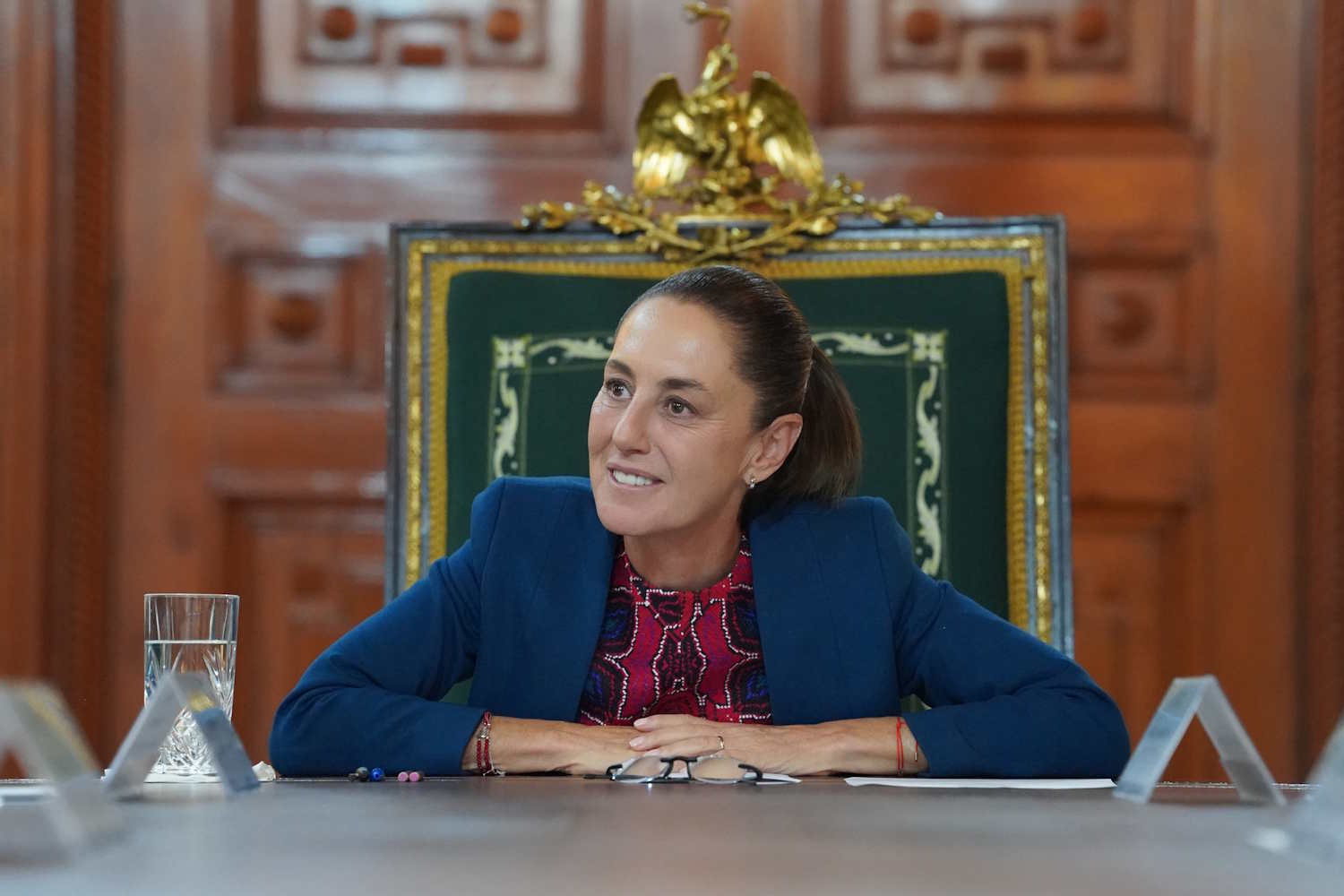
“If I hadn’t reported it, I would have done an injustice to all Mexican women. If even the president can be harassed on the street, what can happen to all the others?”, thus, in the aftermath of a real harassment, the Mexican president Claudia Sheinbaum announces that she has reported the incident to the police.
In the video, widely shared on social media, a man can be seen approaching Sheinbaum while she was walking through the historic center of the capital, kissing her and then placing his hands on her breasts. Precisely to her, the first female president of Mexico, who has made the elimination of violence against women one of the foundations of her campaign and who now announces a campaign and a review of legislation in every state.
After the disbelief and dismay, the denunciation.
The episode lasted a few seconds, but had an enormous impact. The attacker, later identified, was “totally drunk”, according to Sheinbaum herself, and had molested other women on the same day.
View this post on Instagram
“Women’s bodies are not public territory”
The incident triggered a wave of reactions throughout the country: on the one hand, concern for the president’s safety, on the other, a deep sense of frustration among Mexican women, who recognized in that gesture an everyday and too often silenced reality.
Many have shared on social media their experiences of harassment in public places, on public transport or simply walking down the street. “It happens in broad daylight, in front of everyone,” said María Fernanda Rodríguez, a political scientist and member of the organization Women in Plural. “It’s something that happens every day, everywhere. And it’s terribly normal.”
https://www.instagram.com/washingtonpost/?utm_source=ig_embed
Sheinbaum transformed the harassment he suffered into a political and human message.
We must first of all make what is happening visible and say a clear ‘no’. A firm and unequivocal no – he declared. Women’s personal space must not be violated.
The president recalled that in Mexico the type of harassment she suffered is not considered a federal crime and for this reason she announced that she will ask for a revision of the law, so that every woman can file a complaint like she did.
I don’t want it to be the president’s privilege to be able to do this, he forcefully underlined.
Sheinbaum then insisted on the need to act upstream, with awareness and education campaigns in schools, “because all this also has to do with the education of men”.
We will not change our way of being. We can’t stay away from people. Our assistants will continue to support us, but we must remain close to the people. Isolating yourself is not the answer.
It wasn’t the first time someone had violated his personal space. Last June, while visiting Hurricane Erick victims in Oaxaca, an elderly woman surprised her with a sudden kiss on the cheek — another incident that went viral.
Claudia Sheinbaum now had the strength to transform a gesture of violence into a collective appeal: to no longer accept the unacceptable, to make visible what we are trying to normalize, and to demand that no woman should feel privileged to be able to ask for justice. Because as the president herself recalled, with simplicity and firmness:
Women’s bodies are not public territory. And saying ‘no’ is the first step to changing that.
