
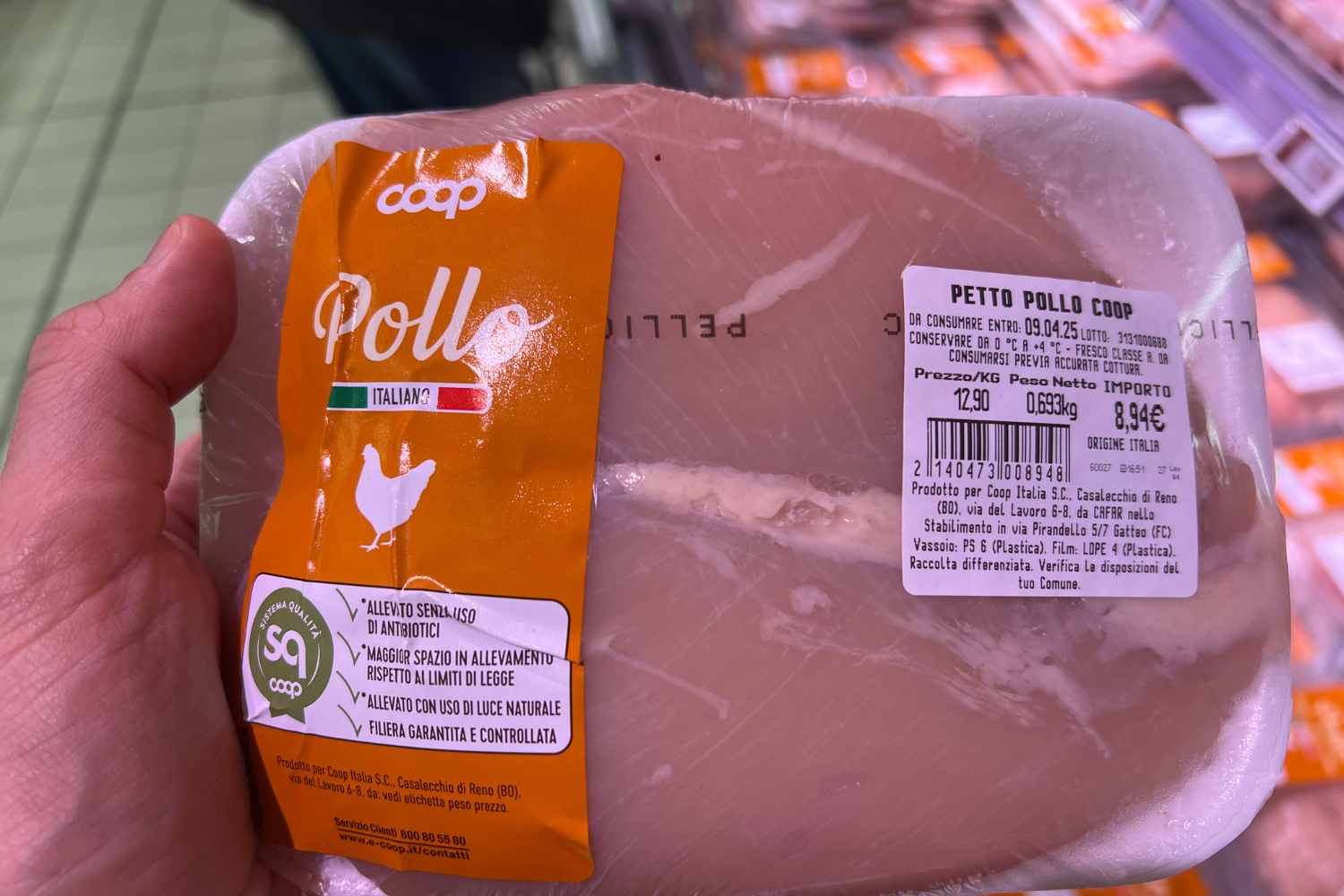
Do you remember the term white striping? This is a disease that affects chicken and manifests itself with white stripes visible to the naked eye on the breast, an indicator of alterations in the meat and typical of intensive farming in which the animals suffer.
This was already discussed last year for chicken breasts sold by Lidl, when over 90% of the samples analyzed clearly showed white striping, demonstrating the suffering of rapidly growing animals and the low quality of the meat.
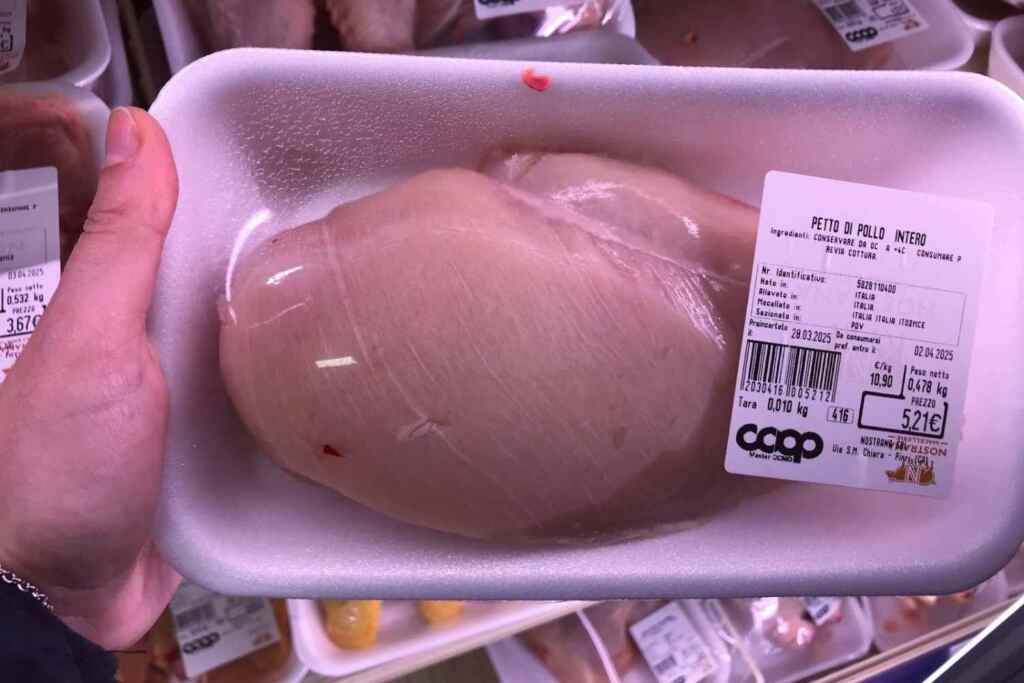
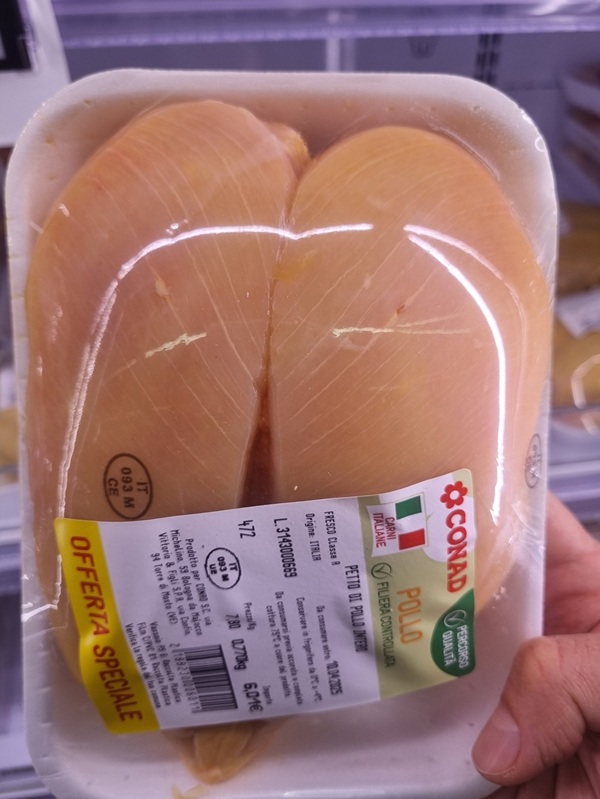
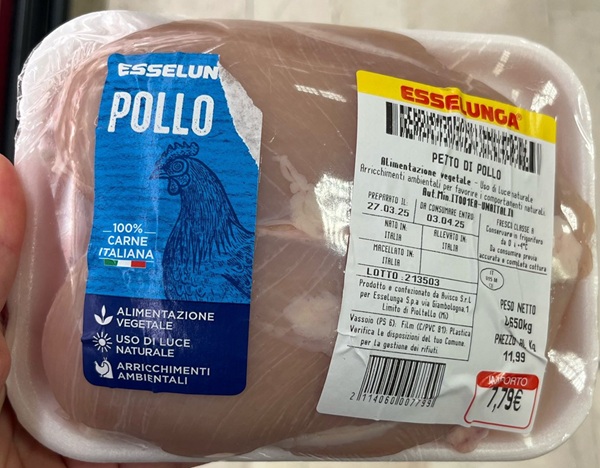
Today, a new investigation byessereanimali returns to this topic, reporting alarming data: more than 90% of chicken breasts under the Conad, Coop and Esselunga brands show clear signs of this pathology.
The investigation
The investigation, conducted on over 600 packs of chicken breast (Conad 215; Coop 181; Esselunga 223) from conventional farms, on sale in 48 sales points in 10 Italian cities, shows a worrying reality:
These data clearly show that the situation is not better for any of the three brands. But the Coop case deserves particular attention. The combination of large labels and translucent packaging makes it almost impossible to visually verify product quality. When only the analyzable packages are considered, the data gets worse: 96.1% of the breasts show white striping and 55.4% have serious cases. A packaging choice that seems more oriented towards hiding the problem than informing customers.
What is white striping and why is it a problem
White striping is a myopathy of fast-growing chickens, those raised in intensive facilities where genetics push the animals to grow too quickly. The chest muscles develop faster than the circulatory system can support, causing muscle fiber degeneration. These are replaced by fibrous and fatty tissue, visible as white streaks.
This is not just an aesthetic problem: meat loses nutritional quality, with an increase in fat content of up to 224% according to some studies and a reduction of proteins of up to 9%. Furthermore, the animals suffer: fast-growing chickens are up to 8 times more susceptible to white striping than slower-growing ones.
The chicken supply chain in Italy is largely based on conventional farming, with tens of thousands of chickens crammed into sheds and slaughtered after just 30-40 days. Most of the chicken breasts sold under the Conad, Coop and Esselunga brands, three of the most popular supermarkets in Italy, come from these supply chains. It’s no surprise, then, that white striping is so widespread.
According to Simone Montuschi, president ofessereanimali:
The scientific evidence is now unequivocal: chickens from fast-growing breeds develop myopathies such as white striping, demonstrating how genetic selection compromises their health and the quality of the products. By adopting the European Chicken Commitment, Coop, Conad and Esselunga could concretely address the problem and guarantee healthier chickens, better meat and informed consumers.
The European Chicken Commitment (ECC) includes the adoption of slower-growing breeds, minimum welfare standards and a reduction in animal suffering. Some Italian groups, such as Carrefour Italia, Cortilia, Eataly and Gruppo Fileni, have already taken this path. The main Italian supermarkets, however, continue to ignore the problem, despite pressure from consumers.
Because change is urgent
A concrete commitment from the large Italian chains would have an enormous impact: millions of chickens raised in better conditions, higher quality meat and transparency towards customers. And all this at a sustainable cost increase, around 0.29 euros per kilo, equal to an 18% increase in the final price.
White striping can very well be avoided given that it is the result of corporate choices, intensive supply chains and lack of transparency. Consumers have the right to know what they put on their plates, and supermarkets have a moral obligation to ensure the welfare of the animals they sell.
You can read the full report HERE.
