
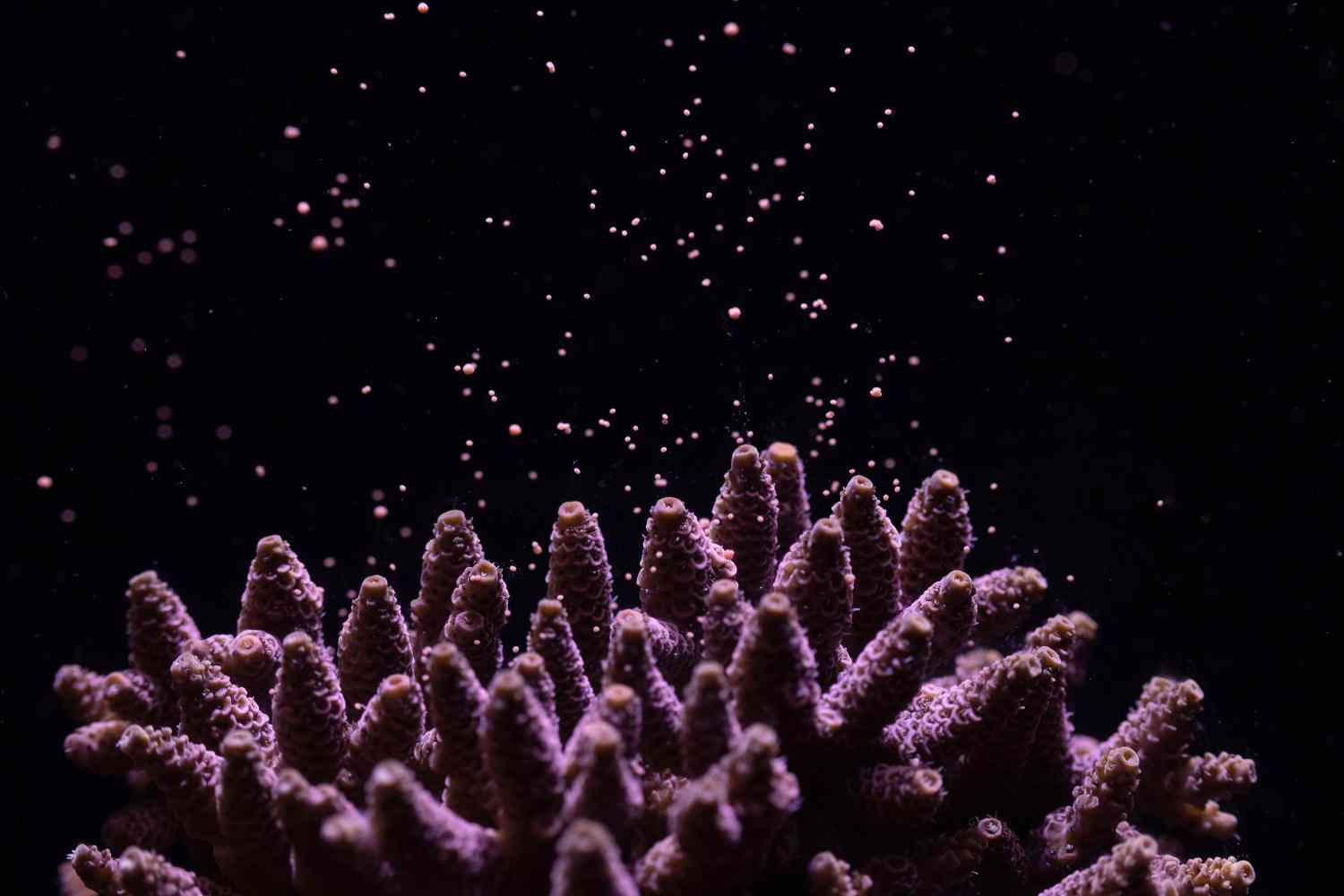
In the silence of the oceans, one of the most serious environmental crises of our time is taking place. According to the Global Tipping Points Report 2025, warm water coral reefs have now exceeded their critical survival threshold: with global warming close to 1.4°C, the Planet has reached its first climatic tipping point.
The consequences are already visible. The global bleaching wave that began in 2023 has affected more than 80% of reefs in more than 80 countries, threatening an ecosystem that is home to a quarter of marine species and supports millions of people around the world.
But just as the crisis reaches its peak, a project in the Seychelles is trying to offer a chance for recovery through the union of science, technology and environmental vision.
“WORLD UNSEEN”: technology at the service of marine life
Canon is continuing the World Unseen project, an initiative launched around two years ago that uses its imaging technology to support coral regeneration. The objective is simple in form but ambitious in substance: to contribute to the rebirth of one of the most threatened ecosystems on the planet.
In collaboration with the English laboratory Coral Spawning International and the marine biologist Jamie Craggs, Canon works to promote the sexual reproduction of corals, creating new colonies that are genetically different and therefore more resilient and resistant to climate change.
In the Seychelles, Canon is supporting the Nature Seychelles association in building a dedicated coral breeding facility, which will allow scientists to breed and reintroduce healthy specimens into the areas most affected by bleaching.
From research to narration: the dual role of imaging
Imaging technology plays a dual role in this project. On the one hand, it is a precision scientific instrument: cameras, lenses and imaging systems allow us to document every phase of coral development, analyzing their growth, behavior and resilience.
On the other hand, imaging is a narrative and cultural tool: thanks to the images and videos produced by researchers, the public can understand and “see” what really happens beneath the surface of the sea.
The power of images is to make the invisible visible,
explains Giada Brugnaro, Corporate & Marketing Communications Professional at Canon Italia.
Through our technology we can help science observe and the public understand. It’s a way to turn scientific documentation into collective awareness and, hopefully, action.
A new frontier for coral conservation
The laboratory in the Seychelles marks an important step for research applied to marine conservation. The sexual reproduction of corals – unlike the cloning used in traditional “coral gardening” – allows for the creation of more genetically diverse colonies, therefore more suitable for surviving in increasingly warmer seas.
It’s not just about preserving a habitat,
Giada Brugnaro underlines again,
but to rethink the way technology can support nature. Canon wants to be part of this transition, providing tools that allow research to go deeper, in the literal and symbolic sense of the term.
An alliance for the future of the oceans
The World and Sene project shows how collaboration between companies, scientists and local organizations can generate real solutions. For Canon, the initiative is part of its commitment to environmental sustainability and the principle of Kyosei — “living and working together for the common good”.
Coral reefs represent one of the most delicate points of our relationship with the planet,
concludes Brugnaro.
Through innovation and cooperation, we want to help preserve their beauty and vital function, not only for the oceans, but for life itself on Earth.
A hope beneath the surface
At a time when coral reefs seem destined to disappear, the joint work of Canon, Nature Seychelles and Coral Spawning International shows that there is still room for hope — as long as science and responsibility move together.
Every new coral colony that is born in the Seychelles laboratory is not only a successful experiment, but a small sign of resistance in the changing sea.
