
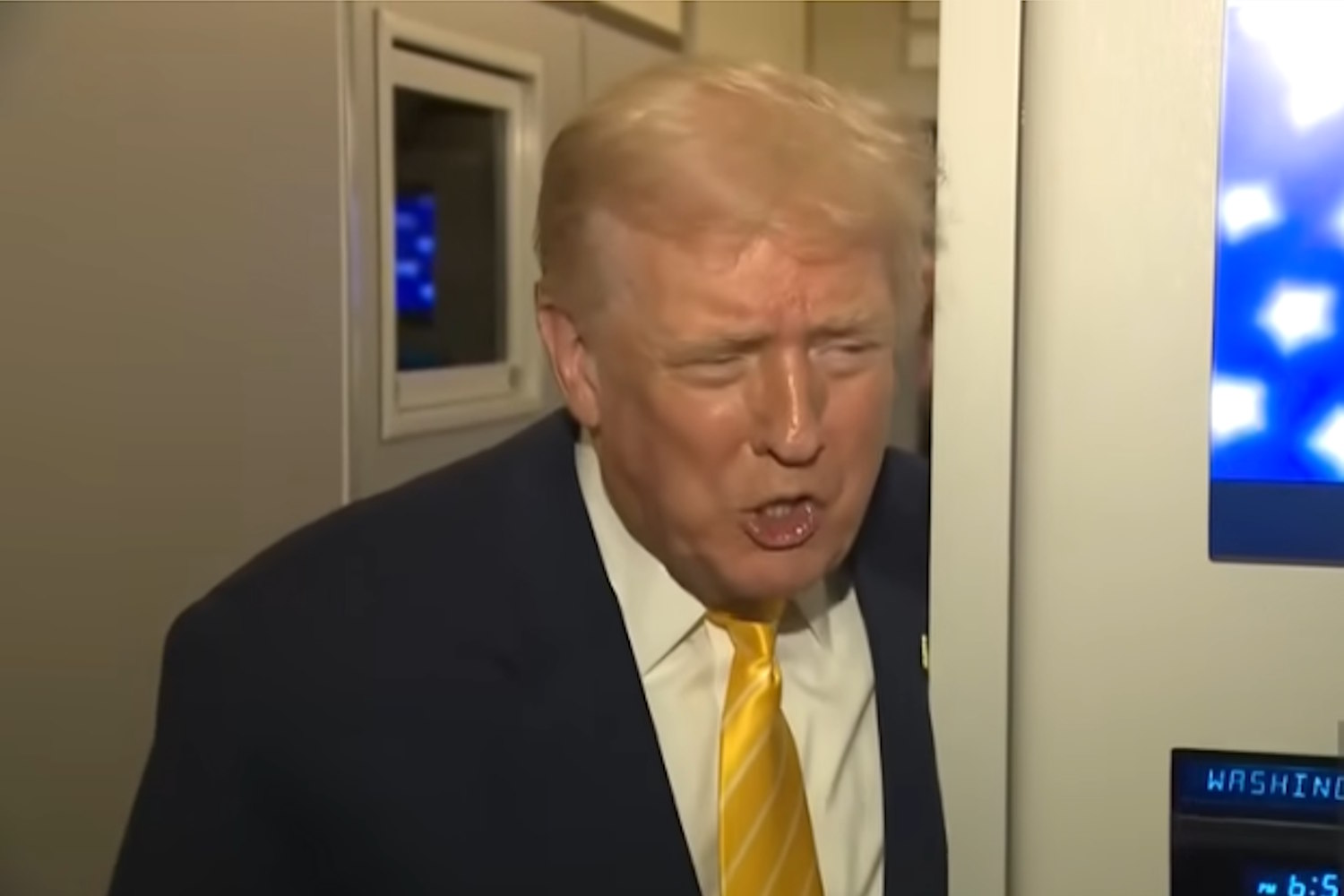
In recent days, Donald Trump has reacted with growing irritation to questions about the Epstein case, going so far as to direct sexist insults at several female journalists. Episodes, which occurred on public occasions and in front of witnesses, which only underline a brutality body shaming and which raise questions about the relationship of tycoon with the press and on the importance of respect in institutional conversations.
The latest incident occurred during an Oval Office meeting with the Saudi crown prince Mohammed bin Salmanaccused of being involved in the murder of Jamal Khashoggi. Mary Bruce, a reporter for ABC News, asked Trump why he had delayed for so long the release of documents on Epstein, the financier involved in a minor sex trafficking scandal.
In response, Trump attacked the reporter, accusing her of asking questions.”terrible” and to be “agitated” and to have received a “brainwashing”, words that also raised the disappointment of many colleagues, such as Jake Tapper of CNN, who defined the reaction as “unacceptable“.
The tension wasn’t limited to this episode. In the previous days, Trump had also insulted a Bloomberg journalist, Catherine Luceywith an offensive expression that went viral on social media. “Quiet, quiet piggy“. Incredible:
View this post on Instagram
All episodes that make us reflect on the role of the media and the respect that should exist between institutional representatives and journalists. Although difficult questions are part of the job of those who provide information, it is essential that every exchange takes place in an atmosphere of mutual respect and professionalism. Anger and verbal aggression should never replace constructive dialogue, especially when dealing with sensitive issues of international importance.
The Epstein case
The United States Department of Justice recently released the first part of the “Epstein list“, a list containing approximately 200 pages of documents related to the investigation of the entrepreneur Jeffrey Epstein, arrested in 2019 on charges of sex trafficking of minors. This documentation includes the personal contacts of Epstein, as well as the flight logs of his private plane, the well-known “Lolita Express”. However, as specified by the authorities, the list does not imply that the people mentioned are accused of any crime. The public is now able to know a part of Epstein’s vast social network, which includes names of celebrities, politicians and other VIPs.
Notable contacts include Mick Jagger, Naomi Campbell, Alec Baldwin, Courtney Love, Dustin Hoffman, Michael Jackson, former New York governor Andrew Cuomo and many others. Despite the presence of some prominent public figures, surprisingly, there is no sign of Donald Trump, although his family members Ivana and Ivanka Trump appear. This “first phase” of documents, while not directly implicating those involved, has sparked great interest and controversy, as it sheds light on a web of connections that fueled Epstein’s power and influence.
The Department of Justice has promised to continue with the release of the remaining documents, ensuring that all information is made available to the public after a review to protect the identities of the victims. The Attorney General of the United States, Pamela Bondi, underlined the commitment to transparency, while the director of the FBI, Kash Patel, reiterated the intention to pursue every possible wrongdoing and to bring to light all hidden truths, ensuring that there will be no cover-ups.
Of bodyshaming and other whys
Returning to the episodes of which Trump was the protagonist, they cannot fail to also raise a reflection on the body shaminga phenomenon with devastating consequences on the dignity and respect of people, especially when it comes from powerful figures like Donald Trump. His words addressed to female journalists, such as “Shut up, quiet little pig“, not only are they humiliating, but they contribute to perpetuating a culture of contempt and devaluation of women, especially in professional contexts. This type of language does not only concern incorrect behavior towards an individual, but has a broader impact on the perception of women in the world of work and in society in general.
When a public figure, with global visibility, uses his power to ridicule or insult a journalist for her physical appearance, a dangerous precedent is set that justifies contempt and gender discrimination. Women, already often subjected to unfair criticism related to their appearance, thus risk being further marginalized and silenced. Trump’s reaction is not just a personal attack, but is part of a broader narrative of misogyny that undermines the value and professionalism of women, reducing them to stereotypes and superficial judgments.
In a democratic context, politics should promote mutual respect and equality, values that must also be reflected in the treatment of journalists. The body shaming it has no place in a civil and constructive dialogue. Every person, regardless of gender, deserves to be treated with respect and dignity, especially in a work environment where the main objective is to provide information and bring the truth to light. Insulting and ridiculing not only harms the person, but damages the entire climate of respect necessary for the correct performance of the role of the press in a democracy.
