
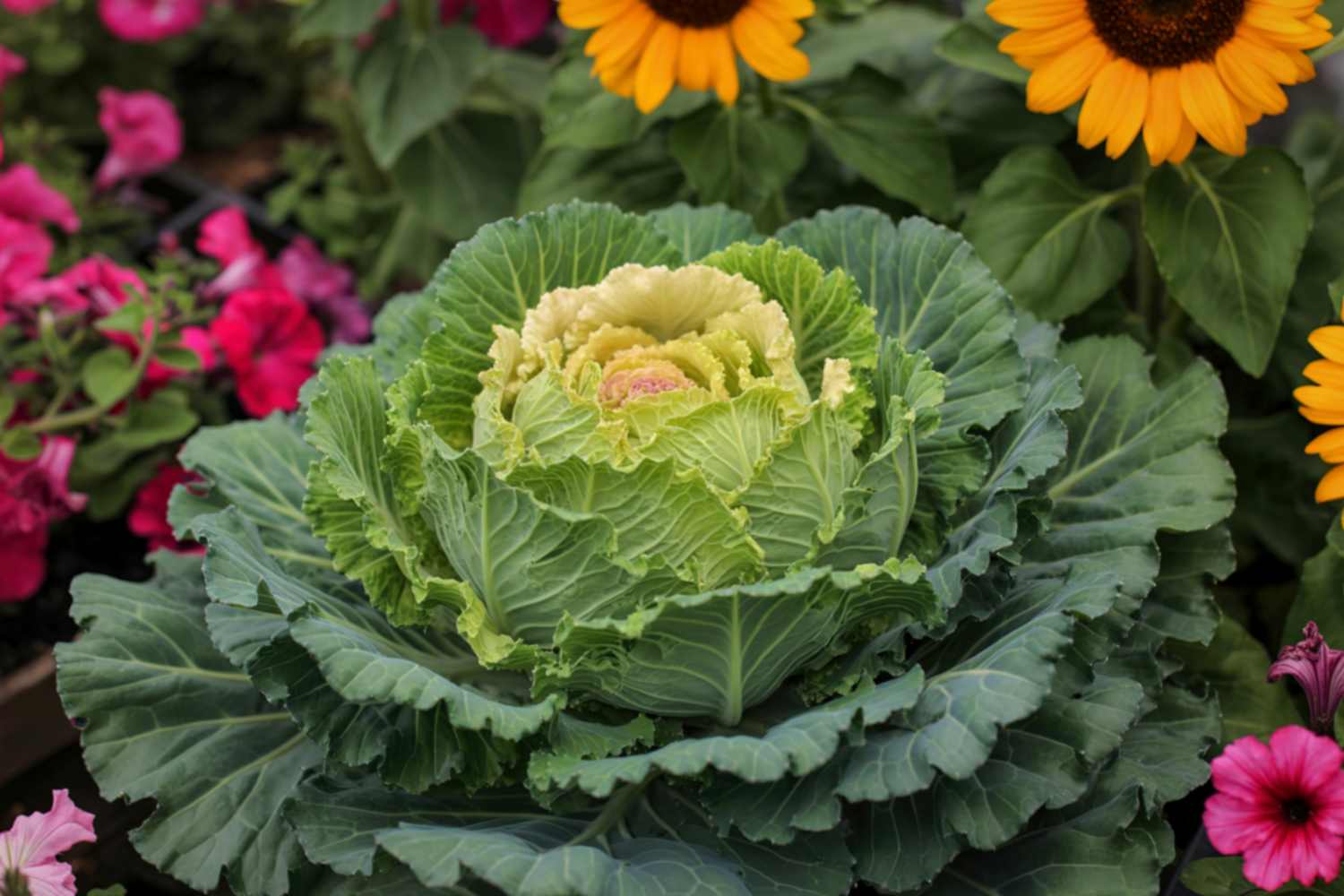
If you grow a vegetable garden and have a certain familiarity with fresh vegetables you will surely have noticed that whitish film that covers the leaves of cabbage and cauliflower. There are those who mistake it for the residue of an anti-parasitic treatment, or for dirt, when in reality it is a completely natural and beneficial phenomenon for the plant: this waxy substance is called pruina and makes the leaves oily to the touch.
A natural protective barrier
Bloom is a waxy substance produced by the surface cells of the epidermis of fruits and leaves. It is not only found on cabbage, as we can easily observe it on grapes, plums and even some succulents. Chemically, it consists of hydrophobic organic compounds, mainly long-chain aliphatic hydrocarbons with or without substituted functional groups.
It is an epicuticular wax that forms a protective layer on the surface of the leaves with multiple functions: it protects from ultraviolet rays and prevents excessive dehydration. For plants of the family of Brassicaceaewhich includes cabbages and cauliflowers, this protection is particularly important during periods of environmental stress.
How this “dust” is formed
The epidermal cells of the leaves continuously produce these waxes through a complex biological process. The chemical composition and structure of epicuticular waxes are diverse and complex, involving mixtures of long-chain hydrocarbons, alcohols, ketones, and terpenoids.
Studies conducted on broccoli (Brassica oleracea) have shown that these waxes are deposited via a diffusion mechanism through the cuticle. The process occurs continuously throughout the life of the plant, a period in which microscopic crystals are formed and accumulate on the leaf surface.
A sophisticated defense system
The bloom plays a very important role in the defense of plants against parasites. Scientific research has shown that nonacosane, the main component of cabbage leaf wax, negatively influences the oviposition of butterflies and the feeding of butterfly larvae. Pieris rapaean important pest of brassicas.
A study of 12 cabbage varieties showed a strong negative relationship between epicuticular wax content and the level of infestation by various insect pests. Plants with a greater quantity of bloom are less attractive to harmful insects, an aspect which guarantees excellent natural protection without the need for external interventions.
Why we shouldn’t remove it
When we wash vegetables, some of this wax is naturally removed. It manifests itself to the eye as a thin opaque veil, similar to very fine and whitish powder which is not perceptible to the touch; when touched it disappears, leaving the underlying epidermis glistening.
Completely removing the bloom can make plants more vulnerable, as demonstrated by several studies: epicuticular waxes provide protection against so-called abiotic stresses, such as high temperatures, excessive radiation and water loss, as well as against biotic stresses, i.e. pathogens and insects. For this reason, when we buy particularly “dusty” cabbages, we should consider it as a sign of freshness and quality.
An indicator of health
The copious presence of bloom indicates that the plant had optimal growth conditions. In fact, plants stressed by water or nutritional deficiencies produce less protective wax: some agricultural treatments can reduce the quantity and alter the shape of the epicuticular wax on the leaves, which will make the plants more susceptible to fungal diseases.
Organic agriculture considers pruina a precious ally: its presence reduces the need for phytosanitary treatments, as it naturally creates unfavorable conditions for many pathogens and parasites. Furthermore, the highly hydrophobic surfaces created by epicuticular wax are typically self-cleaning, providing additional protection against pathogens and insect predation.
Not just cabbage
Although particularly noticeable on brassicas, bloom is found on many other food plants. Each species produces a unique composition of waxes, adapted to its own ecological needs. It is an organic wax that is derived from long-chain fatty acids, with alcohols other than glycerol.
The next time you notice that whitish film on the leaves of your cabbage or cauliflower, remember that it is not dirt to be carefully removed, but a sophisticated natural protection system.
