
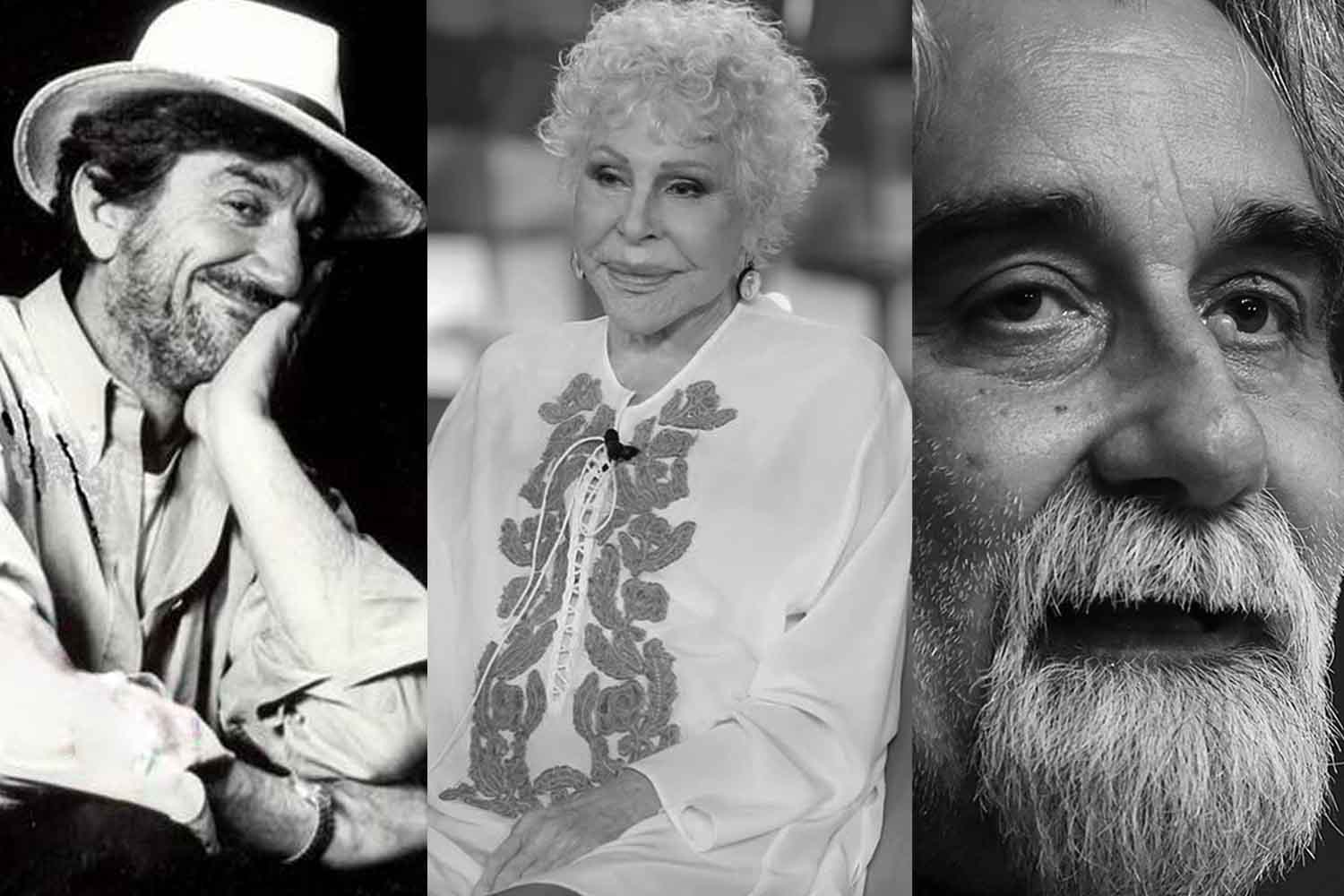
The death of Ornella Vanoni, which occurred on November 21, 2025, shook Italy with almost unanimous tenderness. In recent years the artist had become the most authentic version of himself: fragile, luminous, at times ironic, free from any superstructure. He showed himself as few can do, with a humanity that had brought different generations back into dialogue. This is why his passing has left a void that resembles a collective wound.
The emotional blow came in an already heavy month: just two weeks earlier, on 8 November 2025, Peppe Vessicchio, a much-loved and reassuring figure of Italian music, passed away. His kind, constant, familiar presence inside and outside the Sanremo Festival had created a rare emotional bond with the public. His disappearance had already opened a crack, quickly turning into widespread pain. When, shortly afterwards, we also said goodbye to Vanoni, the emotional impact appeared clearer: this was not just news. They were losses that moved memories, identities, moments of life shared with their art.
We felt the same sense of emptiness in the recent past for giants like Gigi Proietti, who was not only an immense actor, but a presence capable of passing through our days with his clear irony and rare human warmth. The way he knew how to transform a joke into a hug, or a theatrical scene into a shared moment, gave everyone the impression of being part of something bigger than just an audience. With him we felt welcomed, understood, accompanied, even from afar.
A giant, just like Raffaella Carrà, who brought a luminous and contagious freedom into the world, or like Franco Battiato, who with his spirituality accompanied us in the most intimate and silent parts of us, and like many, too many, other artists who have marked our lives.
But why does this happen? Why are we so sorry?
Why does the death of an artist hurt us?
When an artist who has accompanied us for years passes away, many find themselves with a pain that seems to come from a deep, almost intimate place. We wonder why this happens, given that, after all, we didn’t have a direct relationship with them. Yet, what we feel has a much more concrete basis than we imagine.
Psychologists have long been talking about parasocial relationships, those bonds that we build with public figures who “enter” our daily lives through their art. And here an aspect comes into play that we often underestimate: the mind does not measure bonds based on reciprocity, but based on what they represent for us. They are one-sided relationships, of course, but not without meaning.
A famous study conducted on 381 adults showed it with great simplicity: when a person thinks of losing his favorite TV character, the emotional reaction is similar to that of a real separation. Sadness, sense of emptiness, disorientation. And the more that character was present in the participant’s life, the more intense the emotion became. Those with a more fragile attachment style feared even stronger reactions. What emerges is clear: when we become attached, we do it with authenticity, even if there is an artist on the other side.
Confirmation also comes from the works of Wendy Lichtenthal, one of the researchers most involved in mourning and emotional bonds. Lichtenthal explains that feeling sad about the death of a public figure is natural, because that connection, even if symbolic, was real to us. We are “programmed” to create connections that protect us, reassure us, explain the world to us. An artist is never just an artist: it can be the voice we listened to as children, the music that helped us in a fragile moment, the image that reminded us of someone we loved.
When Lichtenthal speaks of “parasocial grief”, he does so with great delicacy: he says that what we suffer is not so much the loss of the person, but the loss of what that person made vibrate within us. And this explains why we felt so touched by Vanoni and Vessicchio, but also why we still feel an emotional movement inside us when we think of all the other giants who have left us.
In each of them there was something that belonged to us too: a laugh, an idea of freedom, a spirituality that made us feel less alone. The truth is, when an artist dies, we don’t just lose a public voice: we lose the way that voice had helped ours feel less fragile. That’s why it hurts. Because behind that loss there is always a part of us that moves.
You might also be interested in:
