
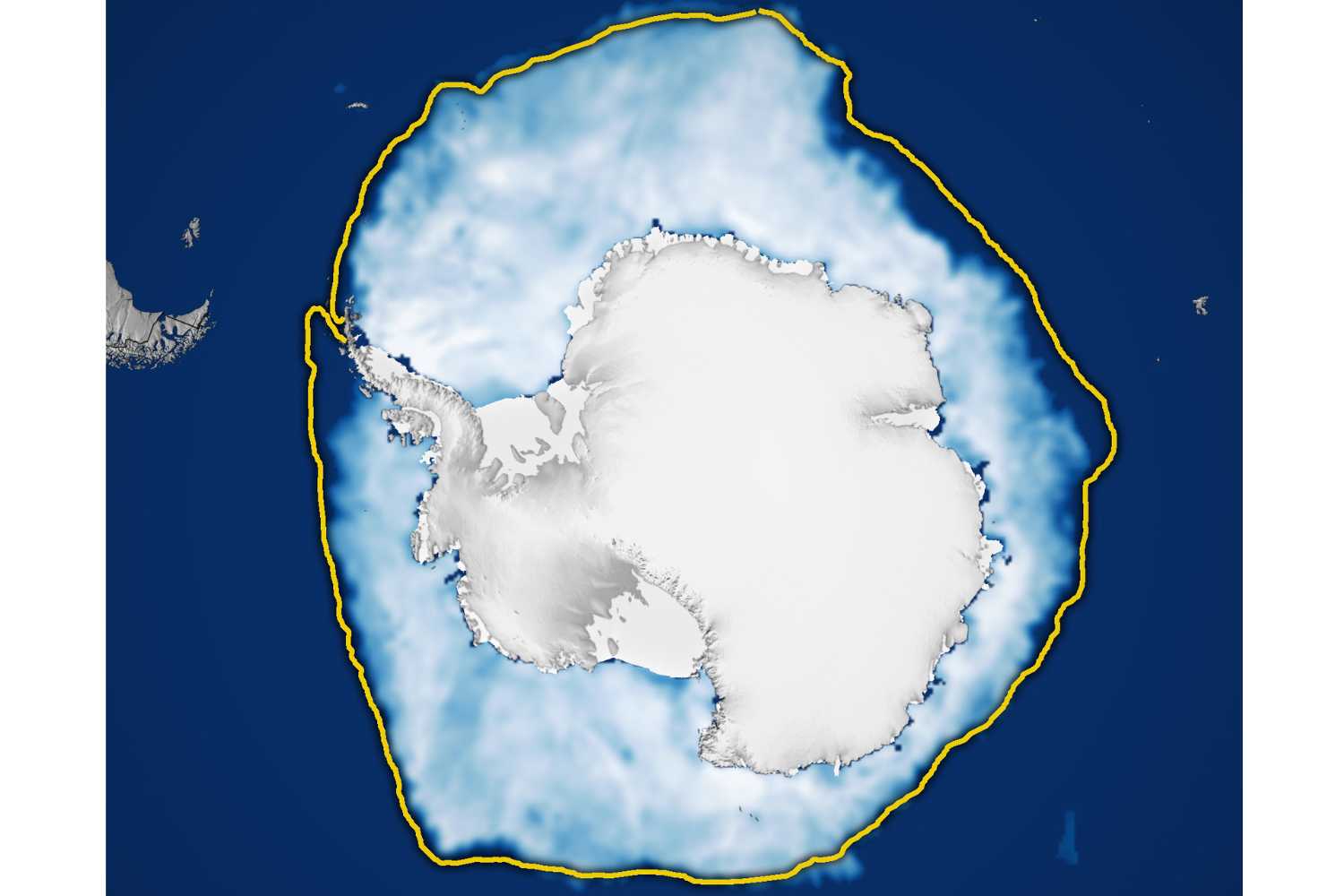
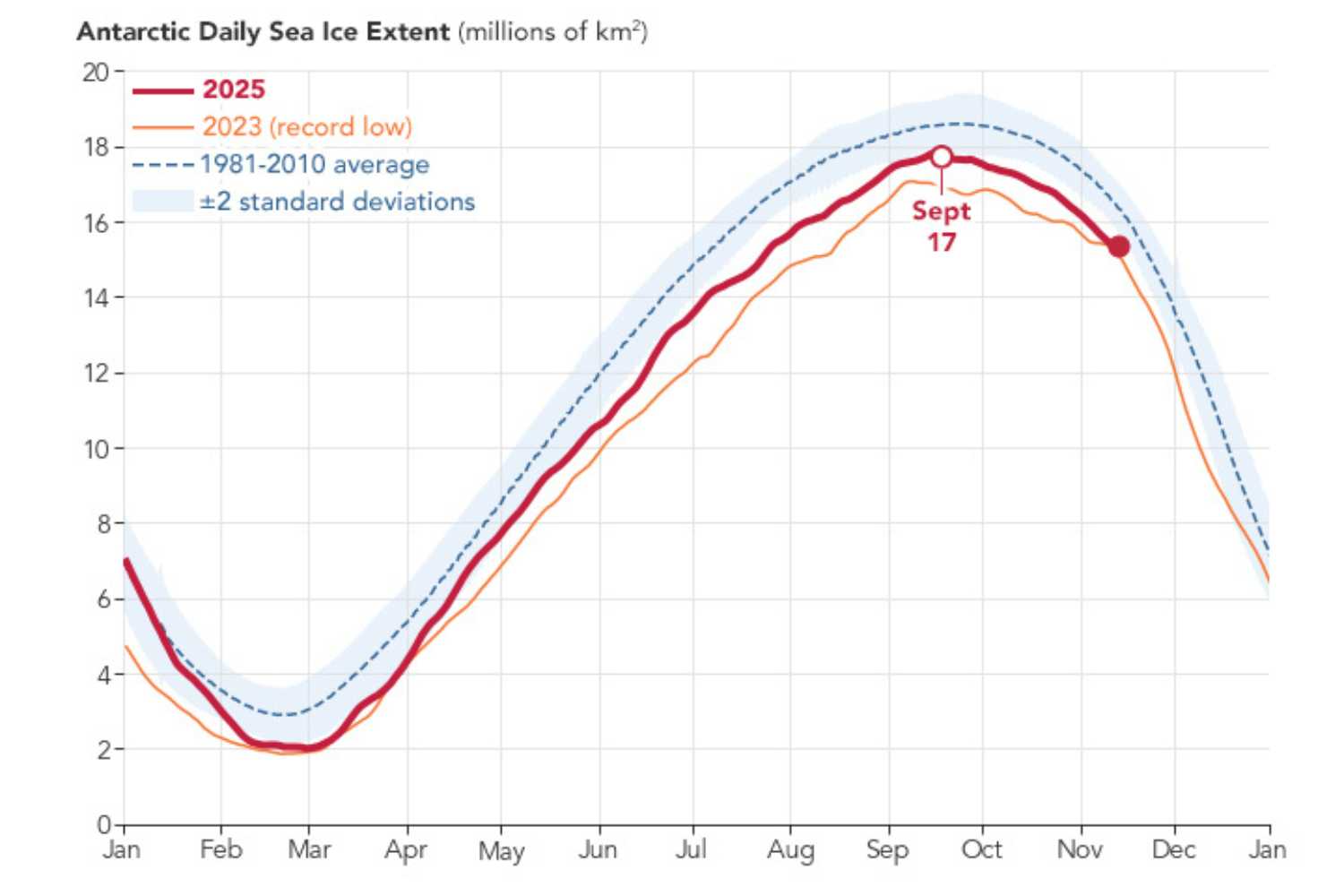
On September 17, as the southern winter lost strength, the sea ice around Antarctica reached its maximum annual extent: 17.81 million square kilometers. An area that is approximately twice the size of the United States, yet 900,000 square kilometers below the average recorded between 1981 and 2010. The bad news is that this is the third lowest maximum in the last 47 years of satellite recordings, a result that confirms a trend that began in 2016.
How to measure ice
The data comes from NASA and the National Snow and Ice Data Center in Boulder, Colorado, where researchers daily follow the evolution of the ice edge by dividing the ocean into a grid and counting the squares covered by ice by at least 15%. A standardized method that allows precise comparisons over time.
A trend without certainties
Since before 2016, Antarctica has seen several record-breaking or near-record winters. Then something changed. Recent years have shown persistently low values, with sharp fluctuations that complicate forecasts. Walt Meier, a scientist at the NSIDC, says: “It is not yet clear whether the reduction in ice cover in Antarctica will persist. For now, we are keeping an eye on it.”
The system that cannot be read
Meier’s caution has a reason. Antarctic sea ice behaves differently from Arctic ice: intense winds and powerful currents continuously agitate it, causing expansions and retreats not only linked to temperature. Nathan Kurtz, head of the Cryospheric Sciences Laboratory at NASA’s Goddard Space Flight Center, confirms that “the complexity of the Antarctic system makes it difficult to predict and understand these trends.”
Eight kilometers disappeared in two months
But there is an event that has left scientists speechless. In 2023, the Hektoria Glacier on the eastern Antarctic Peninsula retreated eight kilometers in just two months. It is the fastest retreat ever documented in modern times, comparable to the collapses that marked the end of the last ice age. The study, published in Nature Geoscience and conducted by the University of Colorado Boulder with the collaboration of Swansea University, revealed worrying mechanisms.
The ice plain that accelerated the collapse
Adrian Luckman, a glaciologist at Swansea University and co-author of the research, explains: “Usually glaciers don’t retreat so quickly. The circumstances may be a bit peculiar, but this scale of ice loss shows what might be happening elsewhere in Antarctica, where glaciers are slightly entrenched and sea ice loses its hold.”
The Hektoria glacier rested on an ice plain, a rocky expanse below sea level. When the retreat began, this configuration allowed large portions of the ice to break off in rapid sequence. Seismic devices recorded glacial earthquakes, confirming that the ice was still anchored to the ground during the collapse. It was therefore not floating ice, but a mass that directly contributed to the rise in sea levels.
The alarm for the largest glaciers
Hektoria covers about 290 square kilometers, small by Antarctic standards. But its collapse represents an alarm. Ted Scambos, a senior research scientist at CU Boulder’s Earth Science and Observation Center, warns: “This type of lightning retreat really changes the possibilities for other larger glaciers on the continent. If the same conditions occur in other areas, sea level rise could accelerate dramatically.”
The legacy of Larsen B
The event is linked to the collapse of the Larsen B ice shelf, which occurred 23 years ago. That collapse triggered a cascade of changes that still reshapes the Antarctic landscape today.
Sea ice isn’t just a beautiful white expanse. It reflects sunlight, keeps ocean temperatures stable, supports the food webs of penguins, seals and whales. When it covers less surface area, dark water absorbs more heat, altering weather patterns even thousands of miles away.
Meanwhile, satellite measurements continue as researchers try to identify other glaciers with vulnerabilities similar to Hektoria’s. Continuous monitoring and international scientific cooperation remain the main tools for understanding a system that changes faster than predictions.
