
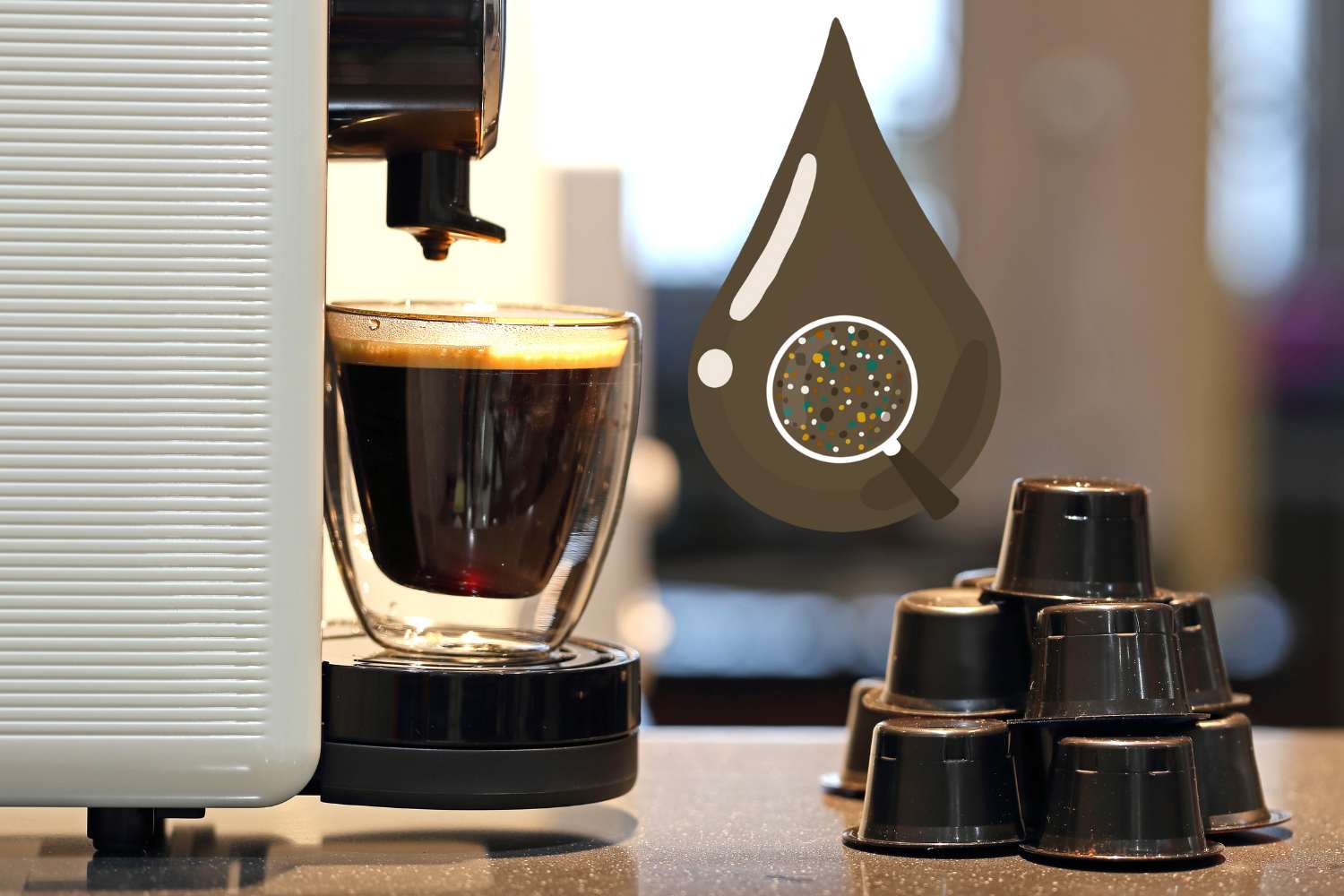
Single-dose coffee capsules have long been protagonists in the homes of many families and in various offices or workplaces. In fact, they allow us to prepare our favorite drink conveniently and very quickly, whenever we want. But what happens to the plastic in these products when hot water passes through them? And what risks does it pose to our health?
Recent studies highlight a worrying phenomenon: the microplastics and chemicals present in the pods can end up directly in the cup, creating an invisible but potentially harmful cocktail.
Because capsules release microplastics into coffee
To understand the problem, it is important to know what happens inside these machines. The water is heated to temperatures close to 100 degrees centigrade and then pushed through the capsule under high pressure. This combination of extreme heat and high pressure creates ideal conditions for plastic to fragment and release microscopic particles that end up directly in the drink.
A recent study conducted by environmental chemistry professor Mohamed Abdallah of the University of Birmingham analyzed, among other things, three different brands of pods. The results show significant levels of microplastics in the coffee prepared with those pods: according to the researchers’ calculations, each cup corresponds to approximately 1.65 microplastics per kilogram of body weight, a quantity higher than that present in water alone.
Chemical analyzes then confirmed that the particles come from the plastic materials of the capsules: the polymers found in the drink correspond exactly to those used in the production of the pods. This clearly demonstrates that microplastics are not only present in the environment, but also directly enter our body through a simple coffee.
However, the capsules are not the only source of contamination. The internal parts of the machines, often made of plastic, can also release fragments, especially if the machine is old. And even the water used can contain microplastics even before entering the coffee maker, as can milk. Even plastic-lined disposable cups contribute to contamination.
In practice, each cup of coffee may contain microplastics from different sources, thus accumulating multiple potentially harmful exposures.
The health risks
Microplastics are tiny fragments, less than five millimetres, which can be absorbed by our body and transported by the blood to vital organs. Laboratory studies have shown that they can cause inflammation, oxidative stress and immune system disorders.
Research from 2024 highlighted an alarming fact: patients with microplastics in their arteries had a greater risk of heart attack, stroke and premature death. Experts agree that while the research is still in its early stages, there is already enough to be concerned about.
The safest alternatives
Fortunately, there are some solutions to reduce the risk of ingesting microplastics through coffee, such as choosing stainless steel capsules, which are reusable, heat-resistant and plastic-free.
Then there are also aluminum capsules, safer than plastic, even if some contain small quantities of plastic materials.
An excellent choice is to use traditional coffee machines such as the moka, glass or stainless steel coffee makers which completely eliminate contact with plastic.
It is also important to use reusable glass, ceramic or steel cups instead of disposable cups, a habit that further reduces exposure.
The future of plastic-free coffee
Bioplastics and other alternative materials are gaining ground, but they are still little studied and not always risk-free. In the meantime, a precautionary approach suggests limiting the use of plastic in contact with food and hot drinks, choosing reusable and long-lasting solutions.
As Tracey Woodruff, a health policy professor who spoke on Time, reminds us: it’s not about eliminating everything immediately, but about making conscious choices that gradually reduce exposure and incentivize industry and governments to develop safer solutions.
