
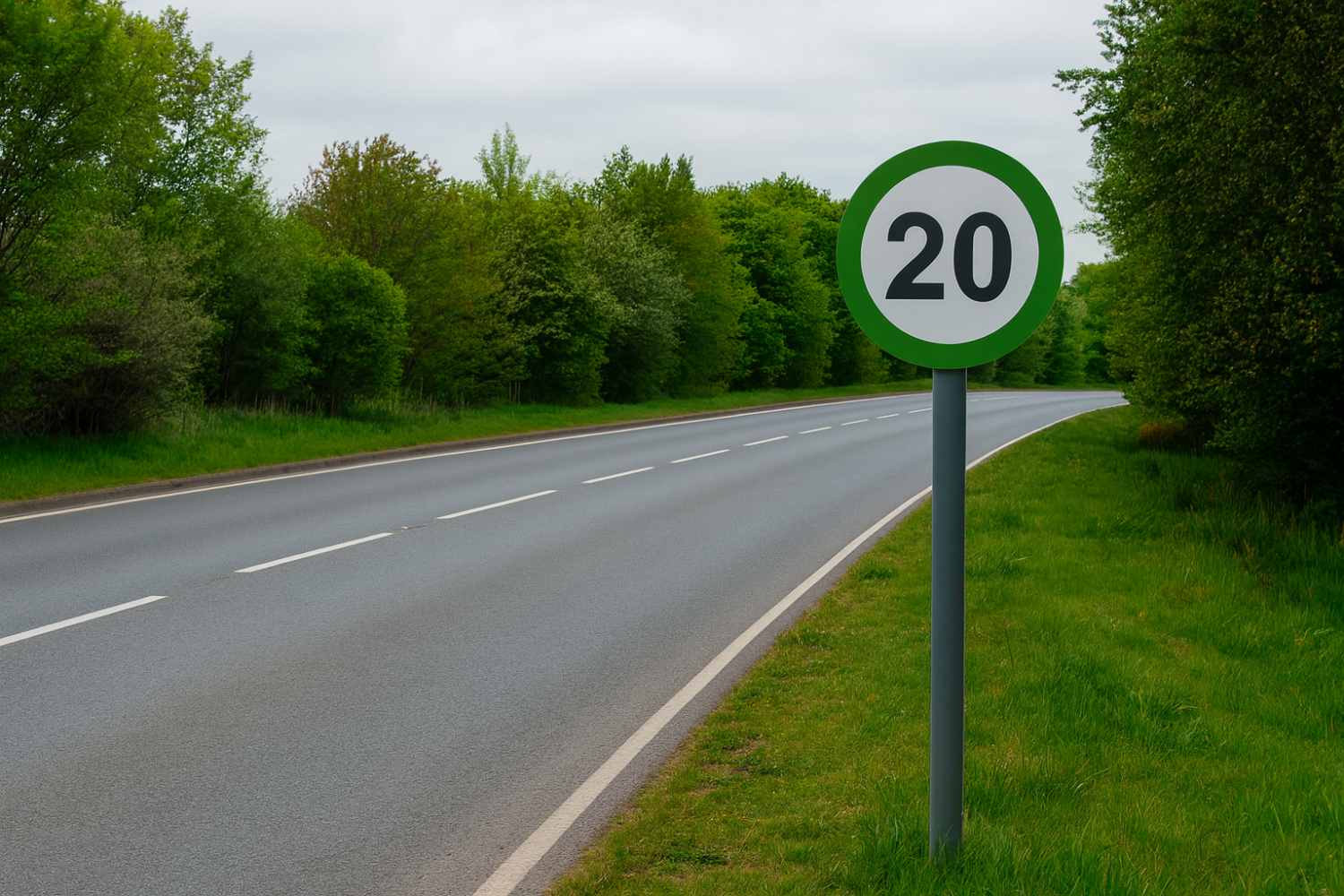
Circular road signs with a green border are appearing on British roads, an unusual color choice compared to more traditional signs and which immediately went viral on social media and in the media. Unlike speed limits with a red border, these new signs do not impose obligations or prohibit behavior: they represent a driving recommendation, not a sanctionable rule.
They are not limits, but suggestions
The meaning is very simple: the number shown in the center indicates the recommended speed on that stretch of road. If, for example, you are advised to travel at 20 miles per hour, exceeding this threshold will not result in any fine, as long as you stay within the official limits set by the highway code. Their purpose is therefore purely preventive, aimed at encouraging responsible behavior.
Where these signals meet
Local authorities in the United Kingdom place them above all in areas considered most sensitive for safety: near schools, hospitals, residential neighborhoods or areas with heavy pedestrian traffic. In some cases they are even installed inside private properties, construction sites or condominium complexes, where it is useful to remind motorists to reduce speed. The function is clear: to create a safer traffic environment without resorting to new legal obligations.
A choice that other European countries also like
The British idea attracted the attention of other states. France and Spain have already introduced similar signs, always with the same meaning: driving recommendations and not formal limits. In Italy, for now, these signs are not present and do not fall into the categories envisaged by the Highway Code, but it is not excluded that in the future they could be evaluated as an awareness tool.
What the motorist should do
When you encounter a sign with a green border, the best advice is simple: pay attention and reduce your speed, especially if you are crossing areas with vulnerable people. This is not an obligation, but an invitation to actively contribute to collective security. Even without sanctions, these signals point to a fundamental principle: individual responsibility is often more effective than any fine.
You might also be interested in:
