
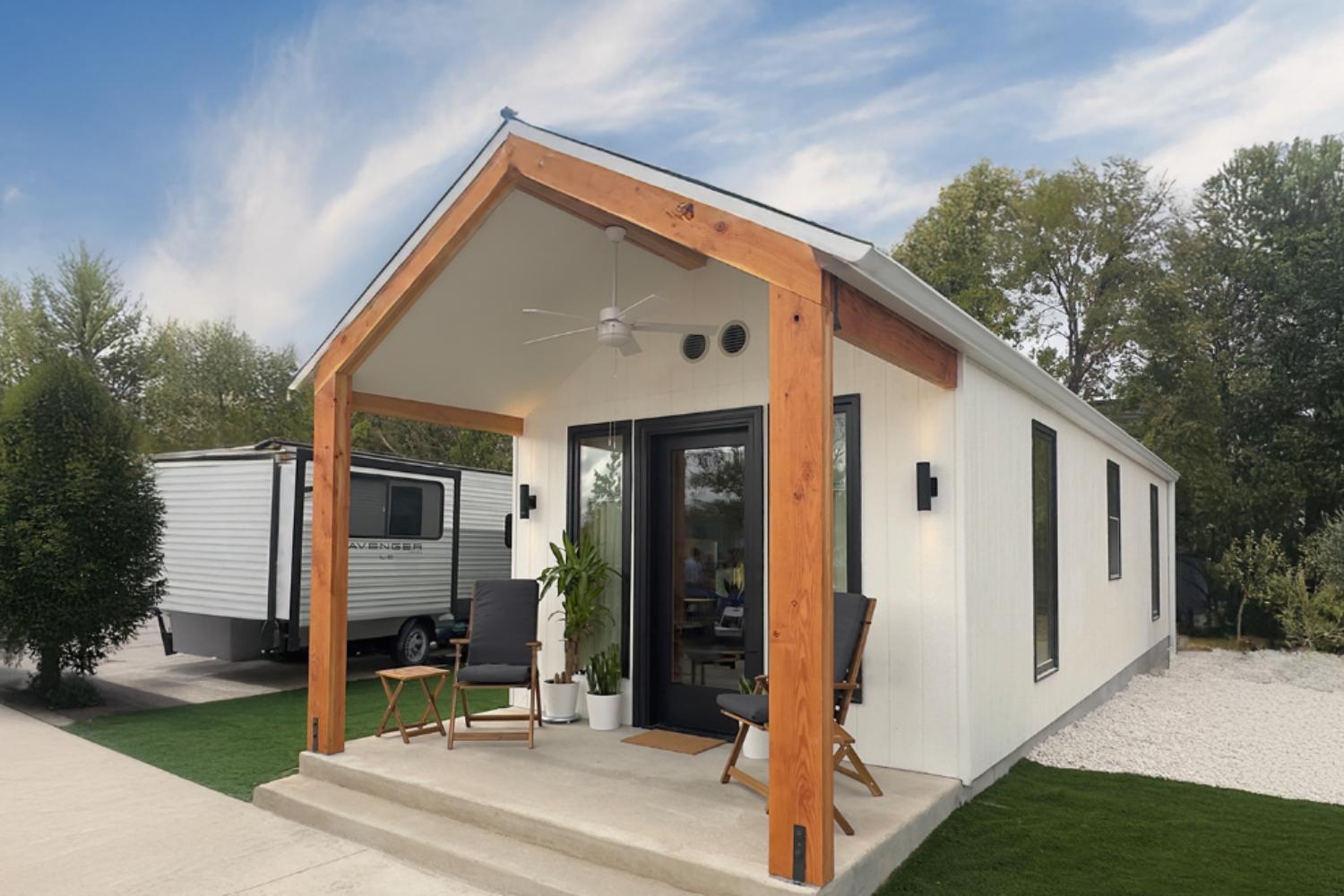
With rising real estate prices and a progressive reduction in homes available for long-term rentals, the housing emergency has become one of the most pressing social challenges in the United States. In this context, Ikea US has chosen to intervene in a practical way, building a mini home for homeless elderly people in San Antonio, Texas. The goal was to create a space capable of responding to the real needs of people who have lived for years without a stable home.
A mini house designed around the experiences of the residents
The project, developed together with the WestEast Design Group studio, starts from a clear principle: temporary accommodation is not sufficient if it does not take into account the experiences of those who will live there. For this reason the structure is inserted in a community that includes around 200 micro-dwellings, campers and small apartments, distributed over an area that once hosted a drive-in.
Added to these spaces are assistance services, recreational areas and social support paths. The first assignments involved around seventy residents, almost all of whom were people with disabilities or had a history of living on the streets for a long time; another sixty entries are expected in the following months.
View this post on Instagram
An environment designed for safety, comfort and autonomy
The mini house measures 33 square meters and represents a prototype that Ikea could replicate elsewhere. The furniture had previously been set up in an Ikea store, so that it could be observed and perfected before final installation. One of the central aspects is safety, also guaranteed by tall, narrow windows, designed to let light in without compromising privacy.
View this post on Instagram
Inside, each element is studied according to a trauma-informed design approach, which enhances the possibility for inhabitants to make autonomous decisions. This is why the furniture is easy to move, allowing the person to configure the space in a personal and reassuring way.
Light and neutral tones dominate in the bedroom, while the bathroom features a bathtub, a symbolic and practical choice at the same time: an alternative to the showers in reception centres, often associated with uncomfortable situations. The Housing First Community Coalition, which manages the entire area, will monitor the effectiveness of the project to evaluate its possible extension.
View this post on Instagram
You might also be interested in:
