
Born in the United States, Black Friday has over time become an awaited event all over the world, every year millions of consumers wait for this day to take advantage of discounts and attractive offers to purchase household appliances, clothes or objects of various kinds.
But “all that glitters” is not gold, in several articles we have explained to you why not to fall into the trap of Black Friday, a day (which then extends even further) of unbridled shopping which really impacts the environment, makes us spend more than we should and above all puts us face to face with fake needs, from the point of view of consumption and the culture of disposable items.
View this post on Instagram
The allure of buying products at reduced prices can be irresistible, but this often leads to a frantic rush to grab consumer goods that you don’t actually need. The effect obtained is an increase in production, with consequent impact on the environment and society.
Black Friday, in fact, inevitably results in a significant increase in waste, given that many people buy products compulsively. But that’s not all yet.
Our purchases during the Black Friday week, as estimated by SIMA, will cause pollution levels to skyrocket, contributing to the release of approximately 400 thousand tons of CO2 into the atmosphere globally. This estimate took into account both the transport of products ordered online and coming from various parts of the world, as well as the increased circulation of private vehicles, with negative consequences on air pollution and the climate crisis.
Among other things, you also risk scams if you don’t buy on reliable sites and don’t pay particular attention. Read also: Black Friday: beware of scams and fake online sales sites, here’s how to avoid rip-offs
What is Buy Nothing Day
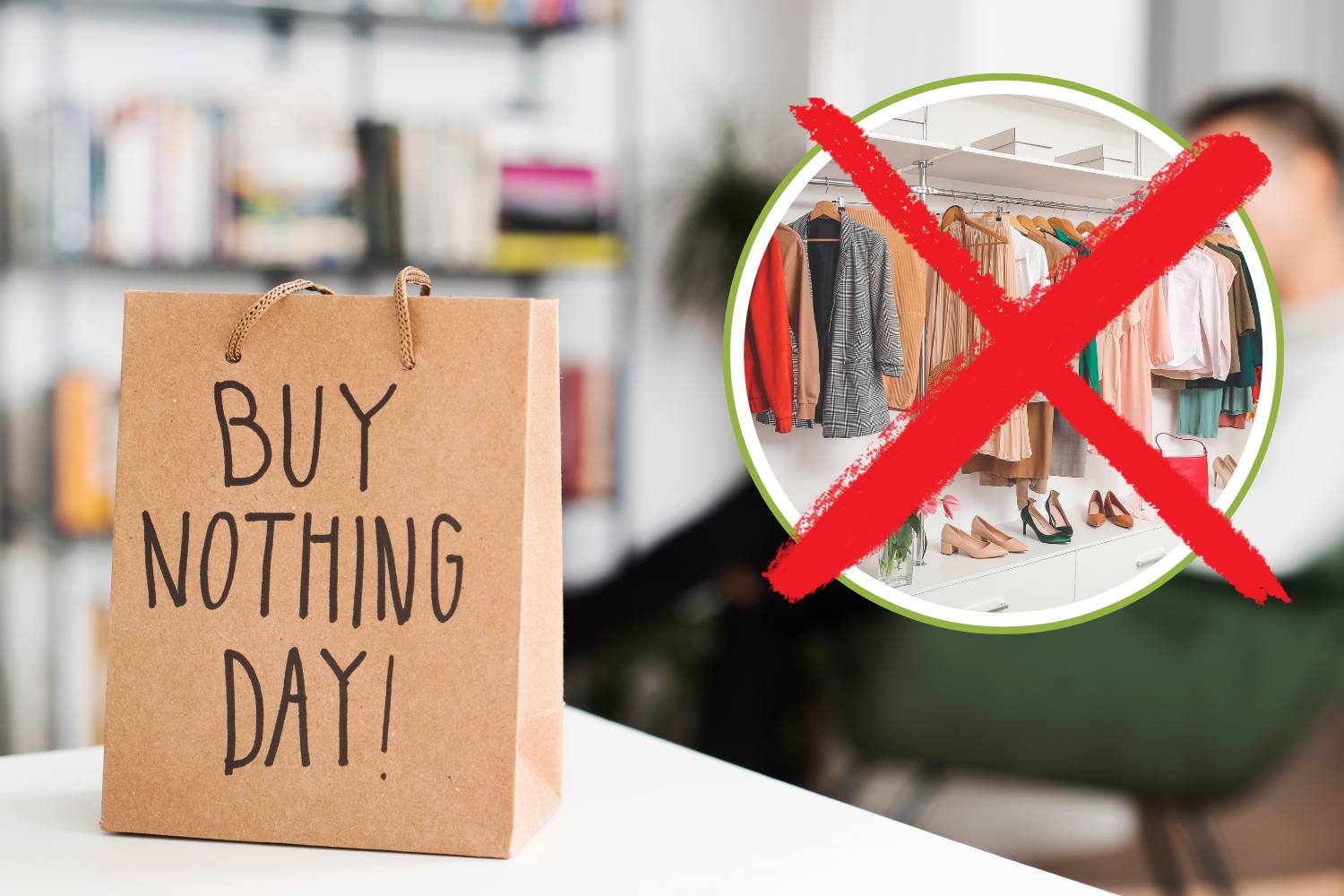
As an alternative to this dynamic that pushes us to buy, buy, buy, a movement has been born for some time that invites people to reflect on the implications of unbridled consumerism and to consider more sustainable alternatives. This is “Buy Nothing Day”, an initiative that seeks to counteract the obsession with shopping and promote a more conscious perspective.
Born from the initiative of Adbusters, a non-profit organization based in Canada, in the early 1990s, Buy Nothing Day has quickly become international in scope and is currently celebrated in over 50 countries. The essence of this initiative is a direct challenge to the culture of consumerism, and invites participants to unplug from shopping for at least one day. For some, it becomes a festive occasion, while for others it is a widespread celebration in the streets; the only requirement to participate, however, is to spend the day without spending.
In the UK, the campaign and website were launched in 2000 by Michael Smith, a graphic designer with a passion for environmental and ethical issues. The basic message has always remained clear: “Buy less, live more”. After 21 years the motto is even simpler: we must consume less.
The serious implications of shopping emerge when the environmental and ethical consequences of consumerism are considered. The rich countries of the West, which make up only 20% of the world’s population, consume more than 80% of the planet’s natural resources, causing disproportionate environmental damage and an unfair distribution of wealth.
As consumers, it is imperative to question our culture of compulsive buying. Each of us has different needs, but we all, more or less, buy and we have the duty to question the products and compare ourselves with the companies that produce them.
Buy Nothing Day, which usually falls on the same day as Black Friday (but the date can be a little different from country to country), is therefore an invitation to reflect on consumption habits and the real need for material goods, taking a break from shopping. The objective of this “against Black Friday” is precisely to promote greater consumer awareness, making them turn towards more sustainable alternatives, such as recycling, reuse and reducing waste.
How to participate in Buy Nothing Day
It’s very simple and the English site dedicated to this alternative day explains it well:
Participate by not participating! Literally, doing nothing is doing something! However, committing to consuming less is also a big step towards helping the environment. Recycling is nice, but reducing is better! If we all took simple steps to reduce what we consume, we would collectively change our attitude towards single-use packaging, fast fashion and our throwaway culture.
And then they add:
Buy Nothing Day is not confrontational, it is not a protest. All we ask is for people to unplug from shopping, have some fun, use their imagination and simply escape consumerism for a day. If people laugh at the ingenuity and brilliance of Buy Nothing Day, then we have gotten their attention and are opening the door to change.
View this post on Instagram
