
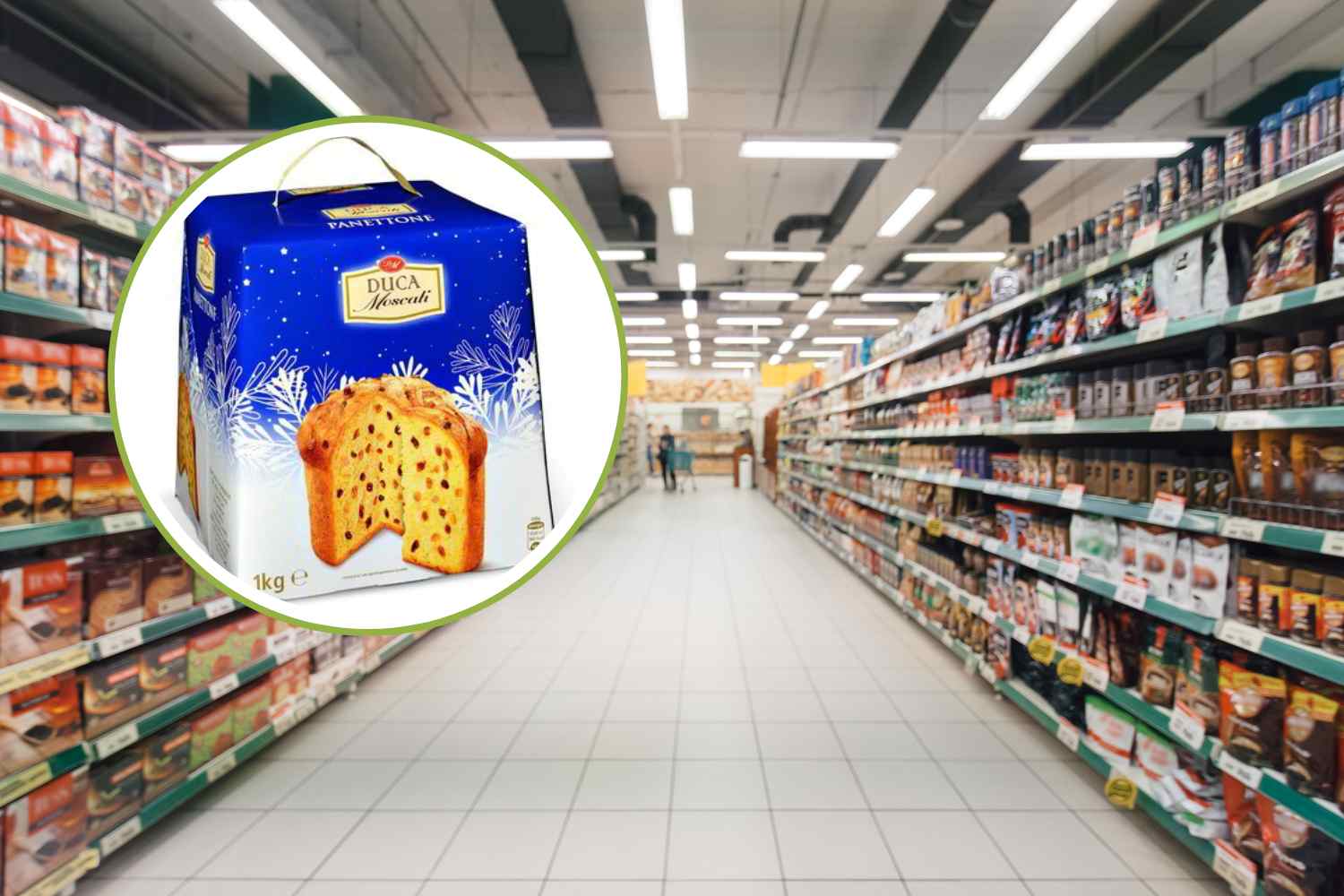
Christmas is approaching, traditional desserts return to the table and panettone remains the symbol par excellence. This year, however, prices are going strong, some reaching twenty euros without difficulty. Those who look at supermarket offers, such as Eurospin, do so to save money, but often have the doubt: “Panettone for less than four euros, will it really be good?”. Understandable suspicion, but the reality is less obvious.
There is no clear answer. Buying a panettone from a discount shelf does not mean choosing a poor product, but neither can it be argued that it is identical to the premium versions. You need to read the label and understand who is behind the dough.
Who produces Eurospin panettone?
The panettone Duke Moscati by Eurospin is produced on behalf of the supermarket, not by Eurospin itself. And who makes it? Once again The Old Ovena Venetian company specializing in traditional leavened products, which also produces the best-known Battistero brand. They operate between Brogliano and Cornedo Vicentino, with factories that combine history and automation. Not an improvised production, but a reality that has been working on panettone, pandoro, colombe for generations, and which declares to consider qualitative excellence part of its philosophy.
Ingredients
The composition of Eurospin panettone is in line with the classic one: flour, raisins (13%), candied fruit (9%), butter, fresh yolk from free-range eggs, natural yeast. There are emulsifiers and flavourings, as expected in the industrial sector, but nothing that causes scandal. It is not a high-end artisanal panettone, but nor is it a product full of preservatives.
Famous brand versus discount brand: does it really make a difference?
The manufacturer is the same one that also works for more well-known brands. It doesn’t mean the recipe is identical. The percentages of butter, the type of raw materials or the leavening times probably change. There are differences, they serve to keep the price low. But the structure of the product remains serious, because those who produce it have an identity and a reputation to maintain.
It’s not enough to look at the brand to judge
Belittling a panettone just because of the price or the name of the supermarket is too quick a way of evaluating. The brand is not synonymous with quality. To understand if it is worth buying, just read the label and identify the real manufacturer. The brand on the package is only the facade, often the least relevant part.
Savings yes, but with awareness
We are not talking about a panettone from a gastronomic boutique, nor about a dessert to be considered second class. Whoever buys it can get an honest product, at an affordable price, knowing that there is a competent company behind it. The economic compromise does not necessarily imply a drastic compromise on quality. The discount brand is just the dress, and sometimes there is more substance underneath than you think.
