
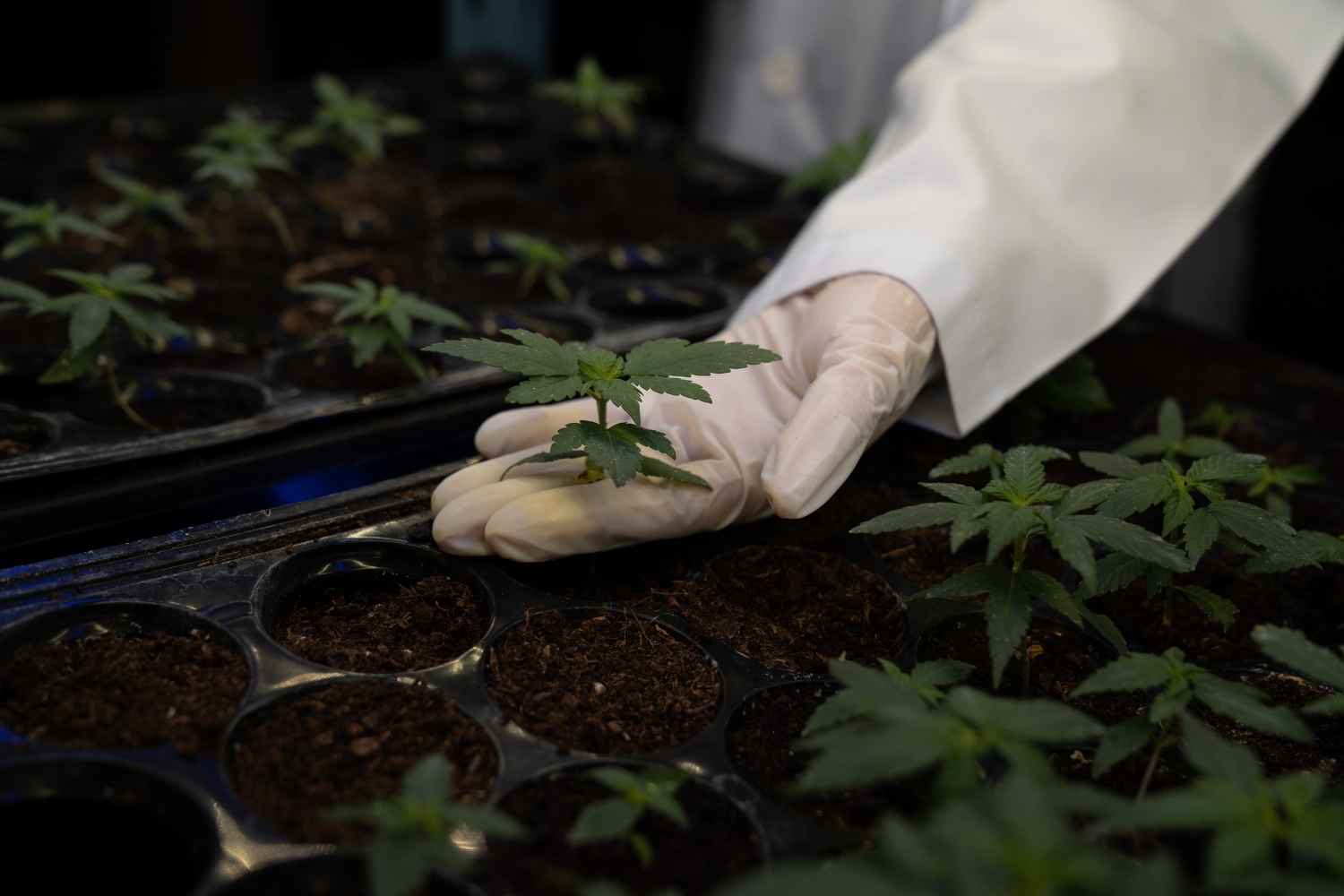
There is no peace for cannabis light in Italy. After the Security decree which, last June, completely outlawed it, in recent days an unexpected step backwards seemed to be looming.
An amendment to the budget law proposed by Fratelli d’Italia, signed by Senator Matteo Gelmetti, could have made the sale of hemp inflorescences and liquid derivatives with THC up to 0.5% legal. The novelty would have been accompanied by a super tax of 40% on the selling price.
Immediately after the announcement, however, a real fuss broke out between the majority and the opposition: the party clarified that the proposal was not aimed at legalizing light cannabis, but at combating its spread. Shortly thereafter, the amendment was withdrawn, once again confirming the regulatory chaos surrounding this supply chain.
The Security Decree now equates light cannabis to narcotic substances, prohibiting their import, transfer, processing, distribution and sale in our country. A regulation that has hit the Italian supply chain hard: around 3 thousand companies and 22 thousand jobs have ended up in uncertainty. FdI’s attempt to restore legality in the form of an amendment – albeit with high taxation – was initially seen by the opposition as a sign of possible rectification but it was not what it actually wanted to express.
The rules of the amendment (later withdrawn)
The amendment provided that the sale of light cannabis was entrusted to the Customs and Monopolies Agency, reserved for tobacconists and authorized retailers, with a ban on sales to minors, a ban on advertising and sales online or through vending machines. All with the 40% consumption tax, designed to discourage trade but which, in fact, would have made economic sustainability almost impossible for companies.
When it seemed that the majority had taken a clear direction towards the controlled reintroduction of light cannabis, an official note from the Brothers of Italy arrived which overturned the perception: the party explained that the amendment was actually aimed at “counter the spread and sale of light cannabis products” through super taxation. A statement that directly contradicted what was foreseen by the text itself and increased the chaos around the proposal.
“The amending proposal does not hide any hidden desire to legalize these products, as claimed by some, but the exact opposite“, read the note, specifying that discussions were underway with the ministries to find the best strategy against this sector.
Faced with criticism and obvious embarrassment, the final decision came a few hours later: the amendment was withdrawn.
The battle continues in front of the Council
While the amendment has been withdrawn, the judicial question remains in the background. The Brindisi court raised constitutional doubts about the total ban contained in article 18 of the Security decree. It will now be up to the Constitutional Court to decide whether the law is legitimate or not. If successful for the plaintiffs, regulatory chaos could explode nationwide, potentially impacting thousands of businesses and workers.
In short, light cannabis remains balanced between bans, interpretations and attempts at partial legalization. And while politics moves between steps forward and steps backwards, the sector looks with apprehension at a future that seems increasingly uncertain.
Behind this regulatory ping-pong there are thousands of entrepreneurs who invested in a sector that seemed legal and who today find themselves treated like criminals. Light cannabis, it should be remembered, contains minimal quantities of THC which do not produce narcotic effects, yet the Security decree has equated it to real drugs.
The mess of recent days shows how uncertain the majority is about how to tackle the issue: criminalize, tax heavily or find a middle ground?
