
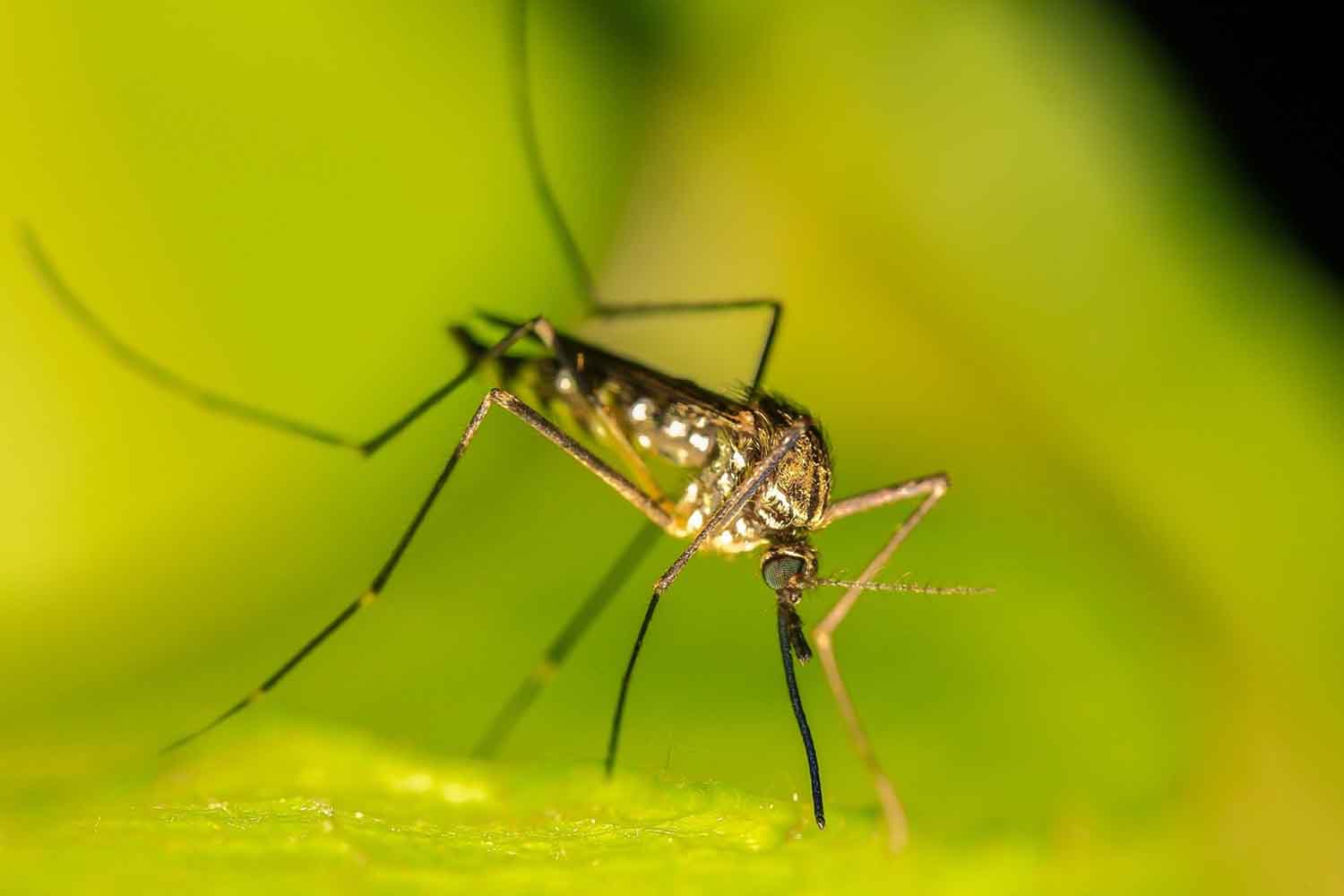
There are scientific stories that seem to come out of a slightly crooked fairy tale, the kind in which nature enjoys reversing roles. The Metarhizium mushroom is one of those characters you don’t expect: it lives in the ground, there’s nothing flashy about it and yet it has learned to imitate flowers to attract insects. He doesn’t do it to be admired, but to devour them. An elegant yet ruthless behaviour, which science has now decided to exploit against the most insistent enemy of our summers: the mosquito.
Until now the problem was simple and paradoxical at the same time. The mushroom is very good at producing longifolene, a fragrant molecule that is irresistible for mosquitoes. The point is that he only issued it after killing his victim. A perfect strategy for the wild ecosystem, a little less so for us humans sitting on the sofa slapping ghosts.
The team led by mycologist Raymond St. Leger, of the University of Maryland, decided to rewrite this part of history and taught Metarhizium to spread longifolene continuously, as if it were a flower in full bloom. The modification works so well that mosquitoes fall into it even if there is a human being in the room, which for them is the richest buffet. A temptation that the mushroom knows how to transform into a trap.
The surprising thing is how harmless all this is to us. Longifolene is already used in perfumes and St. Leger highlights this as a comfort detail:
It is not a chemical pesticide, and it is safe.
It is also a relief for those who live in areas where mosquitoes are not only annoying, but potentially dangerous.
The experiment
The researchers placed the fungus in a simple trap, with a substrate of rice or wheat, allowing only mosquitoes to enter. Then they let a volunteer sleep under a mosquito net in the same room. Within five days, half of the mosquitoes were already gone. The others followed the same fate shortly after, as if the mushroom knew how to wait for the right moment to close the circle.
No one on the team thinks this is the final solution. In China, for example, they are already trying to combine it with other techniques. The strong point of Metarhizium is another: it can be grown anywhere, even in a rural village with very few resources. All you need is some rice, a little care and the mushroom does the rest.
The evolutionary node, however, is the most fascinating step of the entire research. If mosquitoes decide to avoid the scent of longifolene, they would have to give up the flowers too. And for an insect that lives on sugar more than it lives on blood, it would be like choosing not to breathe just to avoid a nuisance. A biological contradiction. What if, despite everything, they found a way? Then you can change the scent of the mushroom again. Nature, this time, is not a limit but an accomplice.
After years spent using sprays, mosquito traps, plates and nets treated with substances that mosquitoes often like more than us, imagining a solution that works silently and without poisoning anything has a certain effect. It’s not a dream, it’s not a miracle, it’s not yet another summer advertising product. It’s simply a fungus that has honed its craft for millions of years and now, with a little human help, it could enter our homes as a discreet guardian.
It may not exterminate mosquitoes, but it could help us live with them without turning every summer evening into a war. And this in itself, for many of us, would be a revolution.
You might also be interested in:
