
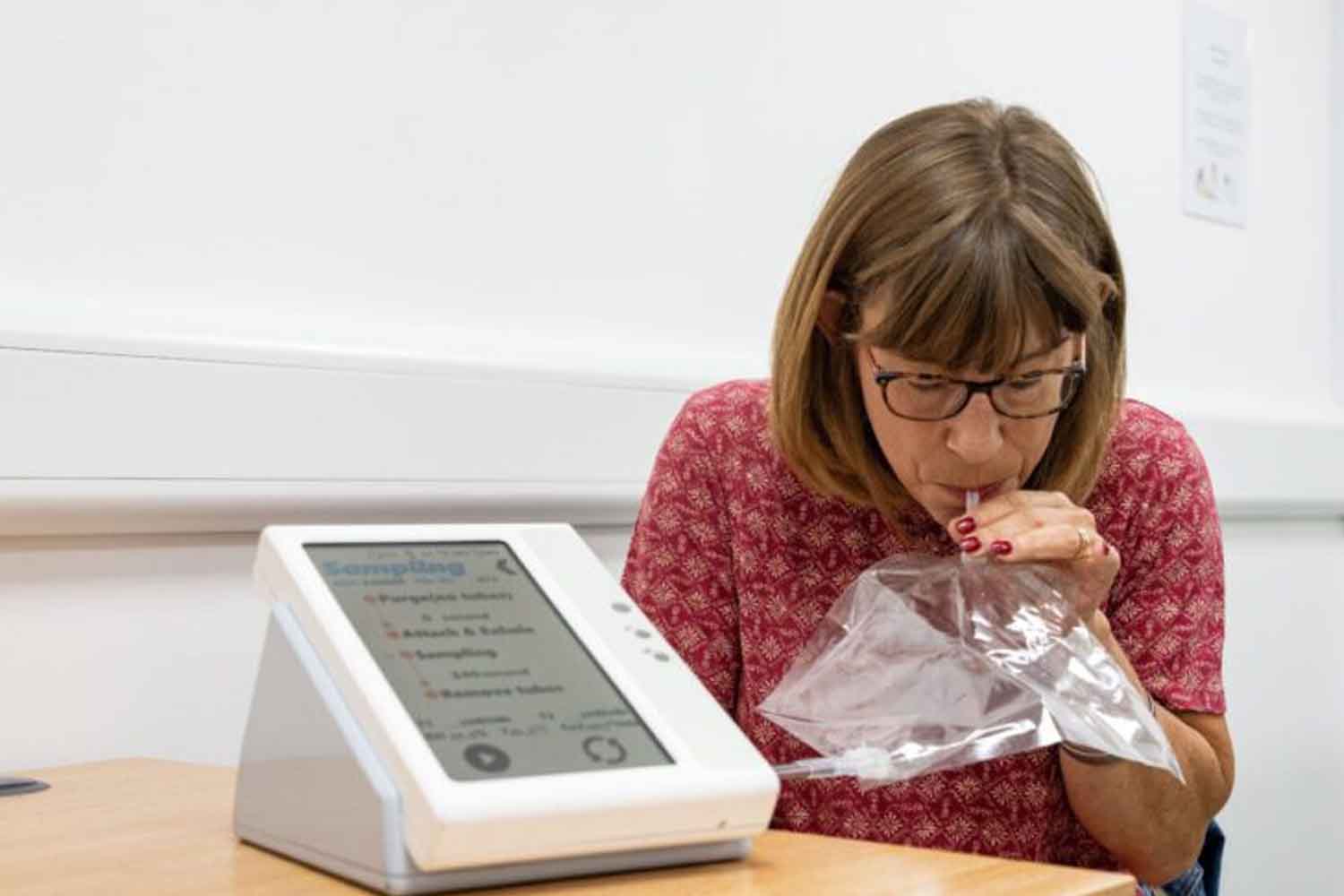
A simple breath could transform into the weapon that medicine has been waiting for for half a century to anticipate pancreatic cancer, one of the most lethal neoplasms because it is discovered, in most cases, when there is very little that can be done. A nationwide trial has started in the United Kingdom which resembles a historic step: a rapid, non-invasive and painless test, capable of intercepting the disease with an ease that until now seemed like science fiction.
How it works
For decades, pancreatic cancer was a clinical enigma, a subtle disease that manifested itself with symptoms so subtle – back pain, difficult digestion, unspecified discomfort – that they were mistaken for common ailments. An analysis conducted in the United Kingdom revealed that more than 60% of patients are diagnosed when the disease is already at stage four, a point of no return: only 22% survive a month after finding out the truth.
The new device, developed by Imperial College London together with the Pancreatic Cancer UK charity, promises to reverse this fate. The technology is based on the analysis of volatile organic compounds (VOC), tiny molecules that circulate in the blood and end up expelled with exhaled air. Thousands of these chemical signals, if interpreted correctly, tell us what is happening inside the body: infections, inflammation and, in this case, the presence of pancreatic cancer even when it is just starting.
For the first time, a test of this type reaches an extensive trial in 40 centers distributed across England, Scotland and Wales, with the aim of involving 6,000 participants. It is not just a clinical experiment: it is a concrete attempt to build a future in which the diagnosis no longer arrives “too late”.
Diana Jupp, chief executive of Pancreatic Cancer UK, did not mince her words: in her opinion this test represents the most significant possibility of life-saving progress in fifty years. A heavy statement, certainly, but one that reflects the expectation of an entire scientific community tired of seeing the disease almost always win.
And there is no shortage of caution. Jupp herself reminds us that it will take years before GPs can use it on a daily basis, but the fact that thousands of patients with uncertain diagnoses are testing it in the real world is already, in itself, a tangible sign of hope. The hope, finally concrete, that pancreatic cancer may no longer be a “silent killer”.
It is the first breath test for pancreatic cancer to reach a national clinical trial of this scale. This alone makes it a moment of real, not theoretical, hope.
You might also be interested in:
