
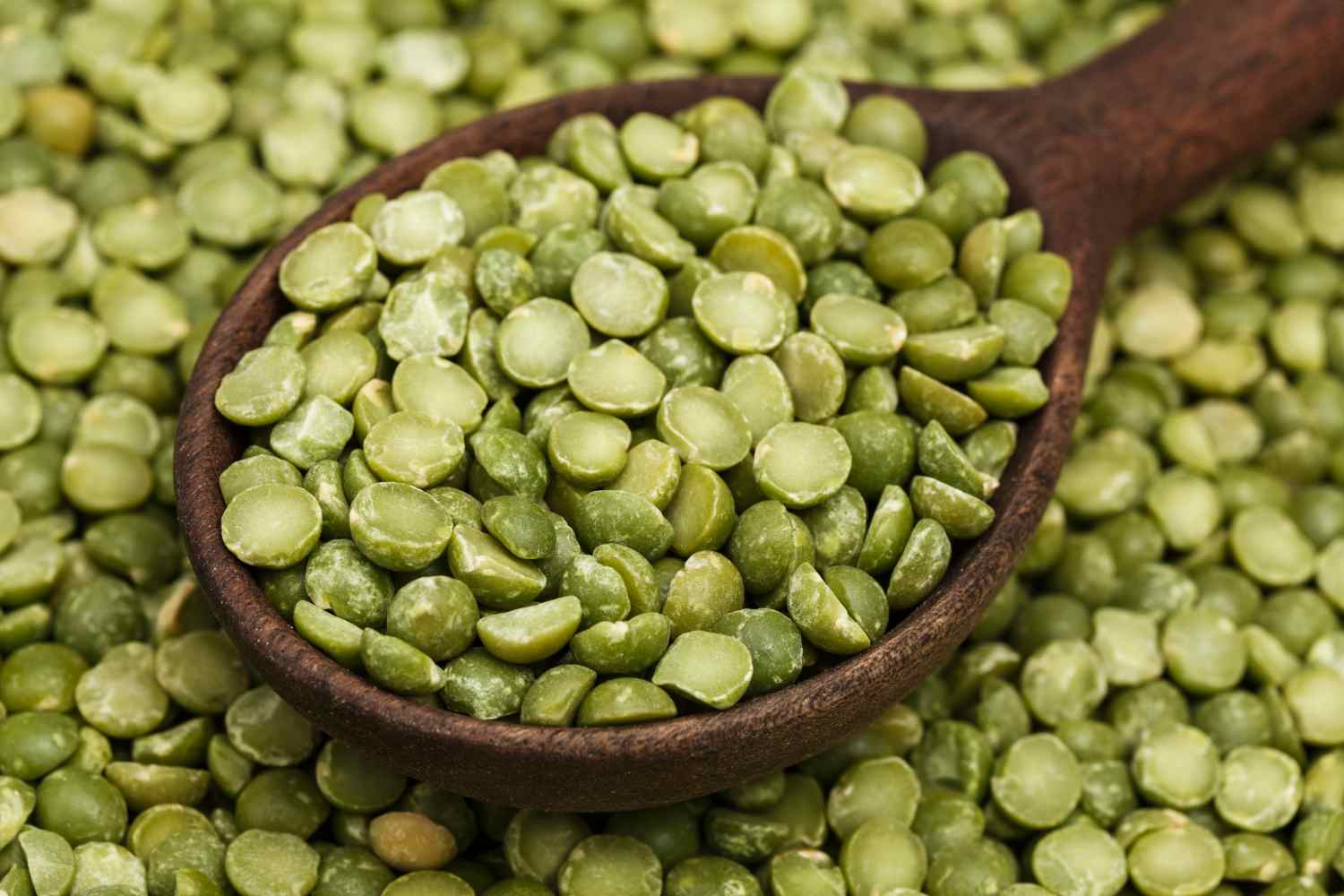
The return of the “forgotten” legume
Dried peas, confined to traditional soups or dusty shelves for decades, are re-emerging into the spotlight of nutritionists. Not for an influencer trend, but because scientific literature and national guidelines strongly reiterate that legumes – including peas – represent a simple, effective and inexpensive lever for improving the nutritional quality of the daily diet. The great thing is that you don’t need to become vegan to take advantage of them: just insert them wisely, a few days a week, and let the benefits speak for themselves.
What the Italian guidelines say
In Italy, the 2018 Guidelines for healthy eating, edited by CREA, dedicate an explicit chapter to legumes (including dried ones). These guidelines recommend defined portions and precise frequencies, consistent with the objective of preventing chronic degenerative diseases. (See “Guidelines for healthy eating 2018”)
According to Italian indications, a standard portion of dried legumes corresponds to 50 grams (before cooking), while for fresh or canned legumes approximately 150 grams is considered.
Furthermore, the guidelines already suggest consuming at least 2–4 portions of legumes per week as part of a balanced dietary pattern.
It is not a “health-conscious” indication: it is a message consistent with the scientific data collected over the years and with the need to include more protective plant foods in the national diet.
Why dried peas are “worth it”
Proteins, fibre, micronutrients
Once cooked, dried peas contain a significant amount of plant protein, soluble and insoluble fiber, B vitamins, iron and other minerals. This mix makes them “functional foods”: not just calories, but components that interfere with metabolic regulation and vascular health.
LDL cholesterol control
Clinical evidence leaves no room for soft interpretations. In a meta-analysis of 26 controlled studies on 1,037 participants, the regular introduction of legumes (including peas) induced an average reduction in LDL cholesterol of approximately 0.17 mmol/L (corresponding to approximately 5%) compared to control groups.
Another review, focused on dietary interventions with legumes, estimated similar decreases in LDL and improvements, albeit more modest, in total cholesterol.
In practice: regularly consuming legumes does not “erase” existing lipid problems, but can make a concrete, additional contribution to the lipid profile.
Glycemic stability and satiety
Dried peas, like all legumes, have a low glycemic index and a low glycemic load. This means that derived sugars are absorbed more slowly, causing less pronounced glycemic peaks. This is useful in diabetes prevention programs and glycemic control. Fiber and vegetable proteins also promote a sense of satiety, which can translate into less spontaneous consumption of high-calorie foods.
The mechanisms behind these effects include slowing of food transit, interaction of fiber with bile acids, and modulation of postprandial insulin.
Environment, sustainability, agricultural context
The environmental aspect is not an accessory: it is an integral part of why nutritionists return to promoting dried peas. Legumes fix atmospheric nitrogen thanks to the action of root bacteria (rhizobia), reducing the need for nitrogen fertilizers. In terms of water balance and greenhouse gases, the production of plant proteins from legumes has a significantly smaller footprint than many animal sources.
The Italian CREA guidelines, in recent revisions, have also introduced the dimension of environmental sustainability into the “healthy eating” paradigm, combining health protection with agricultural impact.
In summary: using more dried peas in cooking is not only “healthy for you”, but also “less impactful for the planet”.
Common resistances (and responses).
Those who haven’t tried them recently often raise objections: “they swell”, “they’re heavy”, “they bother me”. The answers are not ideological, but practical:
How to really include them (without feeling like a “dietician”)
Here is a concrete approach on how to include them in a diet:
- Start with 50 g of dried peas (standard portion) a few times a week, even just 2–3 times.
- Use slow cooking, with plenty of water and soaking if required; cook them until they are creamy but not mushy.
- Combine them with whole grains (rice, spelt, barley) to obtain good amino acid complementarity (legumes + cereals = more complete protein).
- Add vegetables, a drizzle of raw extra virgin olive oil, perhaps aromatic herbs for flavour.
- If you are not used to fibre, increase progressively: on the first day just one dish, then go up to 2–3.
- Don’t aim for the “perfect” dish straight away: adaptation takes time, but the body responds if you provide continuity.
There is no need for romanticism: the return of dried peas is the result of multiple converging factors. First: science has confirmed for years the benefits of legumes on cholesterol, blood sugar, inflammation and vascular health. Second: national guidelines include them as cornerstones of a healthy and sustainable diet. Third: in the context of climate change and the agricultural crisis, choosing more legumes means lightening the system. Finally, from a practical point of view, dried peas are cheap, keep well and can be cooked in many variations – soups, purees, vegetable ragouts, light sauces.
In short: this “forgotten” legume has returned not out of nostalgia, but because it proves to be useful. And those who listen to science sometimes have the duty to retrace their steps and rediscover what they should never have forgotten.
