
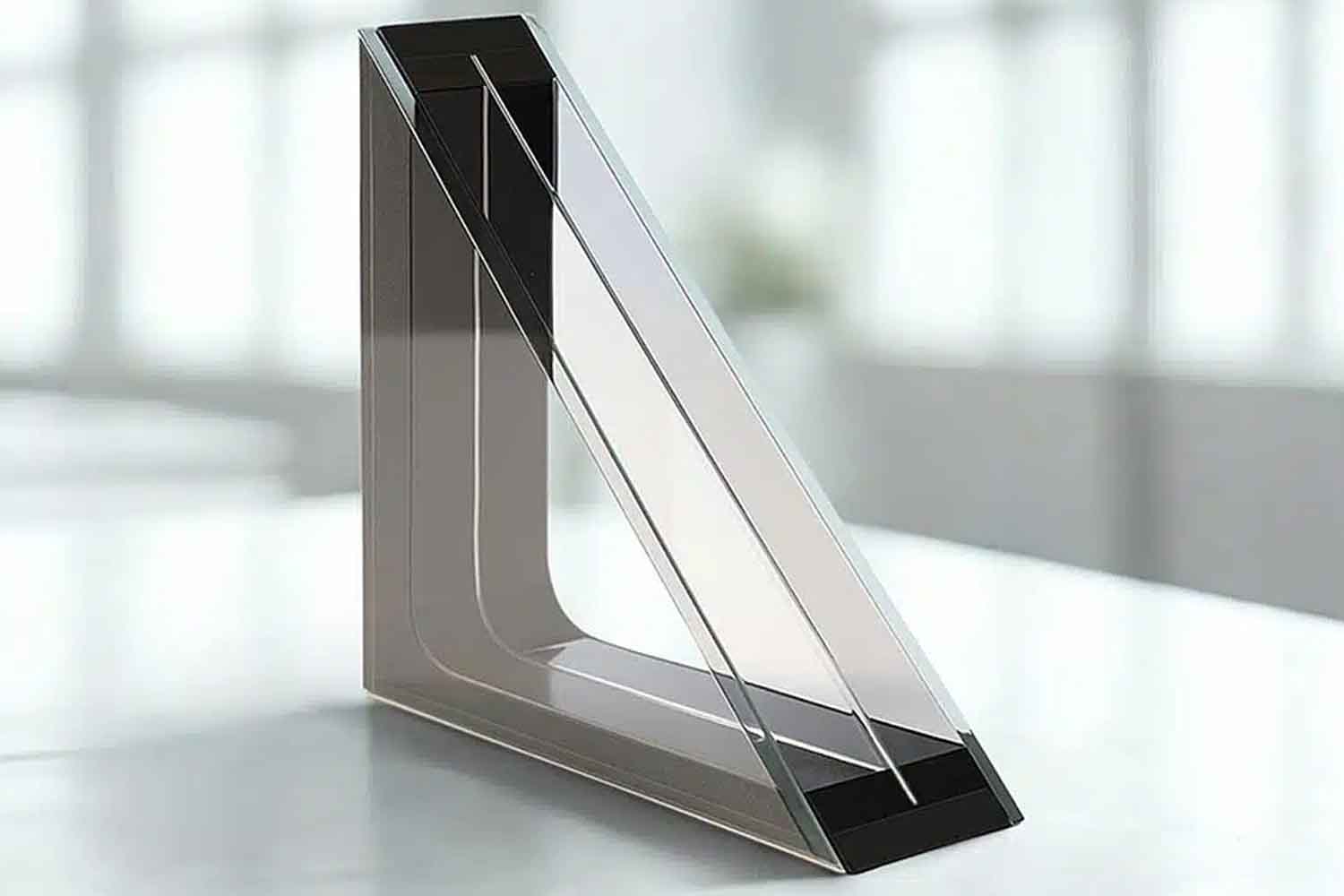
When the cold begins to hit the windows we realize, without the need for sophisticated instruments, where the heat in the house escapes from. It is a phenomenon that we all know, but which we often pretend to ignore. Yet it returns promptly every winter. It is in this context that Alpen High Performance Products presented a triple-glazed window that is thinner and lighter than traditional versions, ending up at the center of discussions simply because many European – and also Italian – homes continue to waste energy as if nothing had happened. Research has confirmed this for years: we have a building heritage that, from a thermal point of view, is losing ground on all sides.
The innovation proposed by Alpen was born from work shared with the Lawrence Berkeley National Laboratory, an American institute that has long experience in energy efficiency. A collaboration that adds credibility to the project, but which must not lead one to think of a universal solution, ready to solve every structural problem of our homes. Rather, it signals something that we have so far brushed aside too lightly: windows are not a decorative element to be changed only when they break, but a fundamental part of the way a home consumes, breathes, loses or conserves heat.
Ultra-fine glass reduces weight and bulk
The feature that strikes everyone is the thickness: a very thin glass, similar in structure to that of smartphones, but enclosed in a three-layer composition. This allows you to greatly reduce the overall weight of the window and avoid having to completely replace the frame. In contexts where every modification becomes an endless job – Italian condominium owners know this well – this is perhaps the real strength.
The rest concerns the physics of the house. Heat loss from glass surfaces is not a marginal problem and, in winter, can have a significant impact on comfort and consumption. Alpen claims that his model significantly limits this exchange with the outside world. It’s an interesting promise, but one that will need to be verified over time and in real contexts, those where drafts, humidity and assembly differences change everything. An aspect that intrigues professionals is resistance: a thin glass can be more robust than a thick one thanks to the tensions generated during production.
The economic climate and the meteorological climate meet in a phase that does not need much explanation: heating your home costs money, and will continue to do so. A lightweight product that can be installed in existing frames and is potentially more insulating inevitably ends up in the spotlight. Not because it is the perfect solution, but because it simplifies interventions that often discourage those who would like to start improving the efficiency of their home.
The arrival of thin triple glass does not rewrite the rules of redevelopment, but adds an extra piece. It is an option that could be useful especially to those who cannot afford complex structural work or live in buildings where every modification must overcome a thousand condominium steps. As always, the actual use will determine the impact, not the technical presentation.
You might also be interested in:
