
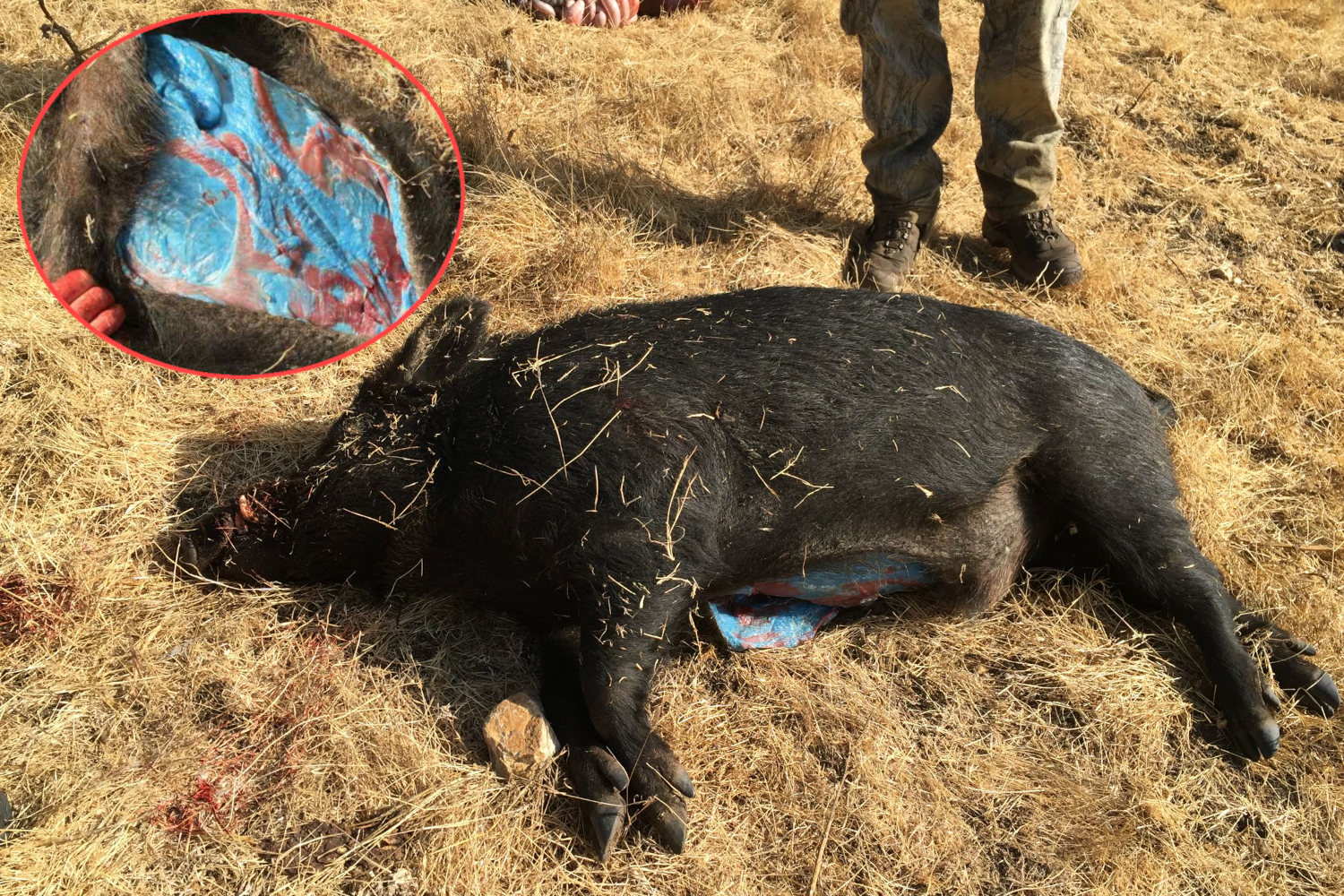
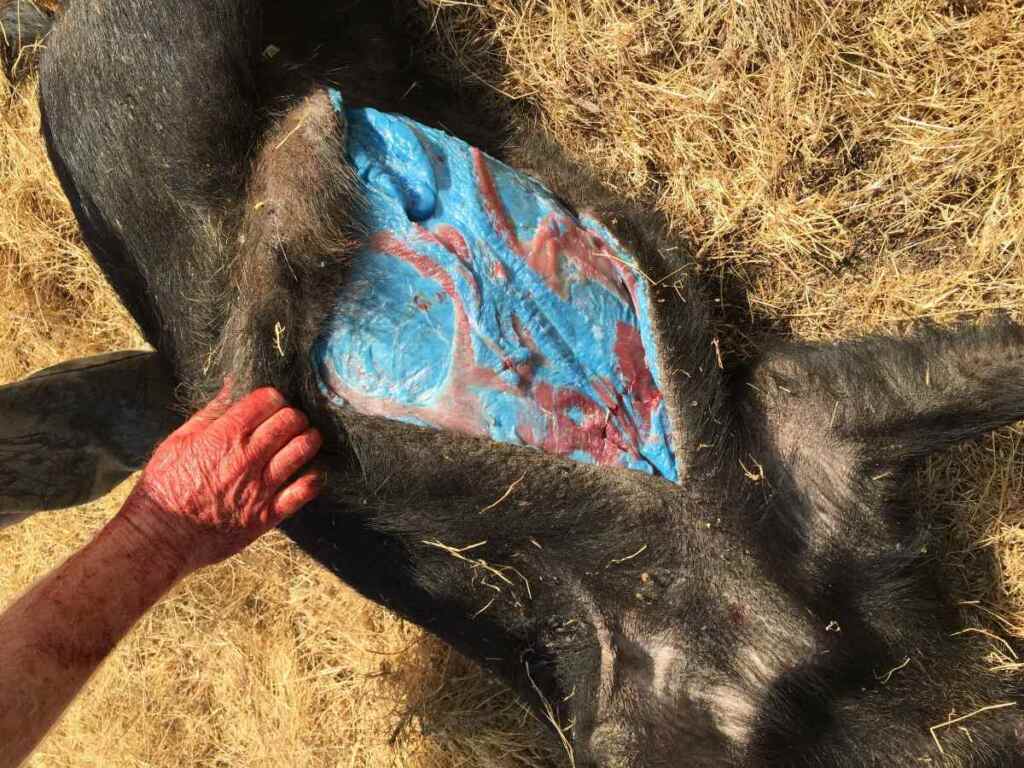
In California, hunters have discovered wild boars with bright blue insides, a phenomenon that has raised alarm among local authorities and the public. The anomaly has been attributed to rodenticide poisoning, particularly the chemical diphacinone, which is often used in mouse pesticides and dyed blue to distinguish them. The use of this compound is strictly regulated in the state from 2024 due to risks to wildlife and the environment.
The consequences of poisoning
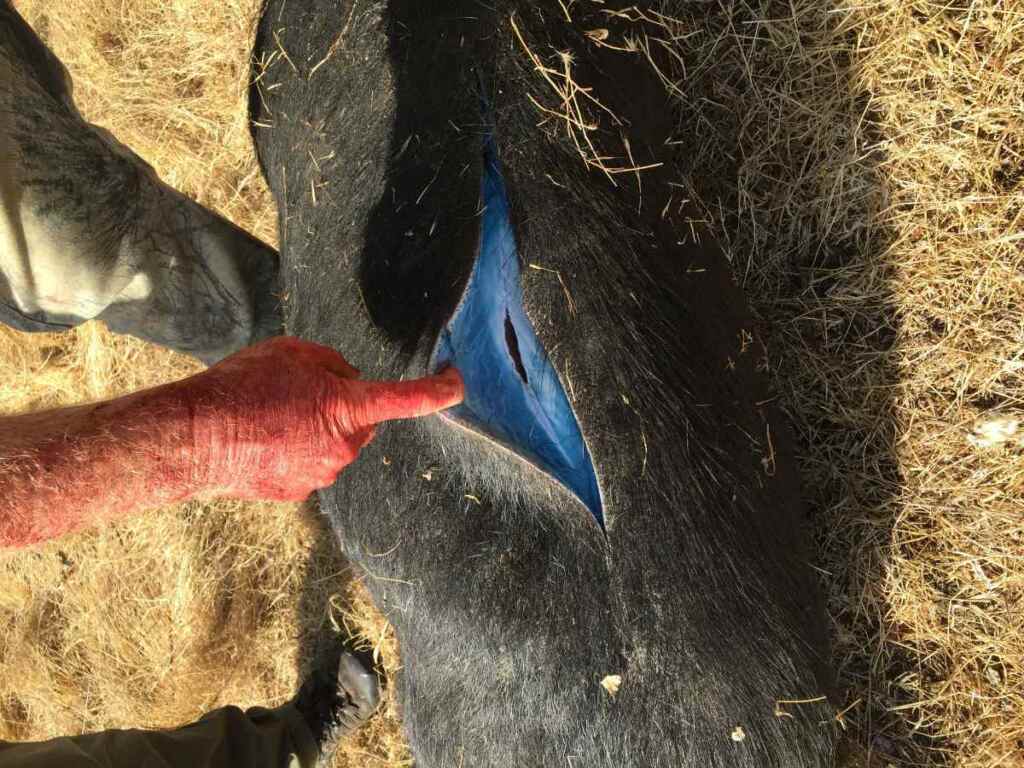
According to experts, diphacinone acts as an anticoagulant, preventing the animals’ liver from producing the clotting factors needed to prevent internal bleeding. This causes serious damage to the animals that ingest it, leaving only some parts visible such as the blue fat, while the meat remains normally colored. The substance can also be dangerous to predators and humans who consume contaminated animals, as it remains active in tissues for a certain period, even after cooking.
Experts warn that exposure to rodenticides can affect non-target species such as birds of prey, cougars, lynx, foxes, as well as at-risk species such as the northern spotted owl and the San Joaquin kit fox. Although it is possible to treat affected animals if the poisoning is discovered early by administering vitamin K, the prognosis is often negative.
Alternative solutions to pesticides
For this reason, authorities at the California Department of Fish and Wildlife (CDFW) have issued strict warnings and regulations on the use of chemical pesticides. The CDFW recommends applying pesticides with caution, avoiding exposure of wildlife.
Safe traps, physical barriers, fences are suggested, as well as natural control strategies, such as encouraging natural predators or using light, sound or olfactory stimuli as deterrents. The objective is to reduce the negative environmental impact of chemical rodenticides and prevent accidental contamination of wildlife and humans.
This case confirms the growing concern about the indiscriminate use of pesticides, linked to environmental and health problems such as cancer, diabetes, Alzheimer’s and neurological alterations. Experts underline the importance of integrated pest management strategies, coordinated at an international level, to safeguard ecosystems and human health, while limiting collateral damage to a minimum.
You might also be interested in:
